
This is the second article in my series looking at whether primes are worth buying if you already own a very good zoom lens like the Nikon Z 24-120mm f/4.
In the first article, I ended up concluding that for general shooters, the Nikon Z 35mm 1.8S probably isn’t worth the expense as that focal length doesn’t really take advantage of a primes benefits in terms of depth of field. If you are interested in how the Nikon Z 85mm 1.8S performs against the 24-120mm f/4S see my latest article in the series.
However in this second article, we are starting to get in to the type of focal length where depth of field naturally becomes more important. Often 50mm is recommended as the best first prime to start with as it gives a natural field of view that closely replicates the human eye, is much more flattering for portraits and allows you to focus on subjects with less context. All these types of shots are areas where depth of field control can be important.
I grew up in a time when primes were considerably better than zooms optically. I remember seeing the difference between Canon professional zooms such as the 17-40mm f/4L and primes like the Zeiss Otus line. However with Nikon in particular producing some incredibly sharp zooms in their Z lens lineup, does this still hold true or not?
This article contains affiliate links. If you use these links to buy something, I may earn a commission at no extra cost to you. I only recommend gear that I have personally owned and used extensively.
Methodology
Because I own both of these lenses, this comparison is based on thousands of frames shot in the real world. However, to provide a fair, head-to-head comparison, I headed to my local testing ground to conduct controlled tests.
For these, I mounted my Nikon Z8 to a tripod to ensure total consistency.
- Mid-Distance Sharpness: I shot my standard test scene with the Z 24-120mm f/4 set to an indicated 50mm, stepping through its aperture range from f/4 to f/8. I then swapped to the Z 50mm 1.8S, shooting from its wide-open aperture of f/1.8 through to f/8.
- Minimum Focus Distance: To evaluate close-range performance, I repeated the process at the minimum focusing distance for each lens, again ranging from wide-open to f/8.
- Portrait Distance & Depth of Field: Finally, to illustrate the practical difference in subject isolation, I shot both lenses at a common portrait distance of approximately 6 feet, with each lens set to its respective maximum aperture (f/1.8 for the prime and f/4 for the zoom).
Size and weight and Handling
The Nikon Z 24-120mm f/4 is not a small lens. At 630 grams, it feels substantial and is well-matched to my Nikon Z8; it also handles well on my Z6III. On my Zf, however, it’s horrible. That said, it remains below the point where I feel the size and weight become a major factor. When mounted on the Z8, it balances well, doesn’t feel front-heavy, and I happily clip it onto my Peak Design Capture Clip when hiking. It features a telescopic zoom design that extends the barrel as you zoom, but even fully extended, it never feels unwieldy. It also uses a 77mm filter thread, a standard size that lets me use my existing filter kit.
The Nikon Z 50mm 1.8S is a different story. At 415 grams, it is lighter than the zoom, though it’s worth noting it is roughly 45 grams heavier than the 35mm 1.8S I tested previously. It is quite a substantial lens for a 50mm f/1.8; it is definitely not a “plastic fantastic” like the old Canon EF 50mm f/1.8 I bought many years ago. However, the performance is in a completely different league compared to those older lenses. While it’s not as compact as some legacy primes, it still feels relatively compact on Nikon bodies like the Z6III and Z8.
I won’t dwell on this too long, as it’s clear that you are paying a size and weight penalty in return for the flexibility of the zoom. Whether that trade-off suits your shooting style is subjective; neither lens is “too heavy” or “too small,” they are simply designed for different priorities.
Image Quality
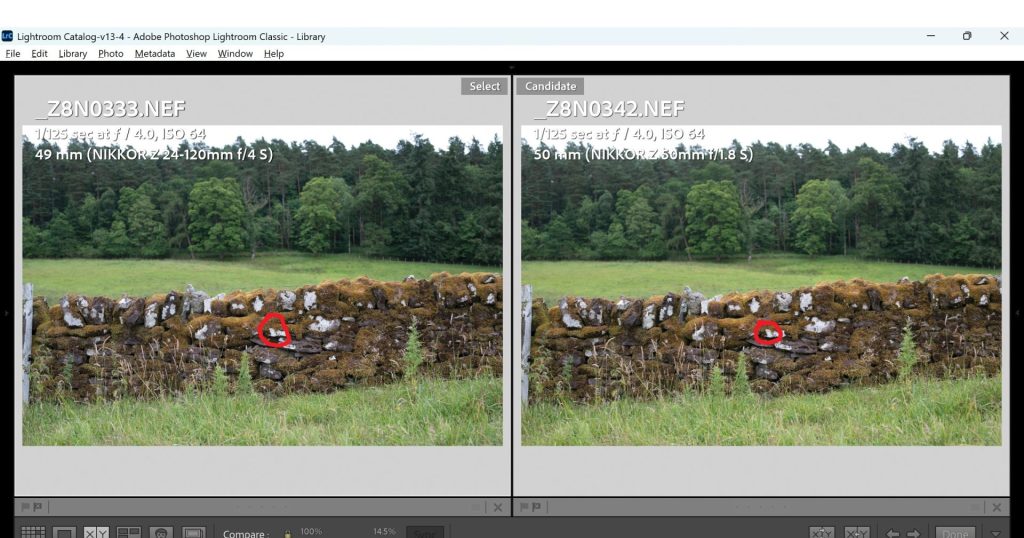
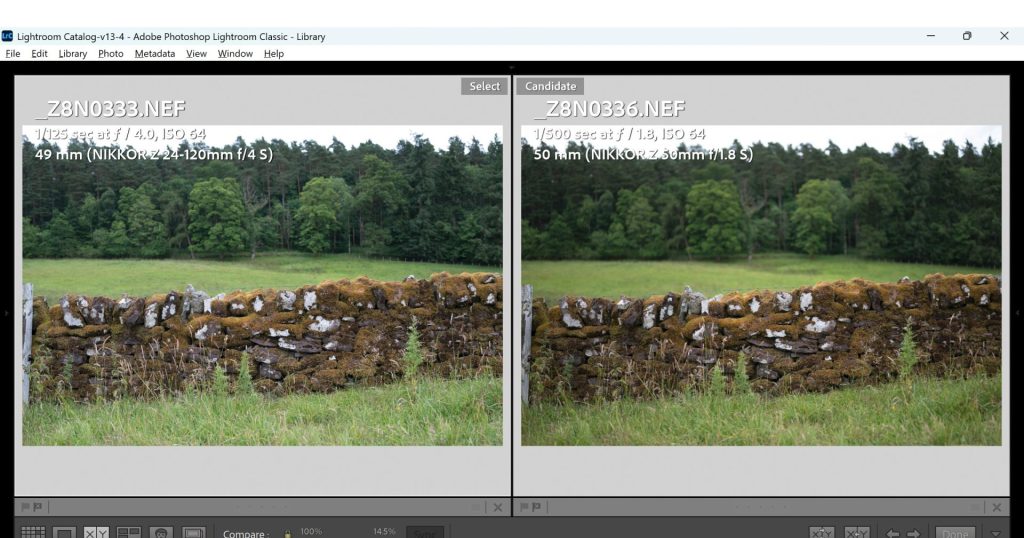
The first thing to note is that unlike in the 35mm comparison, the Zoom at 50mm and the prime give effecteviely the same field of view.
At 50mm, the shallower depth of field of the 50mm 1.8S is quite noticeable, giving a much smoother background which I find less distracting. There is some noticeable vignetting at 1.8 on the Nikon Z 50mm 1.8S. It’s easily corrected in Lightroom with the use of lens profiles though.
When I look at the images side-by-side in Lightroom’s comparison tool, without zooming in, both look very sharp, with good contrast.
Once I zoom in to 100% , both lenses give sharp crisp details with a slight edge going to the zoom at f/4 over the prime at f/1.8.
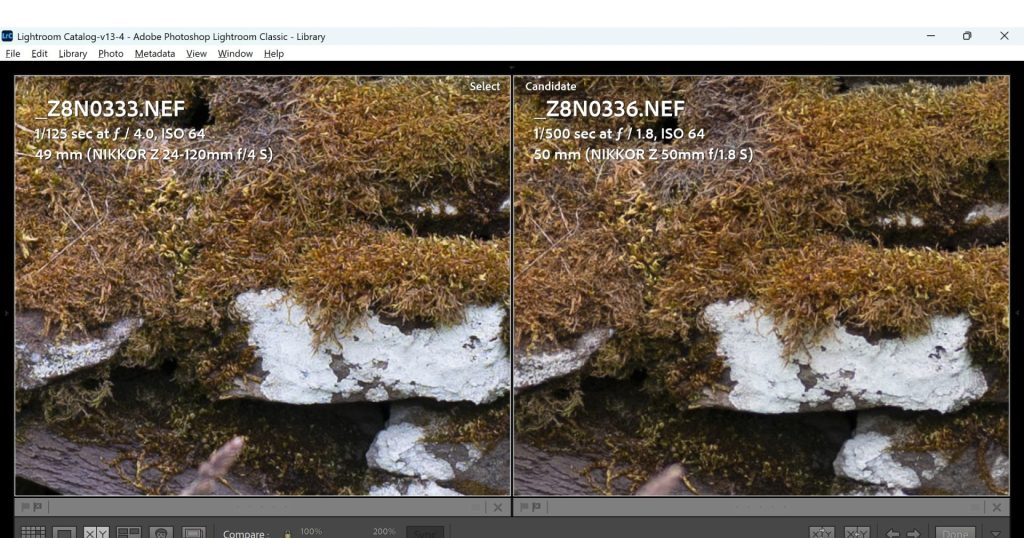
Once the 50mm 1.8S is stopped down to f/4 to match the zoom, it becomes slightly sharper than the 24-120mm f/4. It’s not a night and day difference though. For normal use, I’d honestly say the difference is essentially irrelvant.
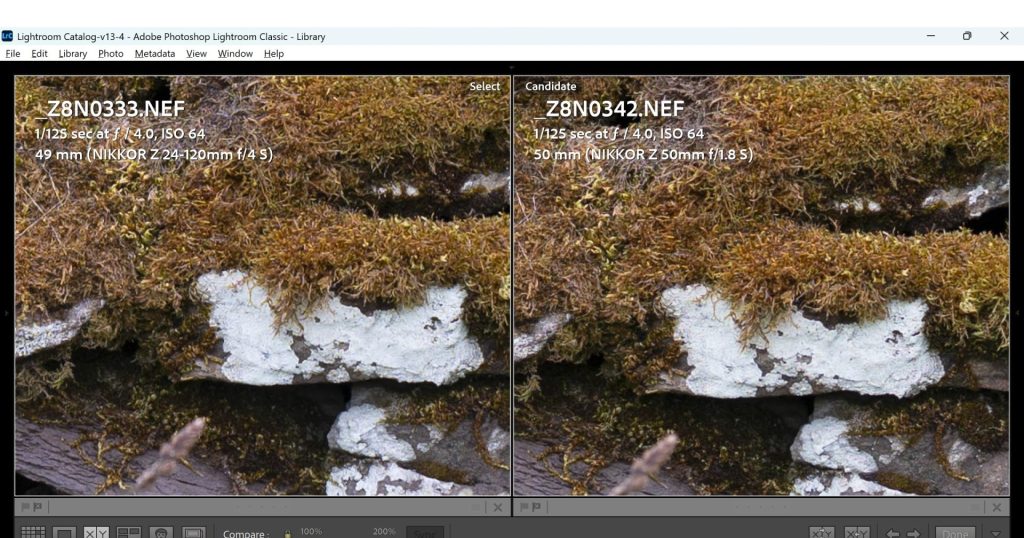
Once both lenses are stopped down to f/5.6, I struggle to see any meaningful difference, even when zooming in to 200% in Lightroom.
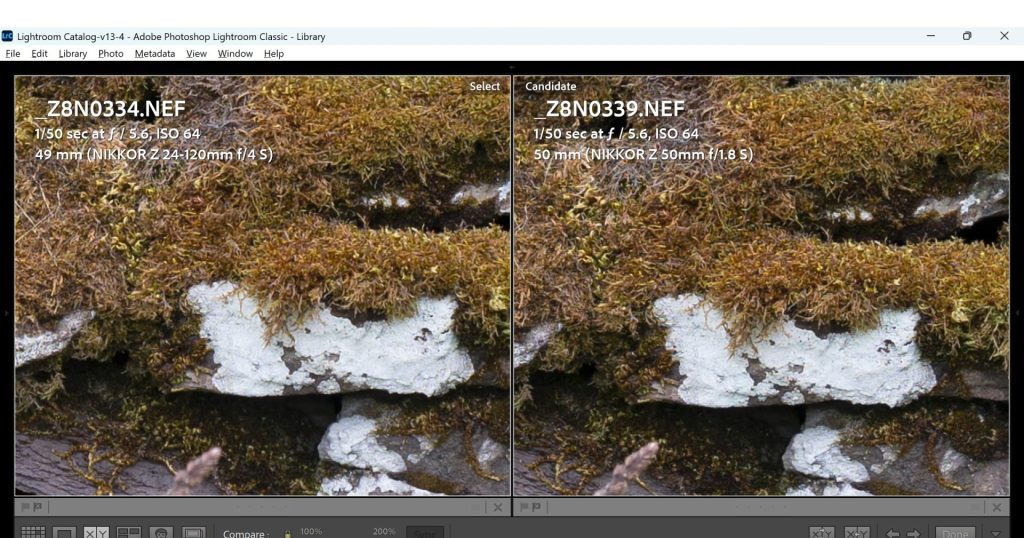
When I have to zoom in to a 200% crop to be sure of the differences, it shows just how close in performance the two lenses are in terms of sharpness in the centre of the frame.
At f/5.6 the extreme edge, performance from both the 24-120mm f/4 and 50mm 1.8s is essentially identical. So for landscapes and general use, I really see little difference between them in terms of pure sharpness.
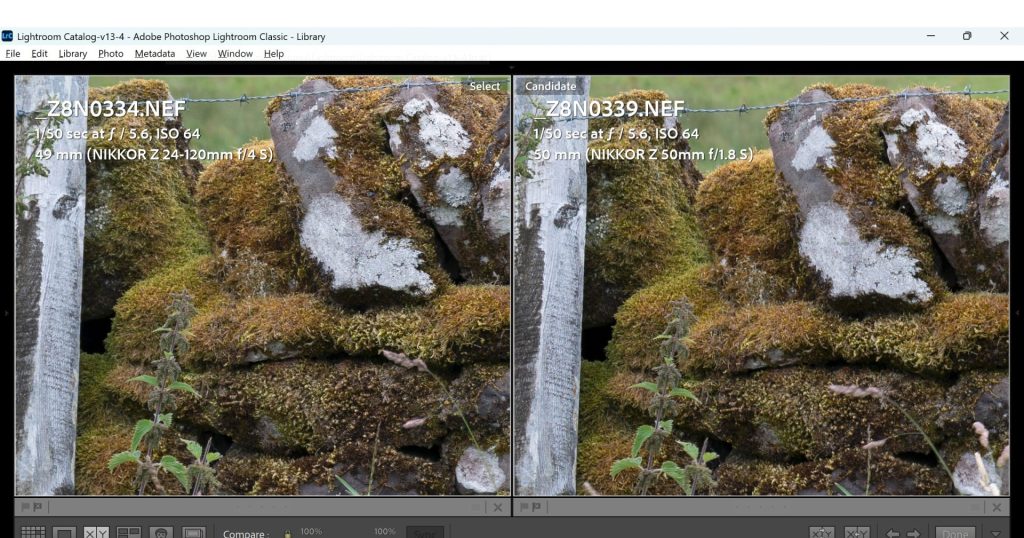
It’s the same story when both lenses are stopped down to f/8 and beyond so I wont bore you with further examples at those apertures.
Next up I wanted to test how each lens at minimum focus distances. Nikon quotes the 24-120mm as having a 35cm minimum focus distance compared to the 40cm of the NIkon Z 50mm 1.8S. So to compare, I shot both lenses at the closest focusing distance I could obtain with the prime lens, from wide open to f/8.
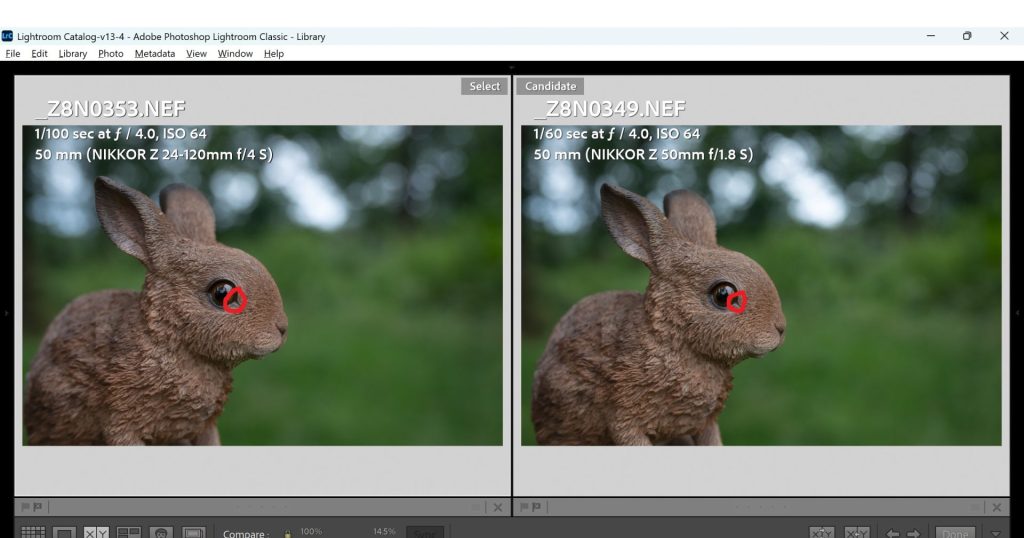
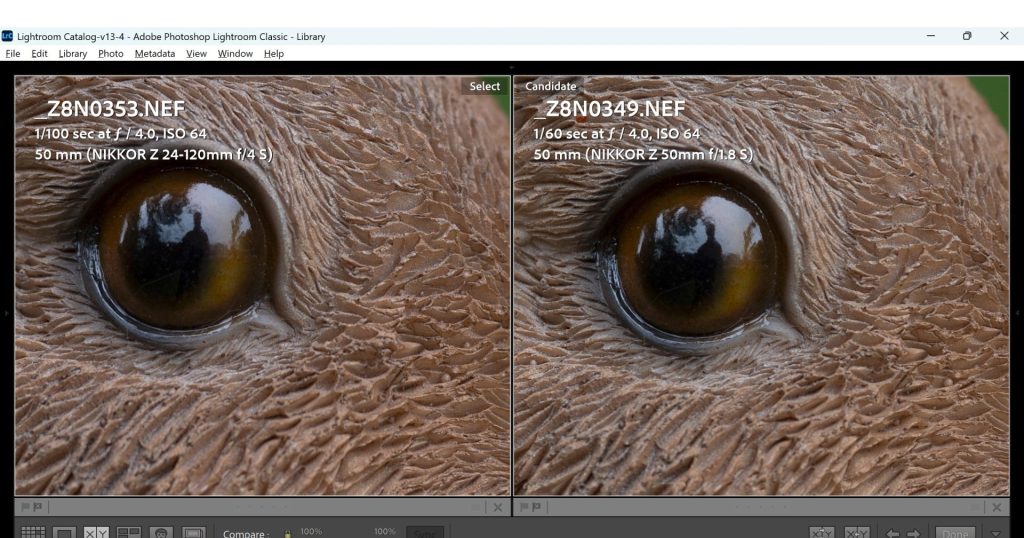
At this point I want to note that Lightroom is telling me I hit exactly 50mm on the zoom lens this time and it does result in a marginally tighter field of view than the 50mm 1.8S prime, due to focus breathing in the 24-120mm f/4S as it focuses closer.
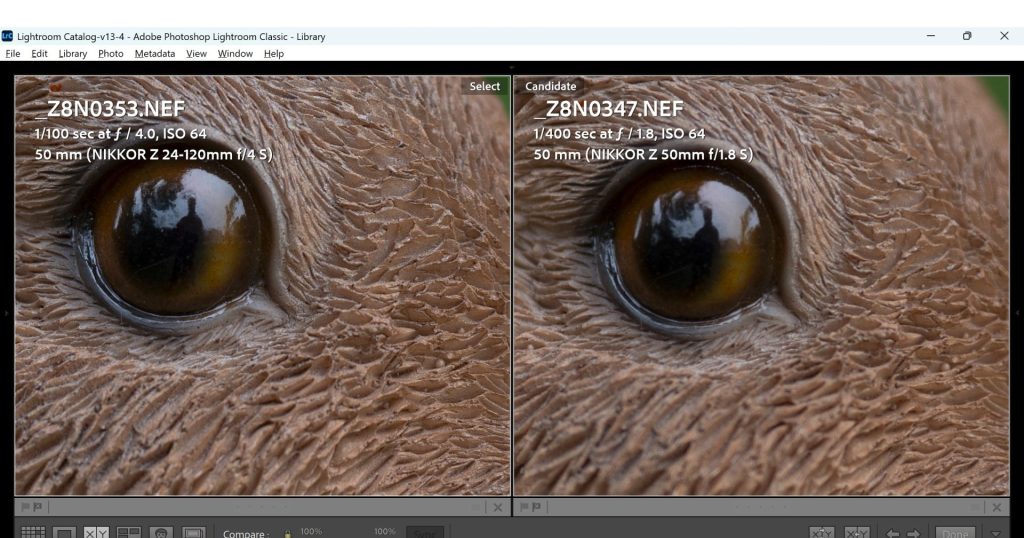
When shot wide open, the Nikon Z 24-120mm f/4s is slightly sharper than the 50mm 1.8S. The differences are tiny but can be seen once you crop in 100% on the images.
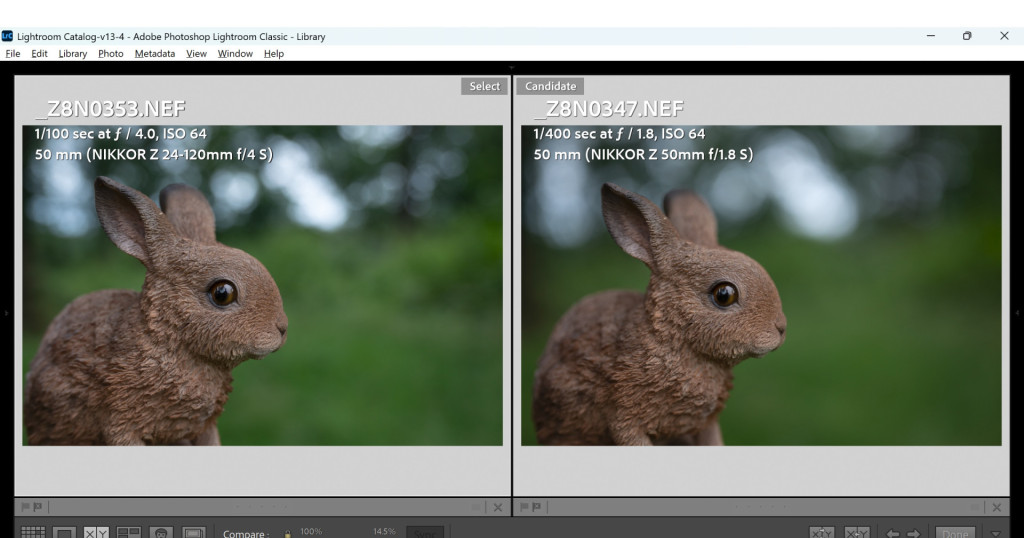
In my opinion the difference in subject separation and background blur is fairly significant. The background blur on the 50mm 1.8s lens is significantly smoother and less distracting. The definitiion of the highlights in the background on the 24-120mm f/4s image are distracting. However, subject placment, distance between the background and subject will all have a major effect on this and to be quite honest, the background on the 24-120mm image is already out of focus to a degree where it is already sperating the subject well. Just how out of focus do I need my backgrounds is the question I’m asking here.
I then took a test shot with the 24-120mm f/4 at its minimum focus distance to show how it affects things.
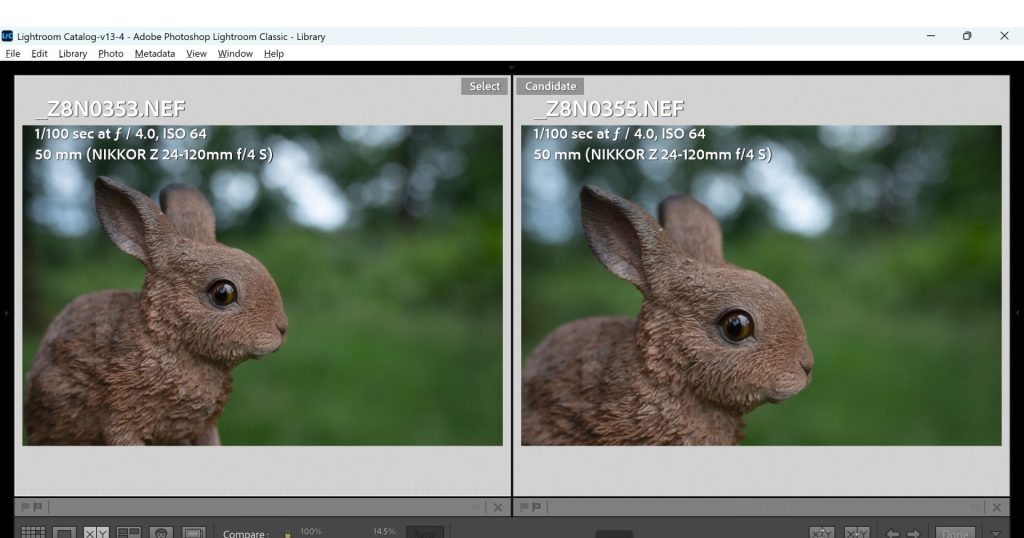
The comparison above shows that the zooms closer minimum focus distance makes quite a difference and a side-effect of this is that it pushes the background more out of focus compared to the Nikon Z 50mm 1.8S.
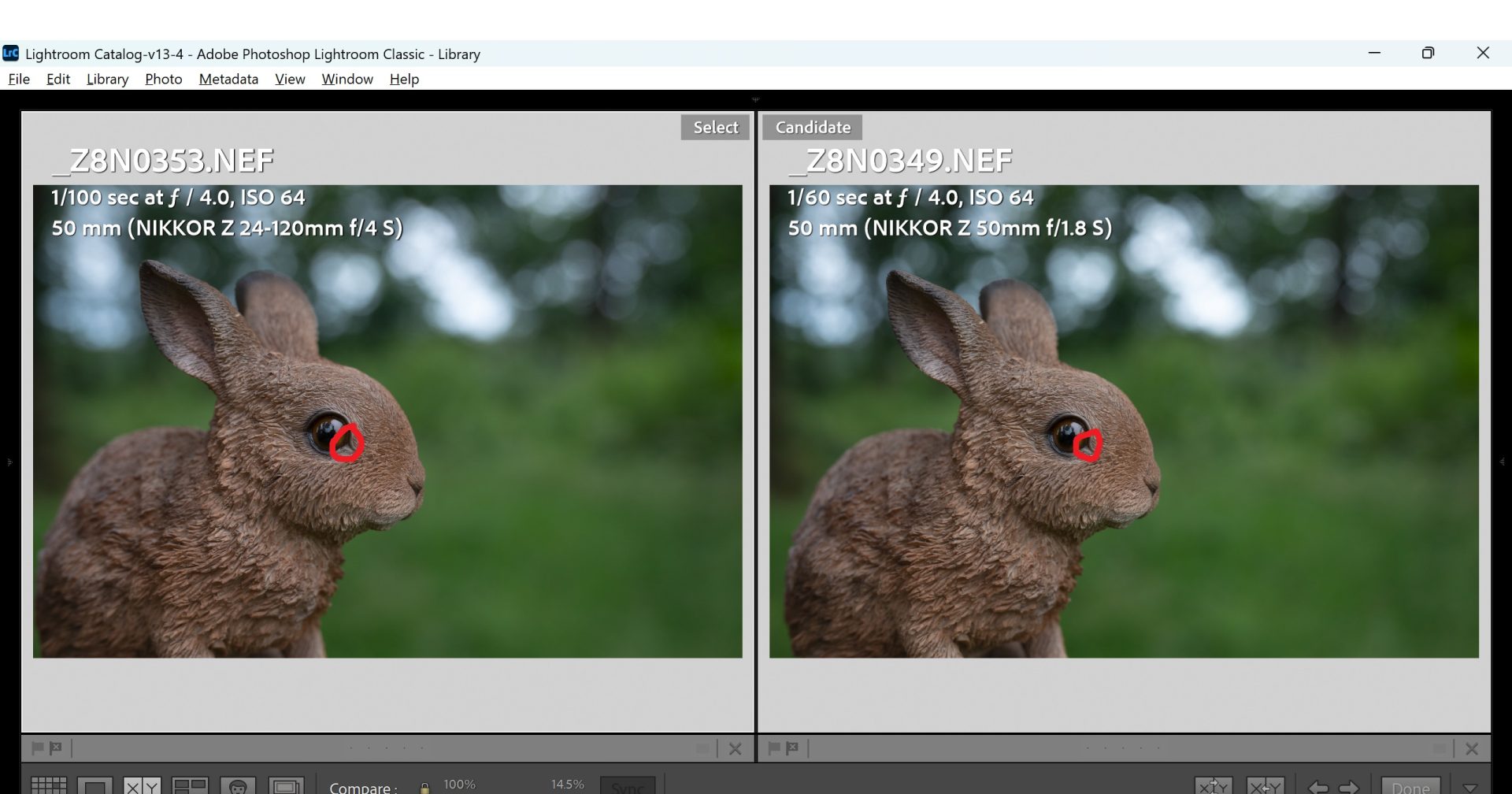
Finally, I took shots with both lenses wide-open at their respective apertures from a distance of 6 feet to show the difference in subject separation and bokeh from a fairly standard shooting distance.
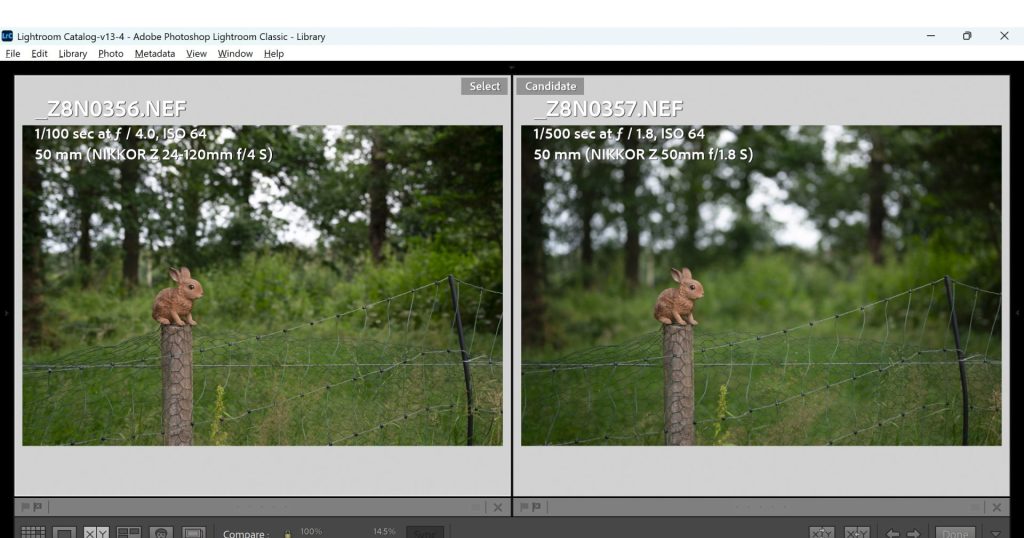
The larger aperture of the Nikon Z 50mm 1.8S shows much more subject separation at f/1.8 than the f/4 of the zoom.
Verdict
Honestly, as I’m writing this I am really torn on the value of the Nikon Z 50mm 1.8S lens if you already own the Nikon Z 24-120mm f/4. For landscapes and general shooting, the zooms flexibility combined with excellent sharpness are basically a no brainer. I’m genuinely surprised that the 50mm 1.8S didn’t easily beat the 24-120mm f/4 in terms of sharpness. If you’re simply looking for better image quality than the Zoom, in the real world, where we aren’t pixel peeping, I just cannot recommend spending the money on the prime lens if you aleady own the Nikon Z 24-120mm f/4.
Is there still a case for owning the prime? Absolutely, but it has little to do with sharpness any more. Nikon with their Z line, seem to have really closed the gap that used to exist between primes and zooms. The conventional wisdom that primes are significantly better optically than zooms, no longer seems to hold up. So what’s the point in the prime? Well beyond the ability of teaching you to see in a certain way, which I’ve talked about many times before, and giving creative constraints which can help your photography improve, I was genuinely struggling to justify the prime lens.
The saving grace is the last test image showing shots at a fairly standard portrait distance. The prime is not a little better here, it is orders of magnitude better if you really need the ability to isolate subjects and throw backgrounds out of focus. Not just that, but it allows greater depth of field control which can be used as a way to guide viewers around a photo.
But these are either quite advanced or quite niche use cases and so, even though the Nikon Z 50mm 1.8S is one of my favourite Nikon Z lenses, and the one where I thought the primes would start to justify themselves more, I have to conclude by saying that if you own the Nikon Z 24-120mm f/4s lens, are a general photographer rather than a specialist, then unless you absolutely want that f/1.8 aperture, to isolate subjects, or you simply prefer working with primes, then it’s simply not worth spending the money on the Nikon Z 50mm 1.8S.
You can see the latest price for the Nikon Z 24-120mm f/4S here.
You can see the latest price for the Nikon Z 50mm 1.8S here.