
Last updated: April 2026 — tested with the Nikon Z6III, Zf and Z8 in real-world use.
Ah, another 50mm f/1.8 lens. Great… but wait — this one’s different.
My first 50mm was the plastic-fantastic Canon 50mm f/1.8 back on a humble 450D. I’m not knocking it — it was great value, and at that point in my photography journey, I was still learning and genuinely amazed at how much better it was than the 18–55mm kit lens.
But let’s be honest — that lens focused slower than an eight-year-old with ADHD. It felt like it was built by a work experience kid on a Friday afternoon, piecing together whatever parts were left in the bin.
Still, it nailed that perfect size-to-aperture ratio that f/1.8 lenses so often do — compact, fast enough, and affordable.
TL;DR
- Much better than a “typical” 50mm f/1.8 — this is true S-line quality.
- Larger than expected, but feels perfectly balanced on the Z6III and Z8.
- Bitingly sharp wide open with clean corners by f/2.8.
- No noticeable CA or distortion; excellent microcontrast and natural colour.
- Autofocus is fast, silent, and rock-solid in all lighting conditions.
- Fully weather-sealed and built far better than most 1.8 primes.
- Bokeh mostly smooth, with only slight onion-ring texture from aspherical elements.
- The only real drawbacks: no aperture ring and not great at close focus.
This article contains affiliate links. I may earn a small commission if you purchase through these links at no extra cost to you.
| Focal Length | 50mm |
|---|---|
| Maximum Aperture | f/1.8 |
| Minimum Aperture | f/16 |
| Optical Construction | 12 elements in 9 groups (2 ED, 3 aspherical) |
| Aperture Blades | 9 (rounded) |
| Minimum Focus Distance | 0.4 m (1.31 ft) |
| Maximum Magnification | 0.15× |
| Filter Size | 62mm |
| Dimensions | Approx. 87 × 76 mm (3.4 × 3.0 in) |
| Weight | 415 g (0.91 lb) |
But here’s where Nikon’s f/1.8 Z lineup stands apart from almost every other brand right now: they don’t force you to choose between the best and the most practical as I found in my best lenses for the Nikon Z6III article and more recently in my Nikon Z 85mm 1.8S review. Nikon gives you everything — premium build, pro-grade optics, fast, confident autofocus — without making you pay for f/1.2 “halo” glass just to get it. I personally own the 20mm 1.8, 35mm 1.8, 50mm 1.8 and 85mm 1.8 lenses. I compared the Nikon Z 35mm 1.8S vs 50mm 1.8S here. The Nikon Z6III also follows this ethos and only needs a few high quality accessories to finish it off. Likewise for the Nikon Z8. If you are considering upgrading to an even higher end camera then I discussed whether it is worth it when I compared the Z6III against the Z8. If you want one of the most beautiful cameras, then I discussed why I bought the Nikon ZF here.
I’ve also put together a detailed guide to the best lenses for the Nikon Z system, based entirely on lenses I’ve owned and used in real-world shooting.
So how does that philosophy hold up in real-world use with the Z 50mm f/1.8?
Design & Build: Premium, and Nothing More

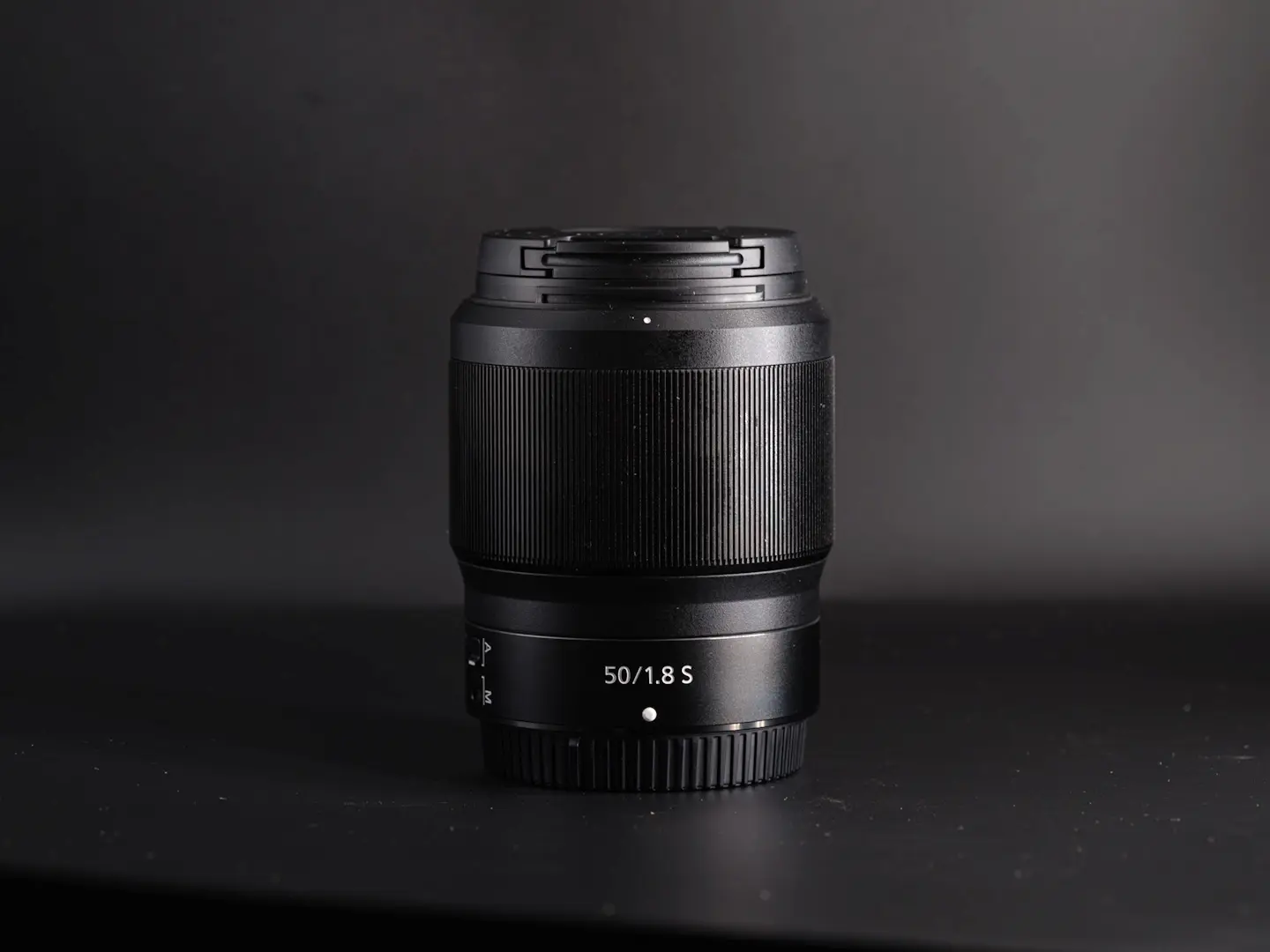
Let’s get the elephant in the room out of the way first — the Nikon Z 50mm f/1.8 S is larger than you might expect. At 415 grams (0.91 lb) and 8.7 cm long (3.4 inches), it’s no featherweight. But it’s also not playing the same game as your typical plastic-fantastic 1.8 lens. This belongs to Nikon’s S-line — their premium glass — and that means very little compromise anywhere.
Most brands treat their f/1.8 primes as the “good enough” tier: lighter, cheaper, and fine for hobbyists. Nikon didn’t. This one feels exactly what I expect from them — no-nonsense, well built, ergonomically spot-on with both the Z6III (my Z6III field notes) and Z8, and premium without being flashy.

It’s mostly plastic, yes, but it never feels cheap. In fact, here in the Philippines, that’s an advantage — metal lenses can get scorching hot and sticky in the humidity, while this stays comfortable to handle. The broad focus ring turns smoothly with just the right resistance, and the physical AF/MF switch is a welcome nod to practicality. You also get Nikon’s full suite of coatings to tame flare, shed water, and keep contrast high even in brutal light.
It’s not a small lens, but it feels perfectly sized for how I shoot — left hand under the lens, right hand on the controls. Think of it as roughly on par with Fuji’s red-badge primes like the 23mm 1.4WR and 33mm 1.4WR: substantial but balanced. I compared the Z6III against the Fujifilm X-T5 on a recent trip to Dumaguete.

If you’re chasing minimal weight above all else, the 40mm f/2 might tempt you — but I own that lens, and it’s not in the same league. The 50mm f/1.8 S is fully weather-sealed at both the mount and internally, and it shrugs off the tropical rain and dust we’ve been getting lately. I’ve used Nikon bodies and lenses for over a decade in every kind of weather, and I’ve yet to see them falter.
My only wish for a future version? An aperture ring. Nikon’s resistance to adding one on most Z lenses remains my single gripe in an otherwise near-flawless design.
50mm vs 35mm vs 40mm – Which Should You Choose?
| Lens | Best For | Why Choose It |
|---|---|---|
| Nikon Z 40mm f/2 | Lightweight, casual shooting | Small, cheap, and easy to carry everywhere — but noticeably behind in sharpness, autofocus, and build quality. |
| Nikon Z 50mm f/1.8 S | Best all-rounder | The sweet spot. Excellent image quality, reliable autofocus, and pro-level build without the size or cost of f/1.2 lenses. |
| Nikon Z 35mm f/1.8 S | Travel, storytelling, everyday use | Wider and more versatile. Better for environmental shots and tighter spaces, but with slightly less subject separation. |
Image Quality: Sharp Enough to Cut You

Let’s just cut straight to the chase — this lens is bitingly sharp, even wide open. I could basically leave the section right here, but there’s some nuance worth talking about.
At f/1.8 it’s as sharp as anyone could ever need. It defines eyelashes, blades of grass, and probably pins in the corner of a distant room (well, I haven’t specifically tested that — but on the Z8, I’m willing to stand by it 😄). I have recently tested the sharpness of the 50mm 1.8s against the 24-120mm f/4s


It’s razor sharp in the centre, and by f/2.8 the corners have fully caught up. There’s a little vignetting wide open, easily corrected in Lightroom, although I tend to like a touch of natural vignette when shooting wide open. I can’t detect any chromatic aberration at all, and distortion is non-existent — at least not to my eyes.
Optically, this lens is exceptional — among the very best 50mm lenses I’ve used (and I’ve shot a lot of them, from Sony’s 50mm f/1.2 GM and Canon’s RF 50mm f/1.2L to OM System’s 25mm f/1.8).
Despite being a “mere” f/1.8, on full-frame it can still blow backgrounds into a soft, creamy mess if you wish. Generally, the bokeh is smooth and non-distracting, though the aspherical elements introduce a touch of onion-ring and a slight cat’s-eye effect toward the edges. On one occasion I noticed a hint of nervousness in the background, but I couldn’t replicate it — probably down to a chaotic jungle backdrop rather than the lens itself.

What really impresses me is that, even though it’s bitingly sharp, it never looks clinical. The rendering still has character — great microcontrast, natural colour, and that subtle “pop” Nikon seems to get so right. It feels organic and balanced — exactly how a modern lens should render. I’ve also used it more recently to shoot landscapes in Scotland.

What I Use This Lens For
-
Family photography
This is where the 50mm really shines for me. It gives a natural perspective, flattering compression, and just enough background blur to isolate your subject without losing context. -
Everyday walkaround shooting
When I want one lens on the camera and don’t want to think about it, this is an easy choice. It handles almost any situation without getting in the way. -
Portraits without overdoing it
You get strong subject separation at f/1.8, but it still looks natural. It avoids that overly compressed, overly blurred look you sometimes get with longer lenses. -
Low light shooting
Whether indoors or late in the day, the f/1.8 aperture gives you enough light to keep ISO down and maintain image quality without needing flash. -
Where I don’t use it
Close-up detail work. The minimum focus distance isn’t great, so for things like food, products, or small details, I’ll either switch lenses or crop.
Autofocus: So Dependable I Barely Need to Write This Section

I’ll keep this one short for two reasons: first, it’s so good that if I can’t get in-focus shots, I probably need to seek medical attention; and second, I value your time.
This lens is fast, reliable and near-silent to focus. It never misses a beat — locks onto faces instantly, nails anything else you point it at, doesn’t hunt, doesn’t slow down in low light, and tracks moving subjects almost perfectly. I fired off a few high-speed bursts of passing cars, trikes, and scooters, and after three attempts I got bored — I couldn’t make it miss.
I’d love to tell you that’s because I’m an incredible sports photographer, but then my nose would grow.
My only minor gripe is that it doesn’t focus particularly close, so if you’re shooting detail shots — say, rings or decor at a wedding — you’ll need to crop in a bit. Beyond that, it’s basically as good as 99% of photographers will ever need.
Who This Lens Is For
-
You’re buying your first prime lens
This is the perfect place to start. It shows you exactly what a good prime can do — sharper images, better low light performance, and that extra subject separation you simply don’t get from a kit zoom. -
You want one of the best 50mm f/1.8 lenses available
This isn’t a “budget 1.8.” It performs at a genuinely high level — sharp, reliable, and built properly. If you want quality without jumping to f/1.2 prices, this is it. -
You shoot portraits, family, or everyday moments
The 50mm focal length is natural and flattering, and paired with f/1.8 you get that subtle background blur that adds depth without looking overdone. -
You already use a zoom and want to take your photos up a level
If you’ve been shooting with a standard zoom, this is the lens that gives you a different look — more detail, more subject separation, and more impact straight out of camera. -
You want one reliable lens you don’t have to think about
It just works. Autofocus is fast, image quality is consistently excellent, and it handles pretty much anything you throw at it.
A Few Things to Be Aware Of
-
It’s larger than a typical 50mm f/1.8
If you’re expecting a tiny “nifty fifty,” this isn’t it. The size comes from the optical performance — but it’s worth knowing upfront. -
No aperture ring
Like most Nikon Z primes, you’re controlling aperture via the camera body rather than a dedicated ring on the lens. -
Not ideal for close-up work
The minimum focus distance is fine for general shooting, but if you’re into detail shots or product photography, you’ll want something that focuses closer. -
Slight onion-ring bokeh in certain situations
You’ll occasionally notice it in specular highlights, but in real-world shooting it’s rarely something you’ll pay attention to.
Verdict: The Silent Assassin
While other lenses are running at the target — screaming and shouting as they charge forward — the Nikon Z 50mm f/1.8 S quietly slips, unnoticed, into the wedding reception. It fires off only what it needs to get the job done and then, just as effortlessly as it arrived, slips away under cover of darkness — like a silent assassin.
Job done. No fuss. No heroics.
A lens that performs every bit as well as its louder, flashier f/1.2 brothers-in-arms — without all the drama and at half the cost.
This lens sums up Nikon’s philosophy better than any marketing campaign ever could. They give photographers the tools they need, with the performance that matters.
Nikon Z 50mm f/1.8 S – FAQ
Is the Nikon Z 50mm f/1.8 S worth it?
Yes. Despite being “just” an f/1.8 lens, it performs at a genuinely pro level. The sharpness, autofocus, rendering and weather sealing make it one of the best 50mm lenses you can buy for the Z system — even compared to f/1.2 options.
Is it good for portraits?
Absolutely. Wide-open sharpness is excellent, bokeh is smooth, and colours look natural with strong microcontrast. It isn’t an f/1.2, but the subject isolation is still excellent on full-frame.
How is the autofocus?
Fast, silent and extremely reliable. It locks on instantly, tracks beautifully on the Z6III and Z8, and barely hunts in low light. It’s one of those lenses you never have to think about.
Is the Nikon Z 50mm f/1.8 S weather-sealed?
Yes. It has full S-line weather sealing at both the mount and internally. It handles rain, humidity, dust and tropical conditions without issue.
Does it focus close?
Not particularly. The 0.4 m minimum focus distance is fine for general use but not ideal for detail shots or product photography. You’ll need to crop or step back.
How does it compare to the Nikon 40mm f/2?
The 40mm is lighter and cheaper, but nowhere near the same level optically. The 50mm f/1.8 S has better sharpness, bokeh, autofocus, and build quality. Serious shooters should choose the 50mm.
Should I get this or the Nikon Z 35mm f/1.8 S?
They’re both exceptional. The 35mm is more versatile for travel and environmental portraits; the 50mm gives stronger subject separation and a more classic portrait look. Many photographers eventually own both.