
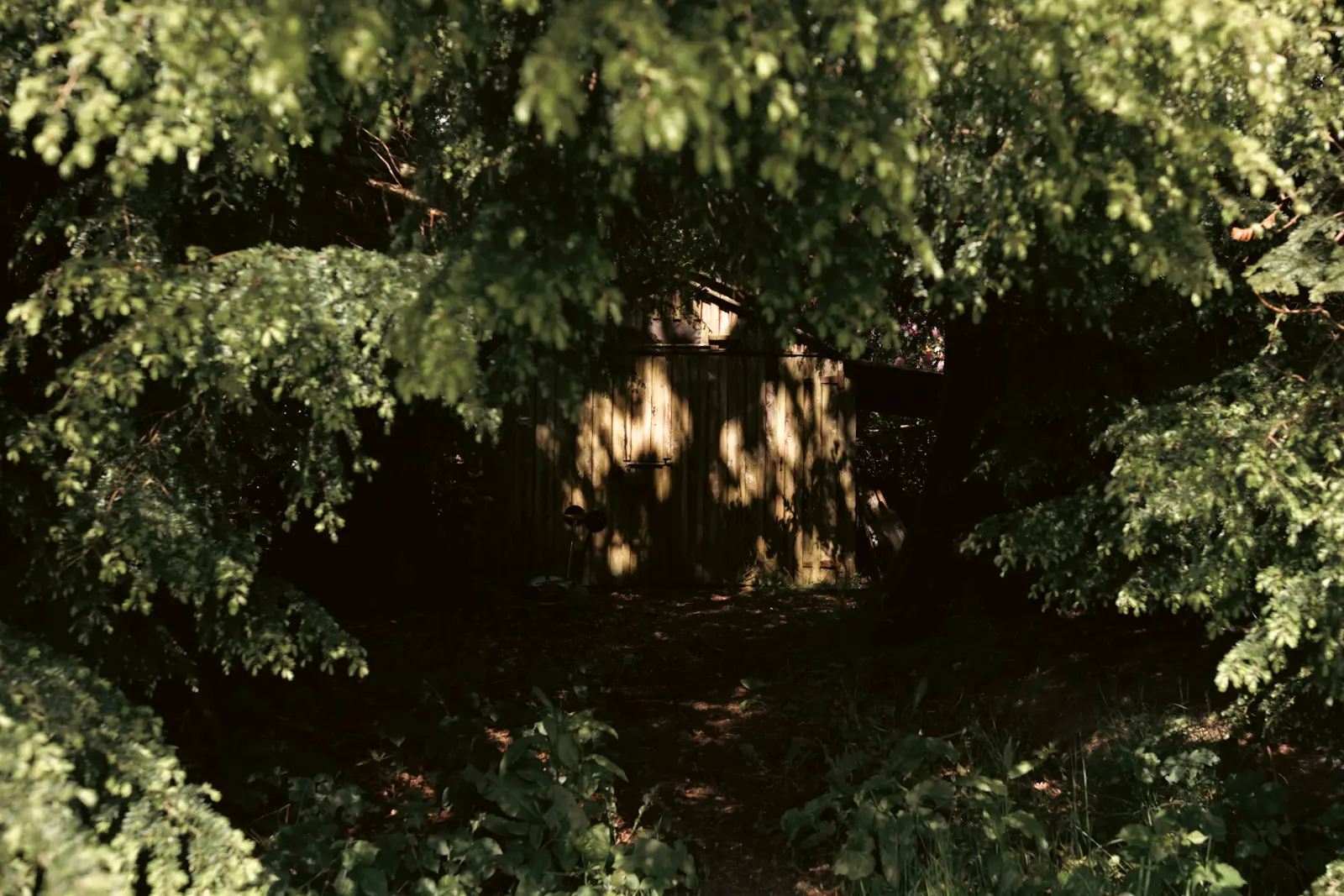
Sometimes the destination is little more than an excuse to get outside.
That was certainly the case today.
A fellow photographer had kindly shared the location of a nearby beaver colony, explaining how the animals had transformed the landscape beyond recognition. The chances of actually seeing a beaver in the middle of the morning were slim, but that wasn’t really the point. I wanted to show my mum the location, stretch my legs and spend a few hours exploring somewhere new with a camera.
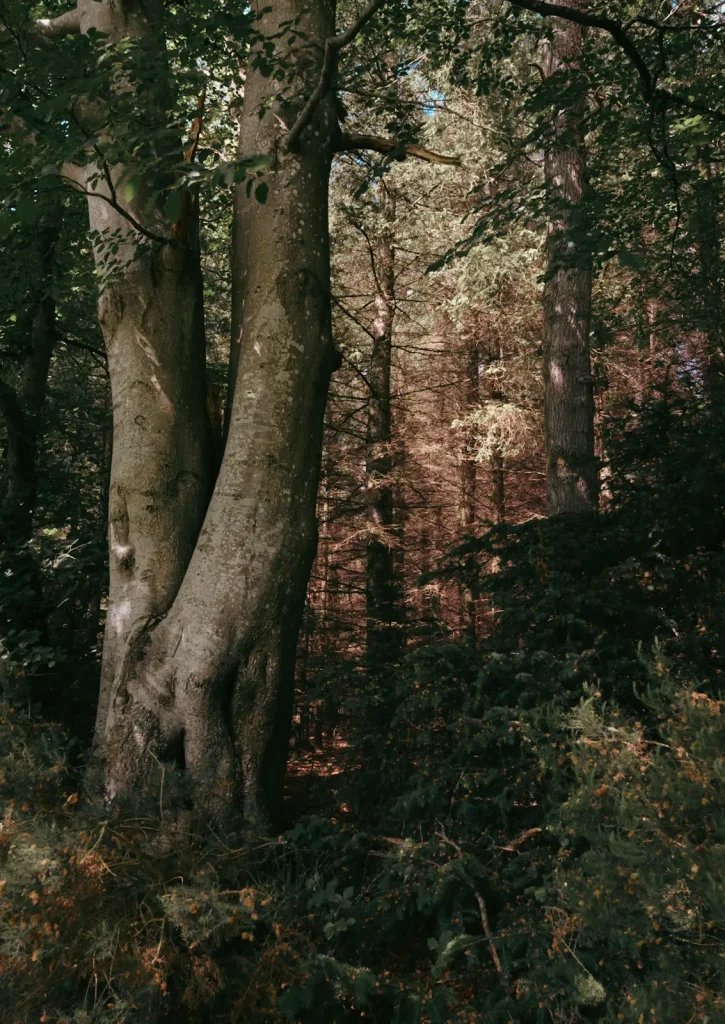
The weather couldn’t have been more different from my recent walks through Perthshire. Low cloud hung over the landscape, hiding even modest hills from view. A steady drizzle fell throughout the morning, occasionally becoming heavier before easing again. Rather than being unpleasant, it felt refreshing. After several warm days, the cooler temperatures made walking far more comfortable.
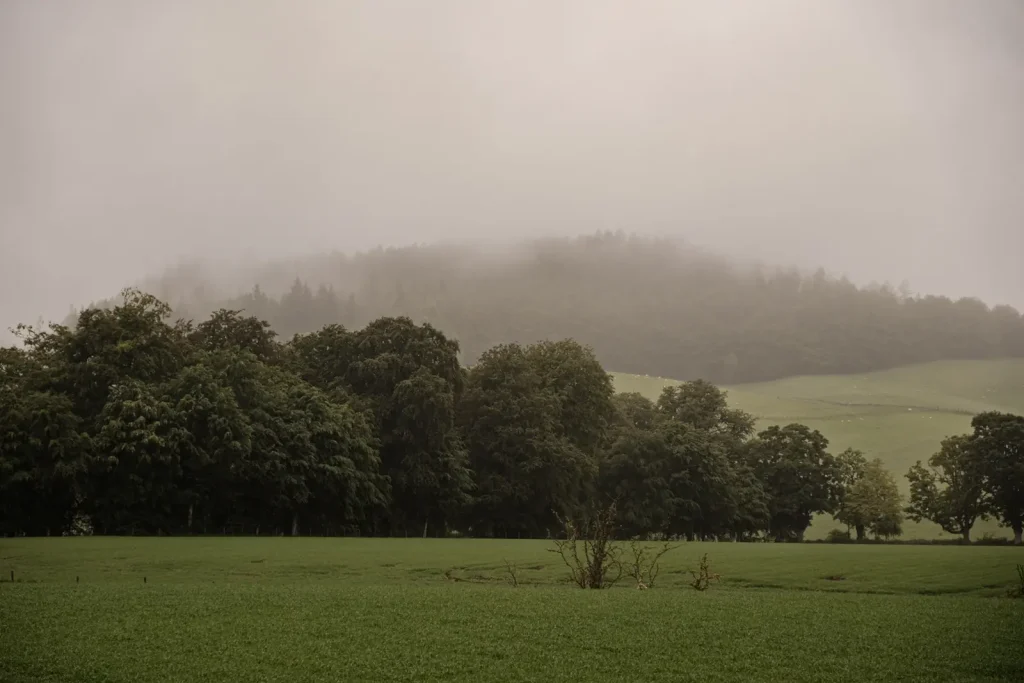
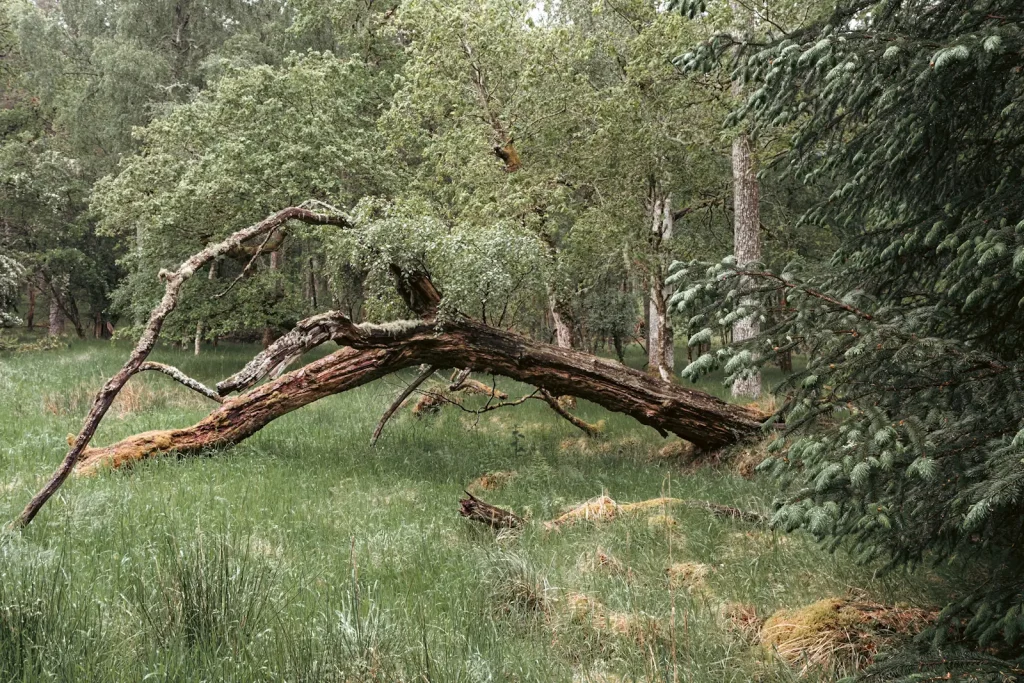
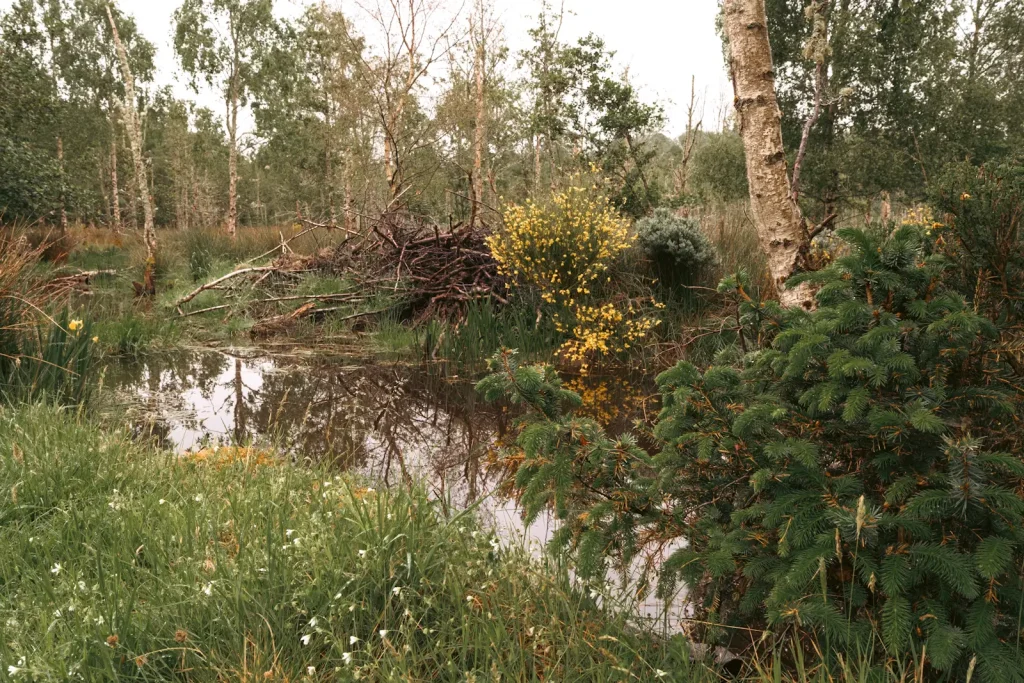
We began across rolling farmland before skirting the edge of woodland and eventually following a narrow path deeper into the forest. As we moved further from the open fields, signs of the beavers gradually started to reveal themselves.
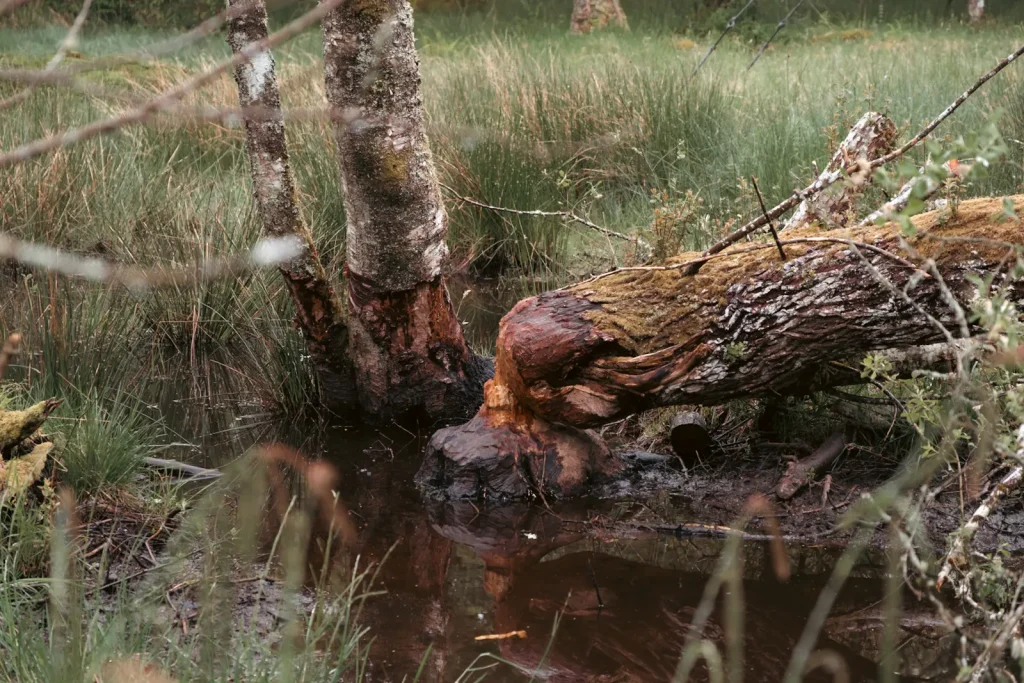
Trees had been felled. Watercourses altered. Areas that once looked entirely ordinary had been reshaped through years of quiet activity.
It was fascinating to see how dramatically wildlife could alter a landscape without the need for machinery, roads or development.
Why I Chose the Fujifilm X-T5
For this walk I carried the Fujifilm X-T5 paired with the Fujifilm XF 16-55mm f/2.8 R LM WR II. I also had the Fuji 18mm 1.4WR in my bag.
The reasoning was simple.
Unlike some outings where I head out with a very specific subject in mind, today felt open-ended. I wanted the flexibility to photograph woodland scenes, wider landscape views and perhaps even have enough reach should a beaver somehow decide to appear in daylight.
The updated 16-55mm f/2.8 II continues to impress me. Compared to the original version, it’s noticeably smaller, lighter and easier to carry throughout the day. Combined with the X-T5, it creates a kit that feels remarkably manageable considering the image quality it delivers.
The weather sealing was also reassuring. Rain fell for much of the walk, but I never once felt concerned about the camera. The setup spent most of the day attached to my Peak Design Capture Clip where it remained instantly accessible regardless of the conditions.
The Joy of Returning to Fujifilm
One thing I noticed almost immediately was how naturally I slipped back into Fujifilm’s way of doing things.
I’ve spent a lot of time recently shooting Nikon cameras, but the transition back to Fuji felt effortless.
The physical control dials remain one of my favourite aspects of the system. There’s something satisfying about adjusting shutter speed, aperture and exposure compensation directly rather than through menus or command wheels. It slows me down slightly and makes the process feel more deliberate.
Although I normally use custom film recipes, today I chose to shoot using Classic Chrome as a starting point while retaining the flexibility to edit later. As I continue building a growing library of Perthshire woodland images, I want consistency in the final edits while still benefiting from Fuji’s excellent colour rendering.
Classic Chrome once again delivered exactly what I expected.
Muted tones, restrained contrast and colours that feel natural without becoming dull.
Even before editing, the files looked excellent.
A Camera That Gets Out of the Way
What struck me most wasn’t image quality, autofocus performance or specifications.
It was how enjoyable the camera remains to use, even after owning it for over two years now.
That’s something I think often gets overlooked when discussing cameras.
The X-T5 isn’t exciting because of any one specification. Instead, it simply gets out of the way and allows me to focus on photography.
The camera felt light throughout the walk despite carrying a professional zoom lens. The controls became second nature within minutes. The viewfinder remained bright and easy to use despite the gloomy conditions.
Most importantly, I never found myself thinking about the camera.
I simply enjoyed being there.
Listening to the rain.
Watching the woodland change as the path wound deeper into the trees.
Observing the evidence of wildlife hidden throughout the landscape.
The X-T5 quietly did its job and allowed me to focus on everything else.
Building a Library of Perthshire
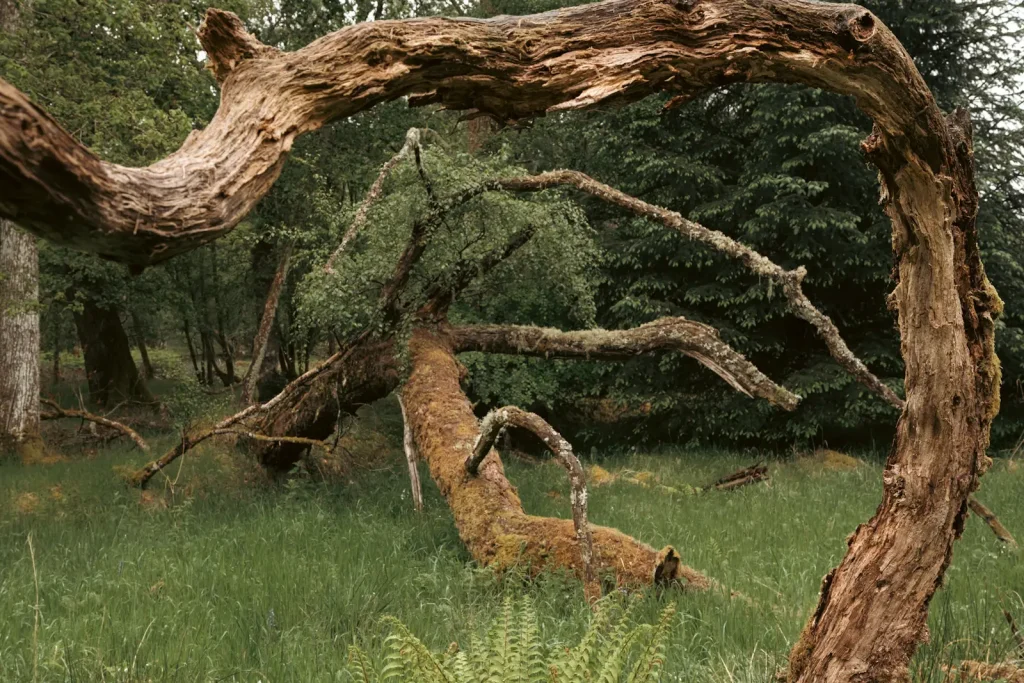
Although the beavers were the original reason for visiting, the photographs I ended up making were mostly woodland images.
That feels fitting.
The more time I spend in Perthshire, the more drawn I become to its woods.
The Highlands will always provide the grand vistas that Scotland is famous for, but increasingly I find myself fascinated by the smaller landscapes much closer to home.
The texture of tree bark.
The way light filters through woodland canopies.
The relationship between weather, season and atmosphere.
These quieter scenes are becoming just as important to me as dramatic mountain views.
Today’s walk added a handful of new images to that growing collection.
Final Thoughts
The Fujifilm X-T5 continues to be one of my favourite cameras for outings where the subject isn’t entirely defined.
It offers excellent image quality, dependable weather sealing, intuitive controls and a level of portability that encourages me to take it almost anywhere.
Combined with the XF 16-55mm f/2.8 II, it proved to be an ideal companion for a damp morning spent exploring woodland and following the subtle signs of beavers hidden throughout the landscape.
The beavers themselves never appeared.
But that hardly mattered.
The walk was enjoyable, the woodland beautiful and I came home with a few more photographs that help tell the story of a landscape I’m slowly getting to know better.
Read more from the Scotland field notes series
If you enjoyed this piece, you may also like these related field notes from Scotland:
Lovely little ode to enjoying simplicity in photography
Hi Steve,
Thanks very much for your kind words. The older I get, the more I value simplicity.
All the best
David