

I’ve heard it said on multiple occasions that the Fujifilm 16-55mm f/2.8 II is like having a bag full of primes. That sounded great to me as I’ve primarily shot primes on Fuji over the last few years and while my 18-55mm was a bargain when it came with my X-T5, I can’t help but want the flexibility of the zoom with the image quality of the primes. But does the mark II 16-55mm f/2.8 lens really deliver that?
Since I published this review, I’ve continued taking the lens out and shooting it more on trips like this one. My thoughts remain largely the same as in the review.
This article contains affiliate links. If you choose to buy through them, I may earn a small commission at no extra cost to you. This helps support the site and allows me to keep creating in-depth, experience-based content like this.
TL;DR
The Fujifilm 16–55mm f/2.8 II is an excellent standard zoom that gets impressively close to Fuji’s primes in sharpness, autofocus and overall image quality, while staying much smaller and lighter than you might expect for a professional f/2.8 lens.
It’s especially convincing if you want one lens for travel, landscapes, family photography or general use without constantly swapping primes in changing conditions.
However, as good as it is, it still doesn’t fully replace Fuji’s best f/1.4 and f/1.2 primes, which retain the edge in rendering, subject separation and that extra sense of 3 dimensionality.
Fujifilm 16–55mm f/2.8 II
A compact, high-performance standard zoom that gets close to Fuji’s primes while offering far greater flexibility.
Check Latest PriceWhen people claim this lens is like carrying a bag full of primes, they’re not just talking about focal lengths.
Any zoom in this range covers 16mm, 23mm, 33mm and into the 50mm range — that’s nothing new.
What they’re really getting at is the optical performance. The idea that the Fujifilm 16–55mm f/2.8 II doesn’t just cover those focal lengths, but actually delivers something close to what Fuji’s best primes can produce.
Further Reading
As part of my testing of the Fujifilm XF 16-55mm f/2.8 II, I compared it against Fujifilm’s premium prime lenses that cover the same focal lengths to see how close the zoom really comes to matching them.
- Fujifilm XF 16-55mm f/2.8 II vs XF 18mm f/1.4 WR: Do You Really Need the Prime?
- Fujifilm XF 16-55mm f/2.8 II vs XF 23mm f/1.4 WR: Do You Really Need the Prime?
- Fujifilm XF 33mm f/1.4 WR vs XF 16-55mm f/2.8 II: Do You Really Need the Prime?
- Fujifilm XF 56mm f/1.2 WR vs XF 16-55mm f/2.8 II: Do You Really Need the Prime?
Since moving to Scotland, I’ve started to once again appreciate good zooms more than I have in recent years. The flexibility matters here. The weather changes quickly, and swapping lenses out in the field isn’t always practical.
But I also own most of the premium primes that sit within this range — and they’re exceptional.
So for this lens to live up to that “bag of primes” claim, it doesn’t just need to be good.
It needs to keep up with some of the best lenses Fujifilm makes.
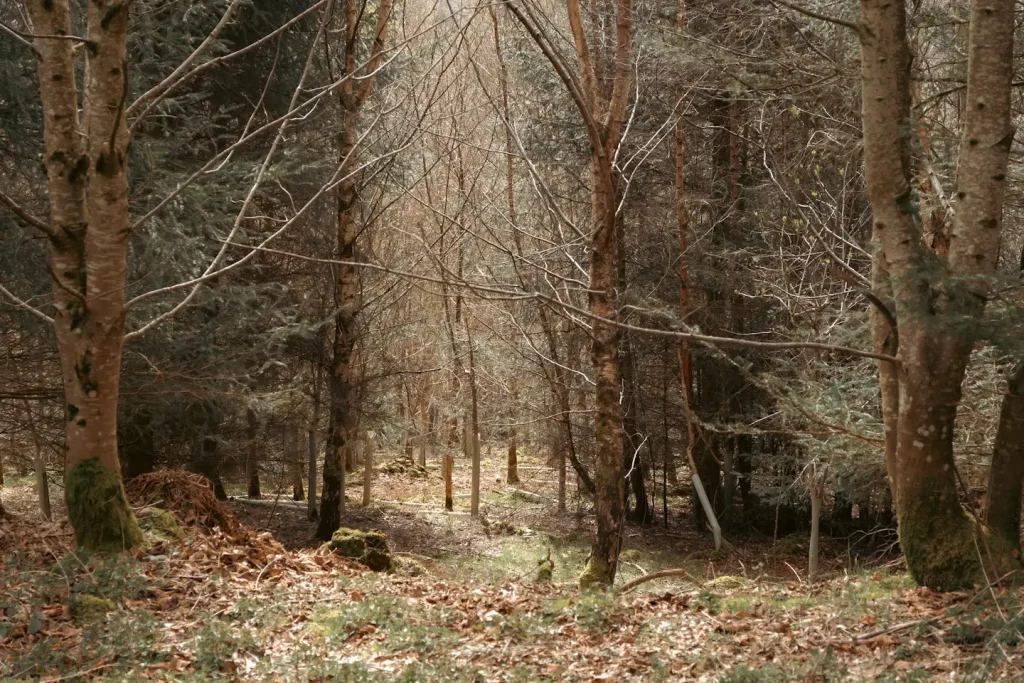
Before I bought the 16–55mm f/2.8 II, I was using the 18–55mm kit lens whenever I needed the flexibility of a zoom here in Scotland.
That lens is widely regarded as one of the better “kit” lenses, but the 16–55mm f/2.8 II sits in a completely different category. It’s Fujifilm’s professional standard zoom, so it should feel like a step up.
Fujifilm 16–55mm f/2.8 II Specifications
| Mount | Fujifilm X |
| Focal Length | 16–55mm (24–84mm equivalent) |
| Maximum Aperture | f/2.8 (constant) |
| Minimum Aperture | f/22 |
| Lens Construction | 16 elements in 11 groups |
| Aperture Blades | 11 (rounded) |
| Minimum Focus Distance | 0.3m |
| Maximum Magnification | 0.21× |
| Autofocus | Linear Motor |
| Image Stabilisation | No |
| Weather Sealing | Yes (dust & moisture resistant) |
| Filter Size | 72mm |
| Dimensions | 78 × 95mm |
| Weight | 410g |
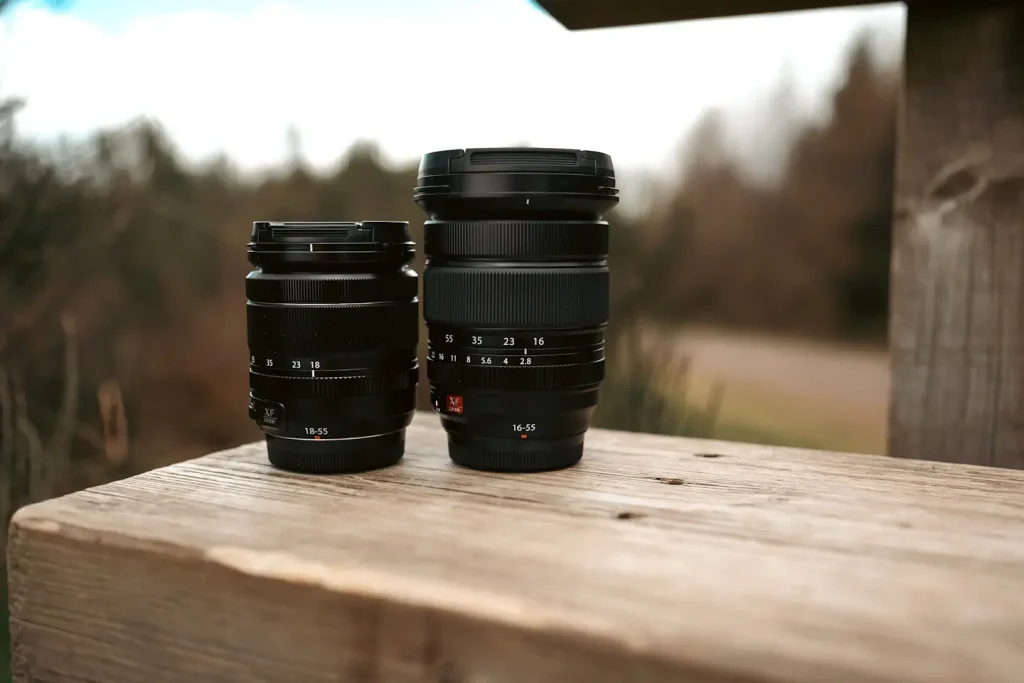
When it arrived, I was particularly interested to see whether the claimed reduction in size and weight over the original version was actually noticeable in real use.
It is.
While it’s clearly larger than the 18–55mm, it still feels relatively compact and well balanced in the hand. In fact, it’s noticeably smaller than something like the Nikon Z 24-120mm f/4 S that I use on my Nikon Z bodies.
I’ve been guilty in the past of dismissing f/2.8 zooms on Fuji. They’ve often felt too large to justify on an APS-C system — lenses like the 50–140mm f/2.8 and the original 16–55mm being good examples.
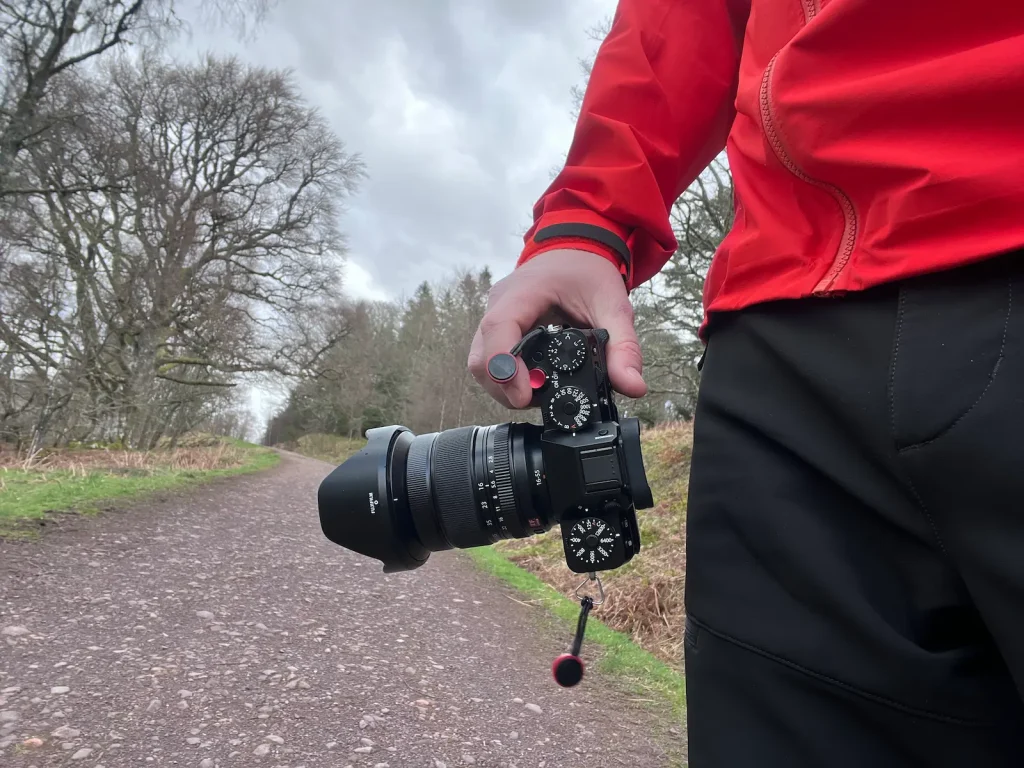
But the mark II version changes that in a meaningful way. Mounted on my Fujifilm X-T5 (with the L-grip attached), it feels well balanced and doesn’t come across as heavy in any meaningful way — certainly no more so than the premium f/1.2–f/1.4 primes I’m used to shooting.
It still fits comfortably in my Peak Design Everyday Sling 10L, with plenty of space left for other lenses and accessories, which says a lot about how usable it is as part of a real-world kit.
Build Quality
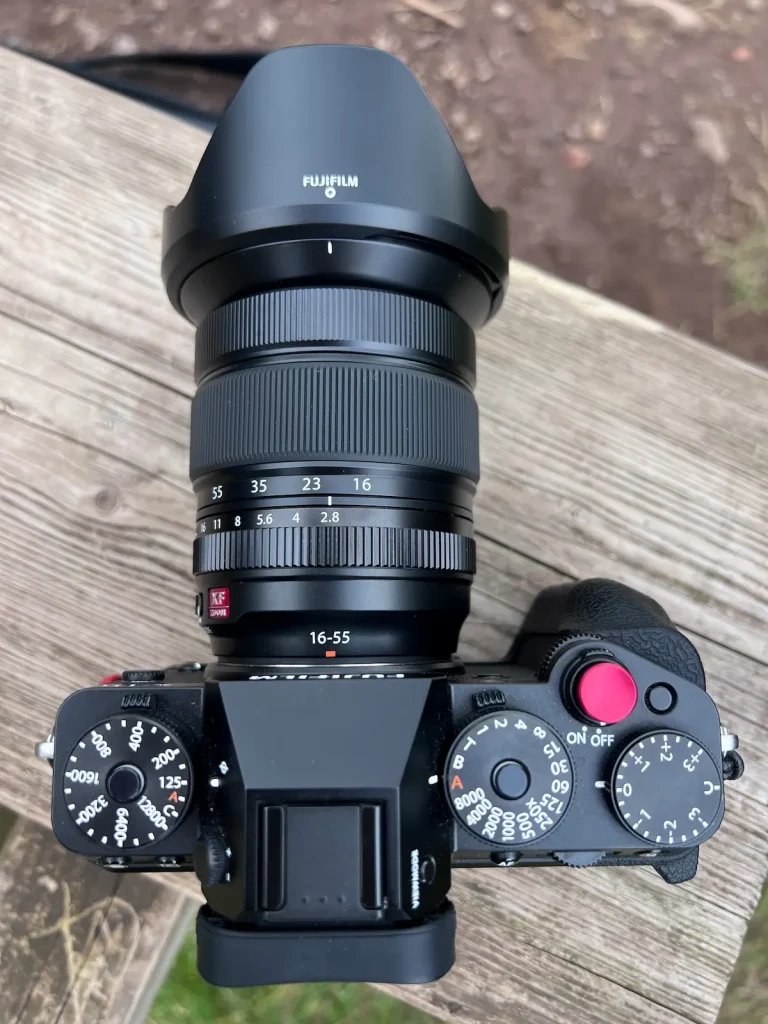
In terms of build quality, the 16–55mm f/2.8 II feels solid, despite the reduction in weight compared to the original version.
At just 410g, and paired with my Fujifilm X-T5, the whole setup comes in at under 1kg — which is impressive for a pro-level f/2.8 standard zoom.
In use, it doesn’t feel a million miles away from shooting with my primes like the Fujifilm XF 23mm f/1.4 R LM WR and Fujifilm XF 33mm f/1.4 R LM WR. That’s not something I’d have said about the previous generation.
The lens now features a de-clickable aperture ring, which will appeal to video shooters. However, for stills, I find the clicks a little too subtle. I’d prefer a slightly more defined step between apertures so you can feel the change without needing to double-check.
It’s not a major issue, but it’s worth noting.
The lens is fully weather sealed, with a gasket at the mount, and it also features a fluorine coating on the front element to help repel water. Given what I’ve already put my non-weather-sealed 18–55mm through, I’d have no hesitation using this out in the Scottish Highlands in poor conditions.
Overall, the build quality feels reassuringly solid — and slightly surprising given how light it is. It balances really well on the Fujifilm X-T5, and crucially, it never feels like you’re carrying a typical f/2.8 pro zoom — especially when you compare it to full-frame equivalents.
Autofocus

The 16–55mm f/2.8 II features Fujifilm’s latest linear motor, and in use it’s fast and accurate.
It tracks people, pets and faster-moving subjects without issue, and there’s no hesitancy or focus hunting — something that was more common with some of Fuji’s older lens designs.
Compared to the 18–55mm, the focus performance feels much more assured, particularly when shooting people.
This is going to be a short section, simply because I haven’t had a single issue with autofocus using this lens on my Fujifilm X-T5.
It’s accurate, snappy, and confidence-inspiring to the point that I’ve honestly not thought about it while shooting — which is exactly what you want.
Image Quality
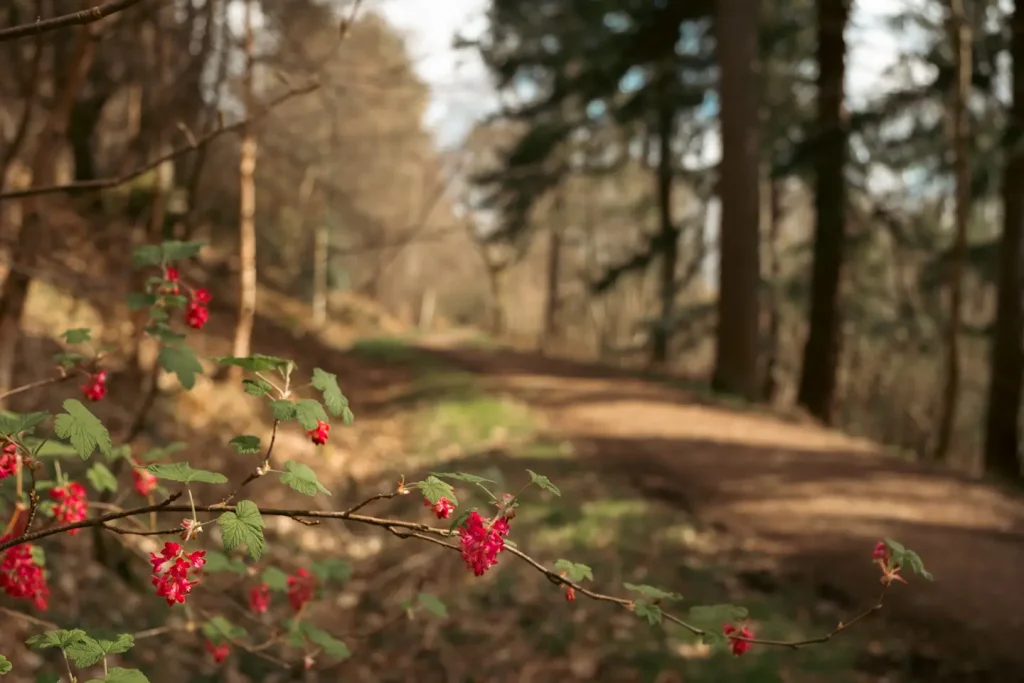
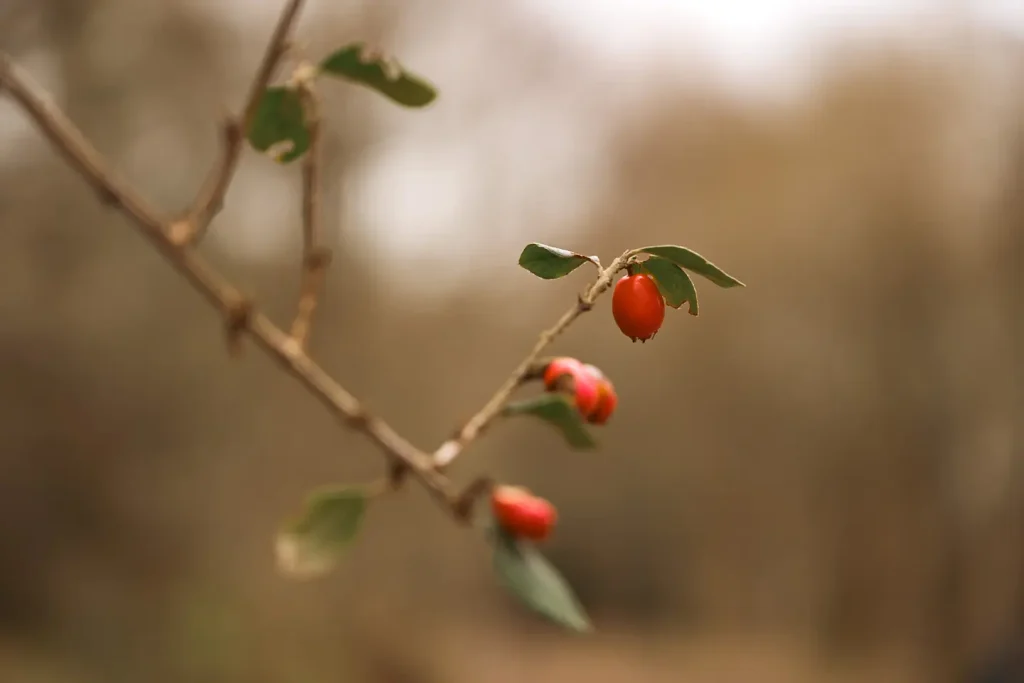
This is where the Fuji 16–55mm f/2.8 II either earns its keep or it doesn’t. As the pro zoom in Fuji’s range, and with claims of it equalling a bag of primes, I rightfully expected excellent image quality.
The 16–55mm f/2.8 II doesn’t disappoint, as it’s sharp throughout the zoom range and across the frame from wide open until diffraction kicks in beyond f/8. I’ve shot into the sun and the lens resists flare well, and the bokeh it produces at f/2.8 is also very pleasing and smooth.
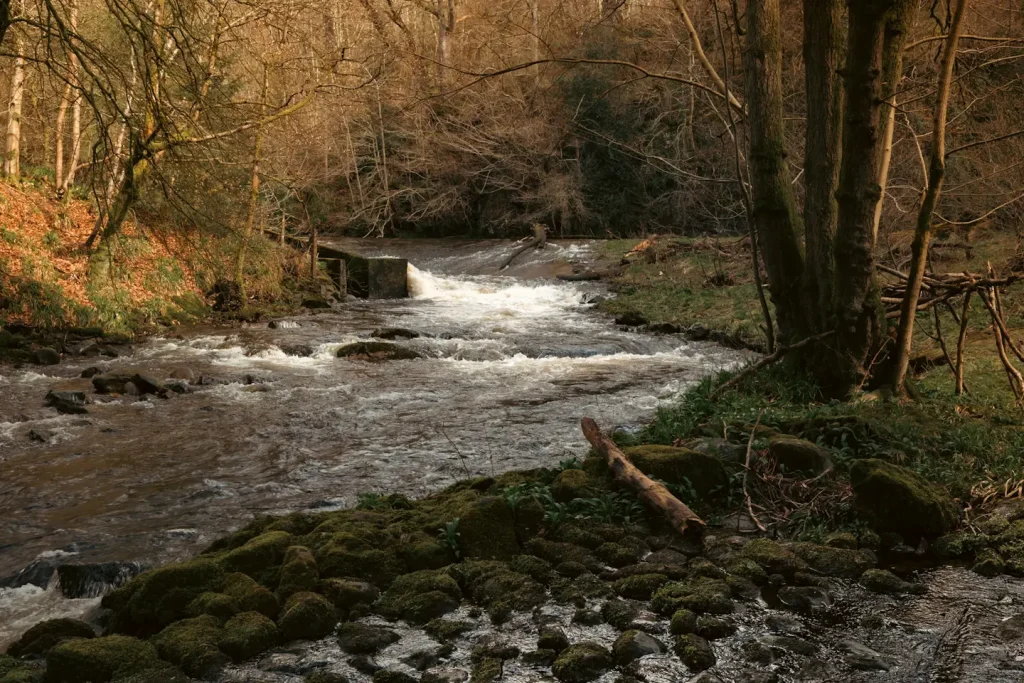
The lens in my opinion performs best at the wider end of the focal range. While it is sharp throughout the zoom range, it excels between 16–35mm the most.
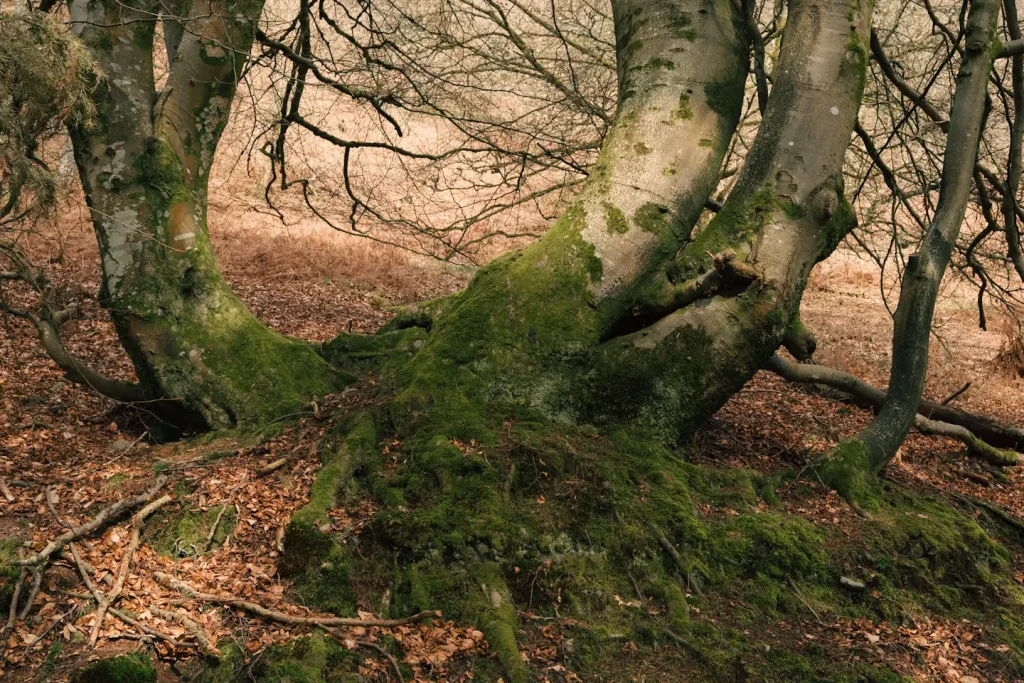
Arguably, at longer focal lengths, corner sharpness isn’t quite as strong, although quite often the subjects I shoot at those focal lengths are people, and corner sharpness isn’t as important there.
I’ve noticed an example or two of chromatic aberration showing up when shooting in woodland with backlit trees and bright sky behind. One such photo was unfixable in post, with quite unsightly aberrations in multiple tree branches. I’ll be honest, I was quite surprised by this, but it hasn’t shown up in many shots and so it isn’t a major concern.
But is it a bag full of primes? I guess that depends on the primes.
16–55mm f/2.8 II vs 23mm f/1.4 WR (Real-World Comparison)
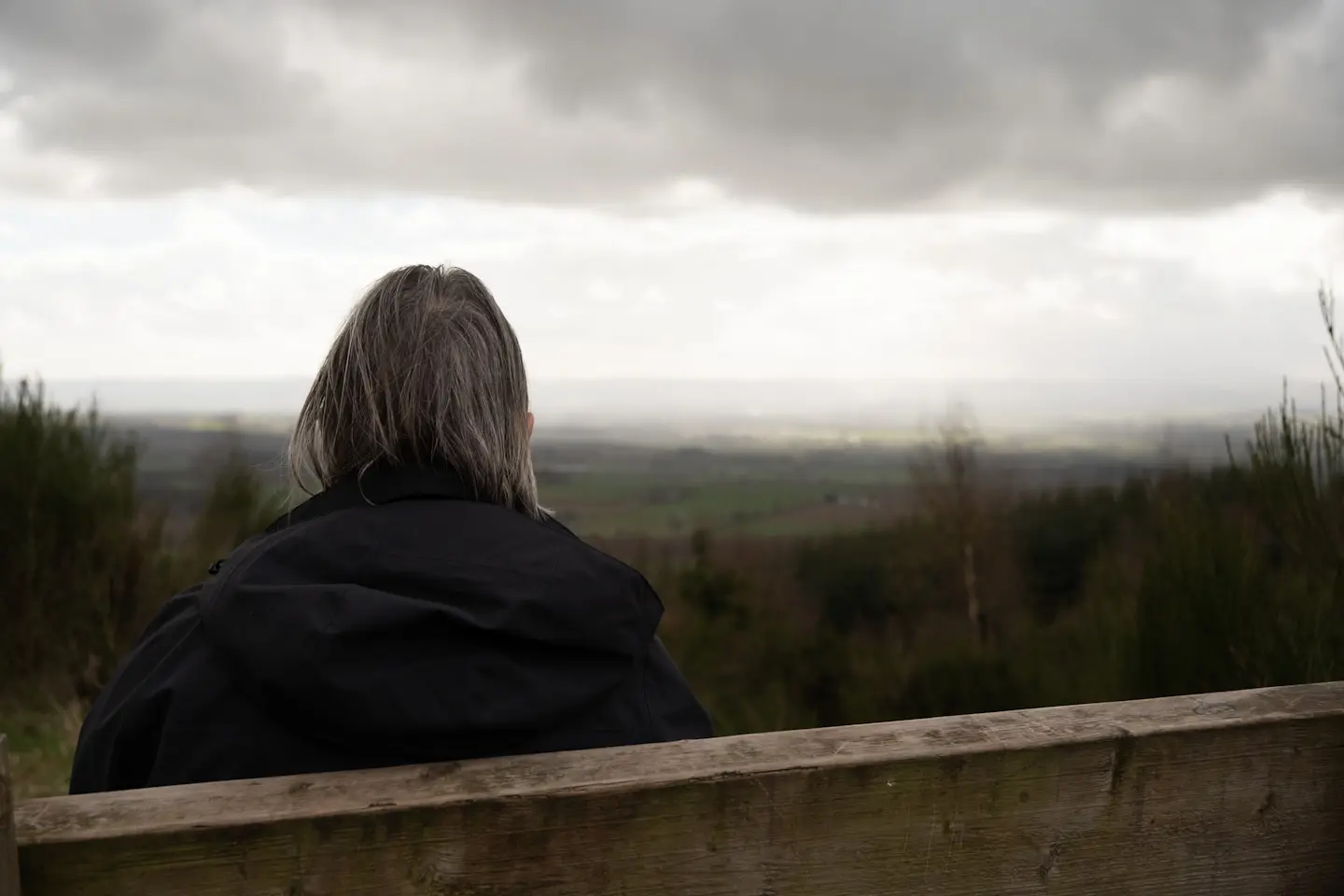
16–55mm f/2.8 II
23mm • f/2.8
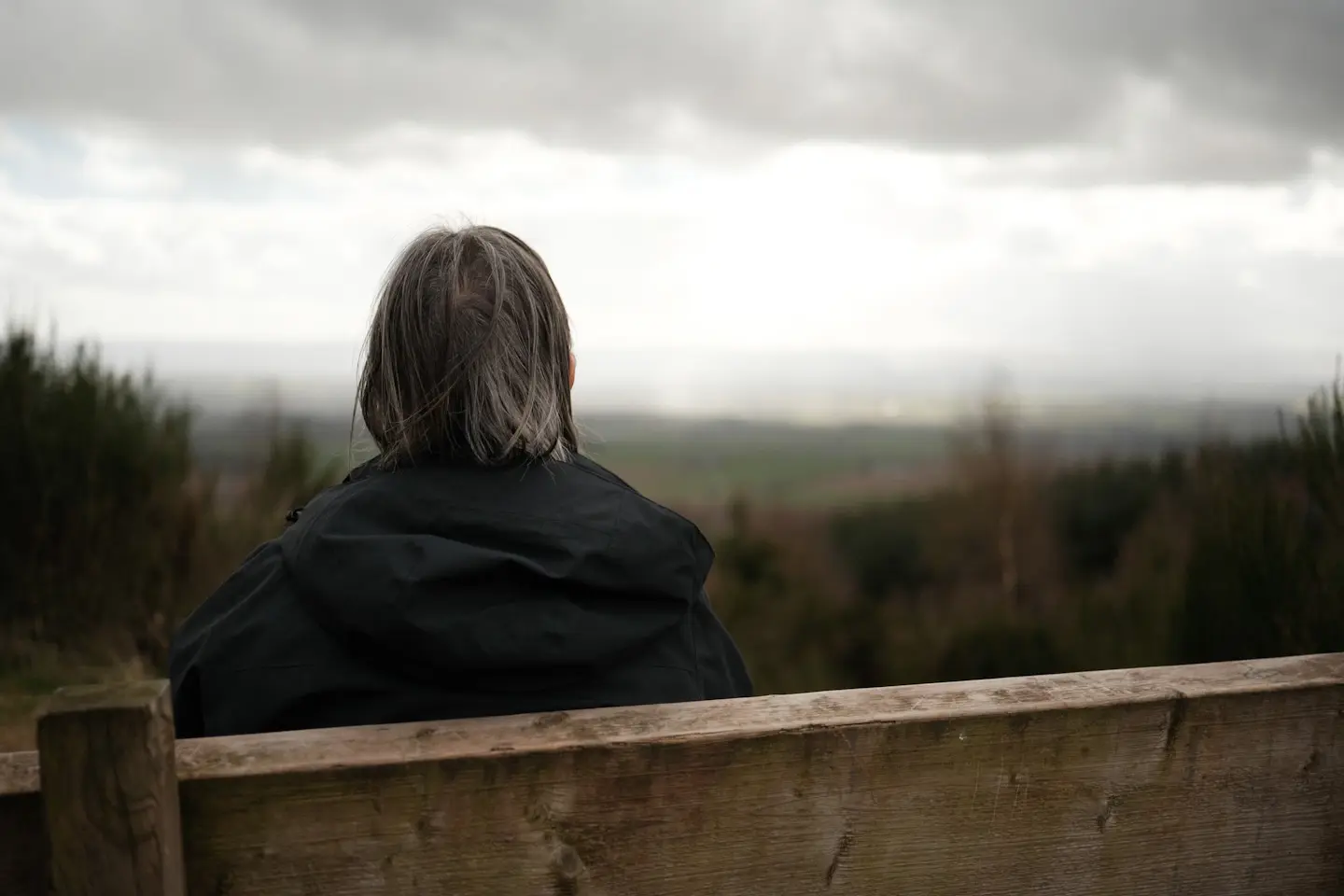
23mm f/1.4 WR
f/1.4
Both images were shot at 23mm, but with a two-stop difference in aperture. While sharpness is very similar, the 23mm f/1.4 WR shows noticeably stronger subject separation and a more pronounced sense of depth, which is where the primes still have the edge.
For the range it covers, and the fact that it really is light and compact, I would take it any day of the week over a bag full of Fuji’s f/2 primes if I felt I was going to end up using multiple focal lengths throughout a day’s shooting. The simple convenience of having this focal range with this level of performance, and not having to swap lenses, is very attractive.
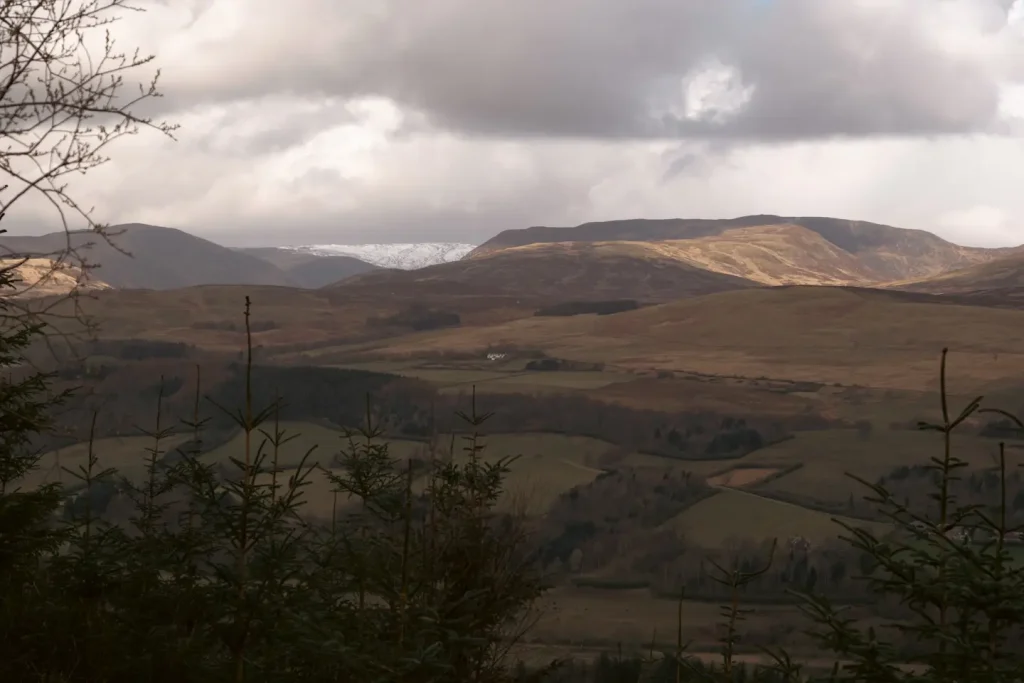
However, as good as the 16–55mm f/2.8 II is, it still doesn’t replace Fuji’s premier primes like the 1.4 and 1.2 versions of the 18mm, 23mm, 33mm and 56mm lenses. Yes, it’s getting pretty close in terms of sharpness, but the rendering and ability to isolate subjects even more with those larger aperture lenses gives images a look and 3 dimensionality that the 16–55mm f/2.8 II still can’t quite match.
Compared to the 18–55mm kit lens I’ve had for years, it’s a step up in terms of handling, AF performance and particularly rendering and sharpness. If you want to use the longer end of the zoom range for portraits and isolating subjects, the 16–55mm f/2.8 II is in a different league.
Compared to the 16–80mm f/4, it is sharper and, of course, brighter, but if you’re shooting landscapes and stopping down, the difference — while noticeable on the 40MP sensor found in the Fujifilm X-T5 — may not be worth the additional price to everyone.
Who This Lens Is For
The Fujifilm 16–55mm f/2.8 II makes sense for photographers who want one high-quality lens that can cover a wide range of situations without constantly swapping lenses.
It’s especially appealing for travel, landscape and general photography, and for prime shooters who want more flexibility without giving up too much image quality.
If you care most about subject isolation, rendering and that extra sense of 3 dimensionality, Fuji’s best primes still have the edge.
Fujifilm 16–55mm f/2.8 II
A compact, high-performance standard zoom that gets close to Fuji’s primes while offering far greater flexibility.
Check Latest PriceVerdict
So, is it a bag of primes… or just hype?
Normally, I’d say that f/2.8 standard zooms are mainly for professionals — usually wedding and portrait photographers who will not only take advantage of the optical performance, but also the better low light performance and subject isolating qualities of a larger aperture zoom. This normally comes with the compromise of size, weight and price.
However, the Fuji 16–55mm f/2.8 II removes the size and weight compromise to such a degree that it becomes a serious option for a much wider range of photographers than “holy trinity” zooms usually are and makes it one of the best lenses for Fujifilm cameras.
This lens is a really great choice for travel photographers, landscape shooters, and anyone who wants one high quality lens to do everything from sharp landscapes to people shots with excellent bokeh and subject isolation — as well as the usual professionals wanting a flexible option for weddings.
What’s most impressive about this lens? The fact that Fuji has managed to cram this level of performance into such a small and light lens.
If zooms are your thing, then this is the standard Fuji zoom to get — if you’re willing to pay the price of admission.
Me, I can see myself continuing to shoot the 16–55mm f/2.8 II a lot here in Scotland because it gives me the kind of performance and convenience that suits the environment here, at a size and weight I’m very comfortable carrying.
It won’t replace my top-tier primes because they still create a different look, but I can see myself using them a little less thanks to the zoom.
Fujifilm 16–55mm f/2.8 II FAQ
Is the Fujifilm 16–55mm f/2.8 II worth it?
Yes, if you want one high-quality standard zoom for travel, landscapes, family photography, weddings or general use. It is expensive, but it delivers excellent sharpness, fast autofocus, weather sealing and a much lighter design than the original 16–55mm f/2.8.
Can the Fujifilm 16–55mm f/2.8 II replace prime lenses?
It can replace a bag of smaller f/2 primes for many photographers, especially if convenience matters. However, it does not fully replace Fuji’s best f/1.4 and f/1.2 primes, which still offer better subject separation, rendering and low-light flexibility.
Is the Fujifilm 16–55mm f/2.8 II good for travel photography?
Yes. The 16–55mm range covers wide landscapes, environmental portraits, street scenes, family photos and general travel details. The mark II version is also light enough to make much more sense as a travel lens than the original version.
Is the Fujifilm 16–55mm f/2.8 II good on the X-T5?
Yes. It balances very well on the Fujifilm X-T5, especially with a grip attached, and it is sharp enough to make good use of the X-T5’s 40MP sensor. It feels like a natural pairing if you want a high-quality all-purpose zoom.
How does the Fujifilm 16–55mm f/2.8 II compare to the 18–55mm kit lens?
The 16–55mm f/2.8 II is a clear step up. It has better autofocus, stronger build quality, weather sealing, a constant f/2.8 aperture and noticeably better image quality, especially if you shoot portraits or want more subject isolation at the long end.
Is the Fujifilm 16–55mm f/2.8 II better than the 16–80mm f/4?
Optically, the 16–55mm f/2.8 II is the stronger lens. It is sharper, brighter and better suited to portraits, events and lower light. The 16–80mm f/4 still makes sense if you value extra reach, lower cost and mostly shoot stopped-down landscapes or travel photos.
Does the Fujifilm 16–55mm f/2.8 II have image stabilisation?
No, the Fujifilm 16–55mm f/2.8 II does not have optical image stabilisation. On bodies like the X-T5, this is less of an issue because the camera has in-body image stabilisation, but it is still worth knowing if you use an older Fuji body without IBIS.
Who should buy the Fujifilm 16–55mm f/2.8 II?
You should buy it if you want one premium Fuji zoom that can handle landscapes, travel, people, family photography and professional work without constantly changing lenses. If you mainly care about the look of fast primes, Fuji’s f/1.4 and f/1.2 lenses still have the edge.
Hi David,
I have a Fuji XT5 and I’d love your XT5 set up guide but after a couple of attempts I’ve still not received it. Please could you send me it?
Thank you
Josie
Hi Josie,
Thanks for your comment. I’ll email it over to you today.
All the best
David