

Added my current Nikon Z8 field kit, updated accessory recommendations based on long-term use, and refined buying advice throughout the article.
The Nikon Z8 is proving to be a dream camera for me — the autofocus is incredible, the handling is near perfect, and the image quality is nothing short of stunning as I found out when comparing the Z6III against the Z8. It’s also a camera that doesn’t need accessorising in the same way my X100VI does. Straight out of the box, the Z8 feels like a complete, professional tool. For a more in depth look, I’ve now published a comprehensive Nikon Z8 review.
For a broader look at how this camera compares within the system, see my guide to the best Nikon Z cameras for photography. For specific lens recommendations for the Nikon Z8 see my lens guide.
That said, there are a few key accessories that have genuinely earned their place in my bag. Nothing gimmicky — just the practical additions that make the Z8 even more enjoyable to shoot with and help me get the most out of it in everyday use.
If you’re building out a Nikon Z kit, I’ve put together a full, experience-led guide to the best Nikon Z lenses based on real-world use and if you want to use your Z8 for wildlife photography then here is my settings guide.
🎁 Don’t want another pair of novelty socks this Christmas? Share my Best Gifts for Photographers guide with friends and family — it’s full of gear photographers actually love.
Once I move back to Scotland in 2026, I’ll update this guide with landscape- and wildlife-specific accessories. But for now, these are the accessories I’ve found genuinely useful for general photography with the Z8. I’ll keep this guide short and sweet so that you can get the information as quickly as possible.
This article contains affiliate links. If you buy something through these links, I may earn a small commission at no extra cost to you. This helps support the site and allows me to keep creating free content. Thank you for your support.
TL;DR – Best Nikon Z8 Accessories
- Expert Shield Screen Protector for Nikon Z8 – protects the outward-facing Z8 screen without affecting clarity.
- Integral CFexpress Type B Cinema Card – fast, reliable, and ideal for bursts and high-resolution video.
- SanDisk Extreme Pro SDXC UHS-II – my go-to SD cards for nearly two decades with zero failures.
- Nikon EN-EL15c Battery (Original) – stick with originals for reliability and better cold-weather performance.
- Peak Design Slide Lite Strap – far more comfortable than the OEM strap and quick to remove.
- Peak Design Capture Clip – perfect for long walks and hikes; keeps the Z8 secure and instantly accessible.
Short version: buy a screen protector, fast CFexpress and SD cards, one or two original batteries, and a comfortable strap. Add the Capture Clip if you walk a lot. That’s enough to get the Z8 ready for almost anything.
Protection, Power & Storage
Screen Protection

Let’s get the basics out of the way first. I love the Nikon Z8 screen design, but if, like me, you’re planning to keep the Nikon Z8 long-term, then adding a bit of basic protection to the screen is a good idea as it’s always outward facing. I use Expert Shield screen protectors on my cameras. I’ve been doing so since around 2010, when they sent me one in the Outer Hebrides for my Canon cameras. That extra bit of protection stood up to everything the Outer Hebrides could throw at it — storms, rain, freezing conditions, as well as being slung in and out of my camera bag in sandy environments constantly. That convinced me the protection was worth it, and it didn’t affect the performance of the screen and lasted as long as I had the camera. I still use them now, where my cameras have to contend with Philippine heat, humidity, and downpours. Here is the one I use:
Expert Shield Screen Protector for Nikon Z8
This is the screen protector I personally use and trust. It lasts for years, doesn’t affect screen clarity, and is easy to apply.
Check pricing on AmazonMemory Cards

The Nikon Z8 benefits from dual card slots, with one of them being the much faster and more rugged CFexpress Type B slot. These cards make a real difference when shooting bursts and wanting the buffer to clear quickly.
Although prices have come down recently, when I first bought mine the sticker shock compared to SD cards had me searching for better-value alternatives than the usual brands I use for SD. I ended up settling on Integral CFexpress Type B cards, which were much, much cheaper yet still offered solid speeds and reliability.
I’ve been using the same cards in various cameras for around four or five years now (and I mean the exact same cards), and I’ve never had a single issue. The prices have dropped even further recently, so I now recommend the Cinema-grade versions, which are not only incredibly fast for stills photography but can also handle the Nikon Z8’s very high-resolution video modes.
I also keep the slightly slower Integral Pro cards as backups. They’re cheaper again but I rarely use them.
Here is the one I use:
Integral CFexpress Type B Cinema Card
This is the Cinema-grade card I use in the Nikon Z8. Fast, reliable, and capable of handling the Z8’s highest resolution stills and video modes.
Check pricing on AmazonSD Cards (Secondary Slot)
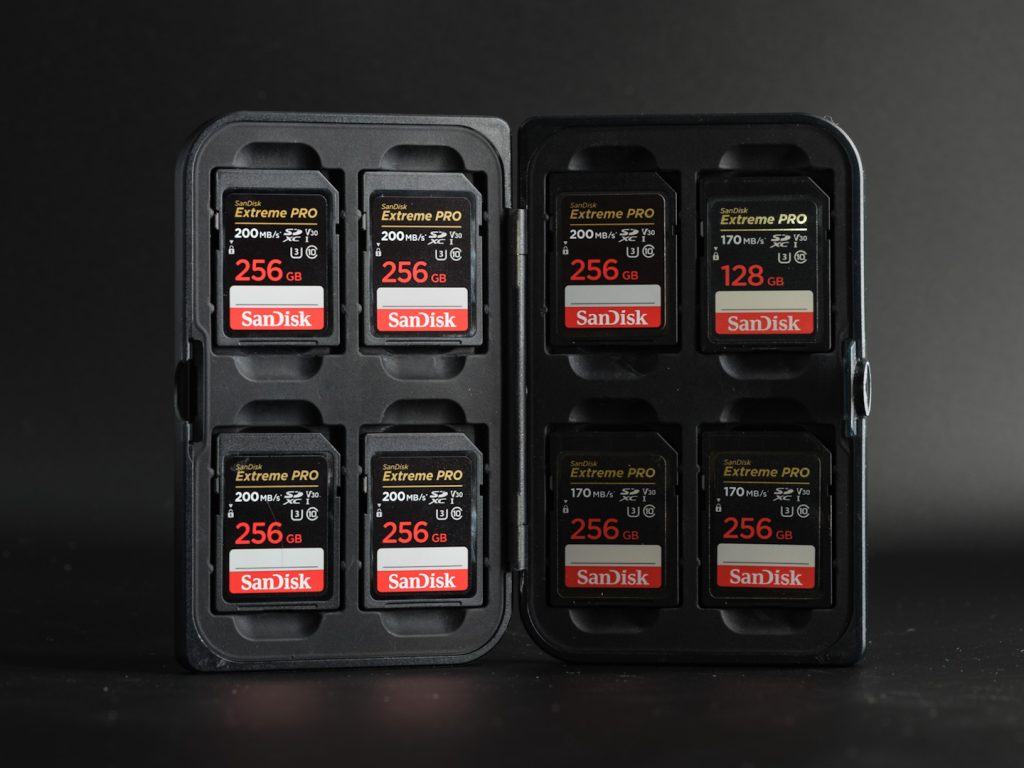
I always use SanDisk Extreme Pro SD cards, because in nearly two decades of shooting I’ve never had a single problem with them — unlike a few other brands I’ve tried over the years. With the Nikon Z8, I use 512GB cards to match my CFexpress Type B capacity and because the Z8’s large resolution produces big files. However, 256GB cards also work perfectly well if you want to save a bit of money while still getting excellent performance.
SanDisk Extreme Pro SDXC UHS-II (512GB / 256GB Options)
I’ve used SanDisk Extreme Pro cards for almost two decades without a single failure. Perfect as the Z8’s secondary card, especially for stills and backup recording.
Check pricing on AmazonBattery Life & Spares
The battery life on the Nikon Z8 is pretty decent, but it’s still a mirrorless camera, which means it drains much faster than DSLRs ever did. Gone are the days of getting three or four days of shooting out of a single charge, so I always carry at least one spare.
I actually have four original Nikon EN‑EL15c batteries, which I rotate between my Z8 and Z6III here in the Philippines. Once I’m back in Scotland, I’ll no doubt buy more, as cold winter weather always reduces battery life.
On many of my cameras I end up going with third-party batteries, but with a top-of-the-range body like the Nikon Z8, I don’t think it makes sense to cheap out. Reliability matters, so I stick with the originals. Make sure to get the C variant which is the latest and allows for USB-C charging whereas some of the older variants of the battery don’t. Here’s the correct original battery:
Nikon EN-EL15c Battery (Original)
I stick with original Nikon batteries for the Z8. They’re reliable, consistent, and offer the best performance in both warm and cold weather.
Check pricing on AmazonComfort and carrying
Peak Design Slide Lite Strap

The Nikon Z8 is a fairly hefty camera by today’s standards. Personally, I find the weight reassuring — the slightly larger body gives fantastic ergonomics, grip, and handling. I often shoot handheld when I’m out walking, and for that I want a strap that’s far more comfortable than the OEM one it comes with.
My main issue with OEM straps is how they attach. When the strap is connected directly to the lugs, it bunches up, gets in the way, blocks buttons, and just feels bulky when shooting. The obvious solution is to remove the strap completely… but then carrying the camera for long periods quickly becomes tiring.
The Peak Design Slide Lite solves all of this with its quick attach/detach anchor system. The anchors stay on the camera, and you simply click the strap on or off in seconds. It’s an ingenious design, and it works brilliantly.
Peak Design offers several strap sizes, but the Slide Lite is ideal for the Z8 with standard lenses. It’s strong enough to take the weight easily, wide enough to spread the load across your shoulder, and versatile enough to use as a neck strap, shoulder strap, or — as I usually do — slung across your back while walking.
It feels well-made, extremely strong, looks good, and is well worth the money. The best part is that by buying a few extra Peak Design Anchors, you can use the same strap across all your cameras without ever needing to swap straps manually again.
Peak Design Slide Lite Strap
My go-to strap for the Nikon Z8. Comfortable, quick to remove, ultra-strong, and far better than the OEM strap. It’s perfect for long walks and everyday shooting.
Check pricing on AmazonYou could easily stop here, to be honest. The accessories above give you all the basics you need. Of course, you’ll want a few cleaning items to keep your Z8 in good condition, but I’m not going to list them here like every other accessories article does, because you can find those easily enough with a quick Amazon search.
For cleaning my gear, I use a rocket blower, some microfibre cloths, and an alcohol-based lens cleaning solution when needed. I’ve also cleaned my own sensors plenty of times — and while it is possible, I really wouldn’t recommend it unless you’re experienced. Fortunately, the Nikon Z8 has a sensor shield, and you should absolutely make sure it’s turned on in the menu (for some reason it’s off by default). It drops down over the sensor when you power off the camera, keeping dust and dirt away. This means you’ll rarely need to clean the sensor yourself — and when you do, trust me, it’s quicker and safer to pay a professional once a year. I broke my old Canon 450D years ago by attacking a dust spot a little too aggressively. Lesson learned.
Peak Design Capture Clip

The next accessory is a fantastic option depending on how you like to carry your camera. For those of us who walk miles and keep the camera ready at all times, a traditional strap isn’t always ideal — the camera bounces around, and after a few miles it gets annoying.
The Peak Design Capture Clip solves this perfectly. It locks onto the strap of your backpack, and a small plate (like a tripod plate) screws into the bottom of your camera. You then simply slide the camera into the clip, where it locks securely in place. The camera stays rigid, doesn’t bounce, and is instantly available whenever you want it — without having to put it in and out of your bag. It fits on most backpacks, and most Peak Design bags have a dedicated attachment point. You’ll see me using this a lot next year when I’m trekking through the Scottish Highlands.
Peak Design Capture Clip
A brilliant solution for long walks and hikes. The Capture Clip locks onto your backpack strap and keeps the Z8 secure, stable, and instantly accessible without bouncing around.
Check pricing on Amazon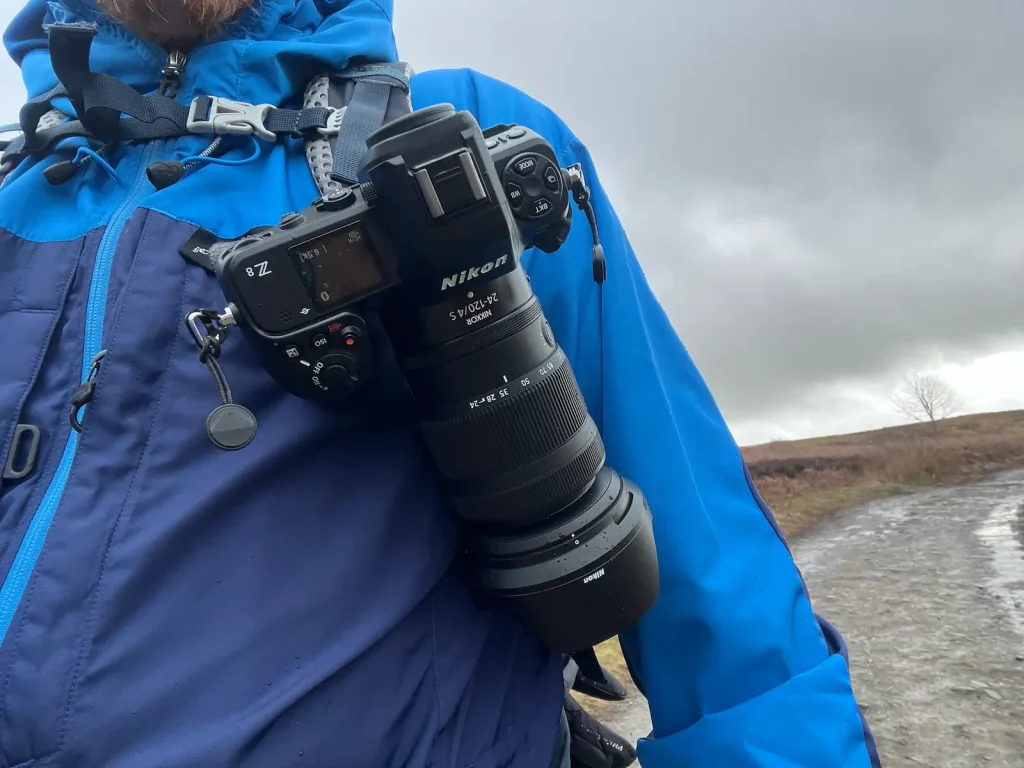
My Nikon Z8 Setup
If I were heading out for a full day of photography tomorrow, this is the exact Nikon Z8 setup I’d take with me.
- Nikon Z8
- Nikon Z 24-120mm f/4 S
- Integral CFexpress Type B Cinema Card (512GB)
- SanDisk Extreme Pro 512GB SDXC UHS-II (200MB/s)
- One spare Nikon EN-EL15c battery
- Peak Design Capture Clip attached to my hiking backpack
This is my most versatile Nikon Z8 kit for country walks, hikes in the Scottish Highlands, and general photography. The Nikon Z 24-120mm f/4 S gives me a huge focal range without needing to carry multiple lenses, while the fast CFexpress card ensures the buffer clears quickly when shooting bursts. The spare battery provides peace of mind on longer days, and the Capture Clip keeps the camera instantly accessible without it bouncing around on a strap while I’m walking.
All Recommended Z8 Accessories in One Place
All Nikon Z8 Accessories in One Place
I’ve grouped all of the best accessories for the Nikon Z8 into one easy Amazon list to make it simpler for you to find everything in one place.
View the full accessory list on AmazonThat’s about it for the general essentials that take the Nikon Z8 from out of the box to fully ready for pretty much anything. I use all of the accessories above regularly with my own Z8, and they’ve genuinely improved comfort, reliability, and day-to-day usability.
In the future, I’ll update this article with more specialised accessories for specific types of shooting — particularly landscapes and wildlife, which I’ll be doing a lot more of next year. Once I’m back in Scotland and spending real time in the mountains, glens, and coastline, I’ll add the gear that proves itself in those conditions.
For now, the items listed here are the core essentials I recommend to anyone starting out with the Z8.
Read More from The Cotswold Photographer
Frequently Asked Questions – Nikon Z8 Accessories
Do I really need accessories for the Nikon Z8?
Not many. The Nikon Z8 feels complete straight out of the box. A screen protector, fast memory cards, and at least one spare battery are the only real essentials. Everything else is about comfort and how you prefer to carry the camera.
Is a screen protector worth it on the Nikon Z8?
Yes. The Z8’s screen is always outward-facing, so a screen protector is cheap insurance if you plan to keep the camera long-term. A good-quality protector won’t affect clarity or touch performance.
What memory cards should I use with the Nikon Z8?
The Z8 works best with a CFexpress Type B card in the primary slot for speed and fast buffer clearing. An SD UHS-II card works perfectly well in the secondary slot for stills or backup recording.
Do I need expensive CFexpress cards for photography?
No. While premium brands are excellent, good-value CFexpress Type B cards now offer excellent reliability and performance for stills photography. Prices have dropped significantly compared to when the Z8 was first released.
Can I use SD cards only in the Nikon Z8?
You can, but performance will be limited. SD cards are fine for stills, but you’ll notice slower buffer clearing. Using a CFexpress card in the main slot makes the camera feel much more responsive.
How many spare batteries should I carry for the Nikon Z8?
At least one spare. Mirrorless cameras drain batteries faster than DSLRs, and cold weather reduces battery life further. For longer days or travel, two spares is a sensible number.
Are third-party batteries safe for the Nikon Z8?
They can work, but for a high-end body like the Z8 I recommend sticking with original batteries. They’re more reliable, perform better in cold conditions, and fully support USB-C charging.
Is the Peak Design Slide Lite strong enough for the Nikon Z8?
Yes. The Slide Lite easily handles the weight of the Z8 with standard lenses and is far more comfortable than the OEM strap for long walks and all-day shooting.
Is the Peak Design Capture Clip safe with a heavy camera like the Z8?
Yes, as long as it’s mounted correctly. The Capture Clip holds the camera securely, prevents bouncing while walking, and keeps the Z8 instantly accessible on hikes and long days out.
Do I need to clean the Nikon Z8 sensor often?
Usually no. The Z8’s sensor shield dramatically reduces dust reaching the sensor. With it enabled, most users will rarely need sensor cleaning. When it does need cleaning, professional servicing once a year is the safest option.