
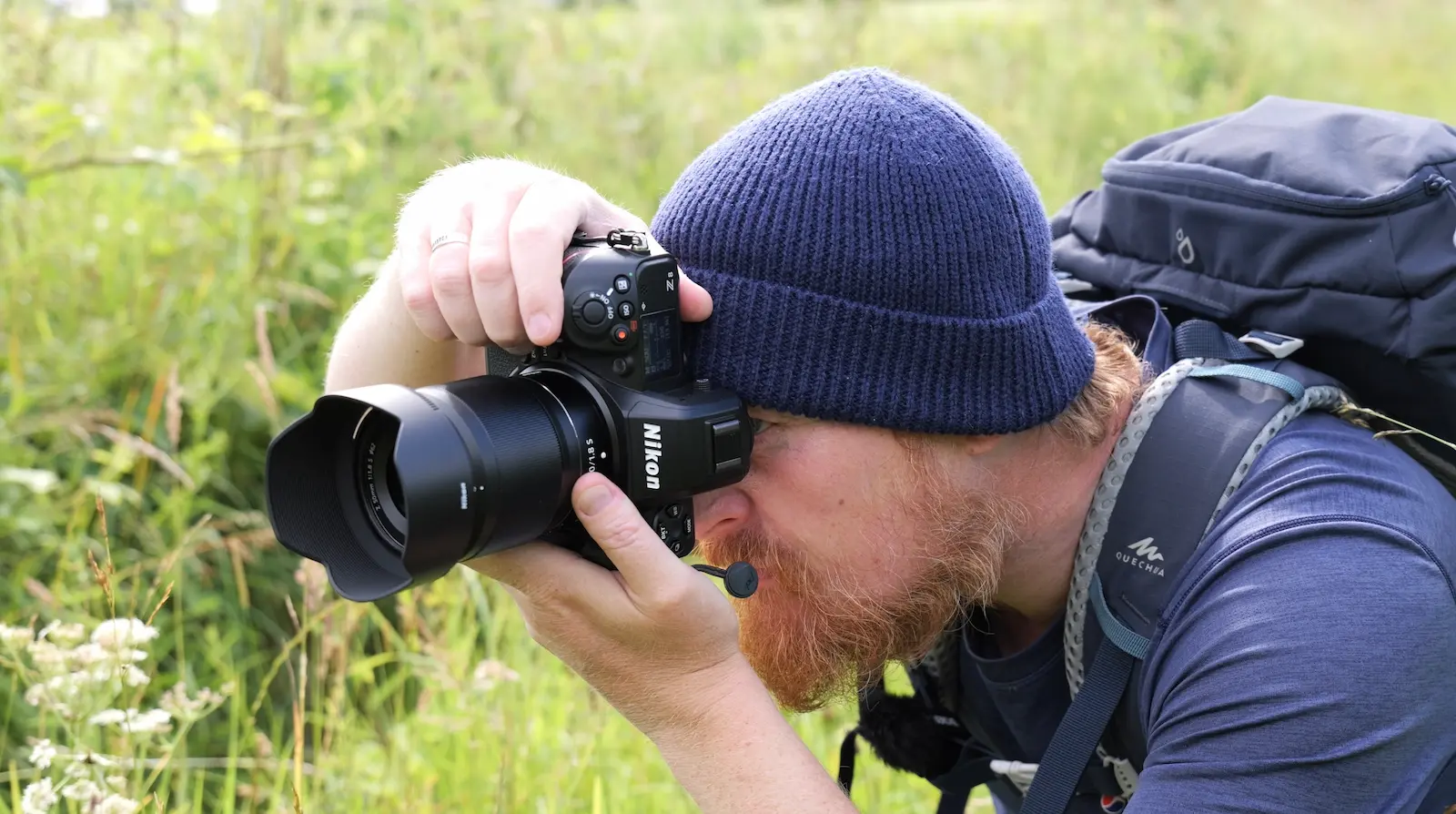
I’m currently writing a series on whether owners of the Nikon Z 24-120mm f/4S lens should consider adding any of the Nikon Z 1.8S primes to their kit.
As part of that series, I took the Nikon Z 50mm 1.8S lens out on a local walk through the Perthshire farmland near my home yesterday with the intention of seeing how it changed the way I shoot, the images I could make and whether I could make it work for the wide-open countryside near my home. You can see how the Nikon Z 50mm 1.8S compares against the 24-120mm f/4 here.
It was a beautiful sunny, summers day which sounds lovely, and it was, but it’s not my preferred weather for trying to shoot landscapes.
The high contrast light means that you have to carefully watch your exposure, ensure highlights aren’t clipped and it tends to flatten everything. That combined with being faced by a wall of green at this time of year has resulted in me looking more for interesting pockets of light across the landscape where it creates more depth than simple flat looking sunny scenes.
The 50mm focal length changes the way I shoot, It gives a feeling of peering in to the landscape rather than being immersed in it. The images often end up feeling more intimate. I tend to look for foreground elements that can frame a subject which sits deeper in the image.
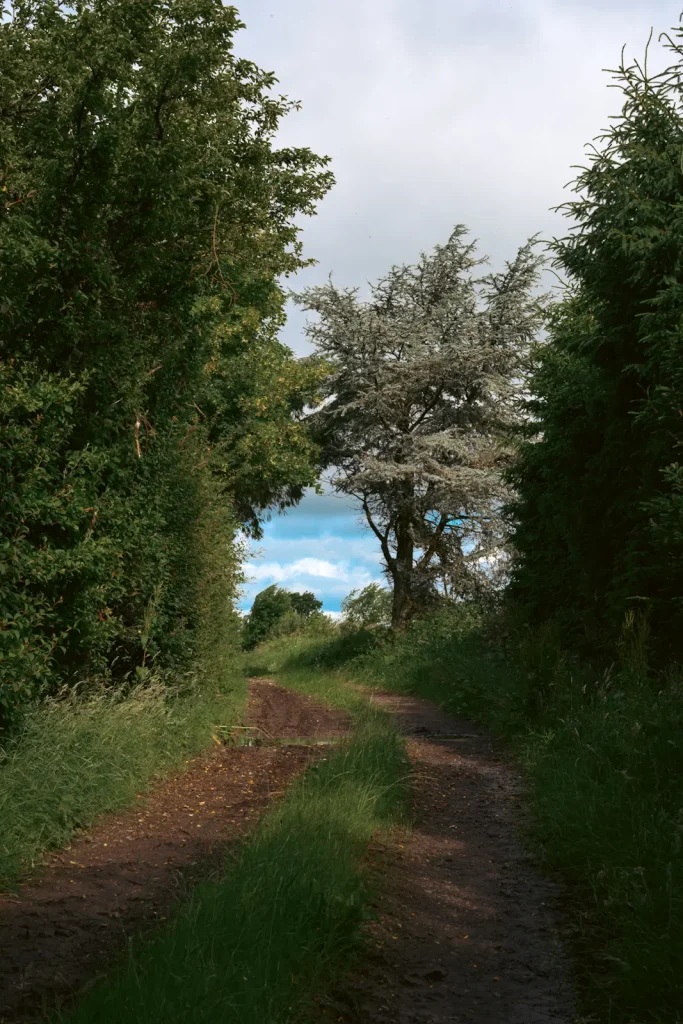
I started out the walk, up an old railway path, looking for exactly these kind of compositions, peering through leaves and branches toward something that caught my eye. The light was a mix of bright sunshine, and the ocassional cloud rolling across the sky which would briefly cast shadows on to the land below.
Initially, I was still looking for similar compositions as I would normally, perhaps some foreground interest, leading towards the subject, framing it or leading in to it. To be honest, whether it was having my wife with me as I’m teaching her to create videos, or it was simply that I didn’t adjust my thought process enough, I was struggling to get anything other than snapshots of a nice subject.
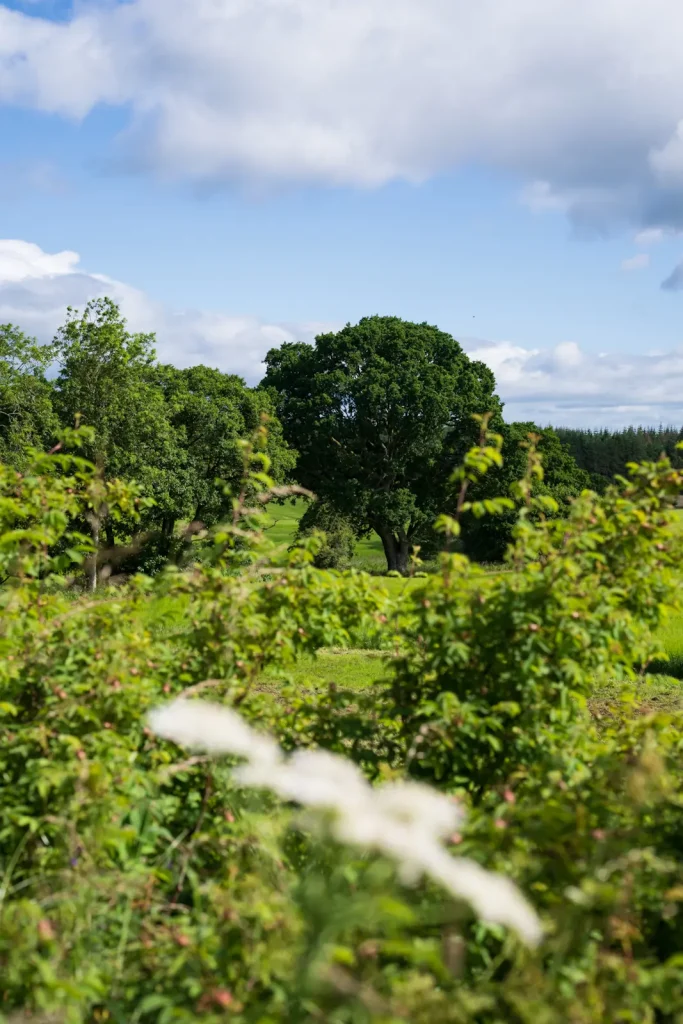
One such location was a beautiful field of crops, blowing in the wind, creating swirls and patterns as the tops of the crops swayed during each gust. It immediately caught my eye and I headed down off the path to get closer. My instinct was to place the crops right up front in to the foreground and find a point of interest in the distance that could act as an anchor to the frame.
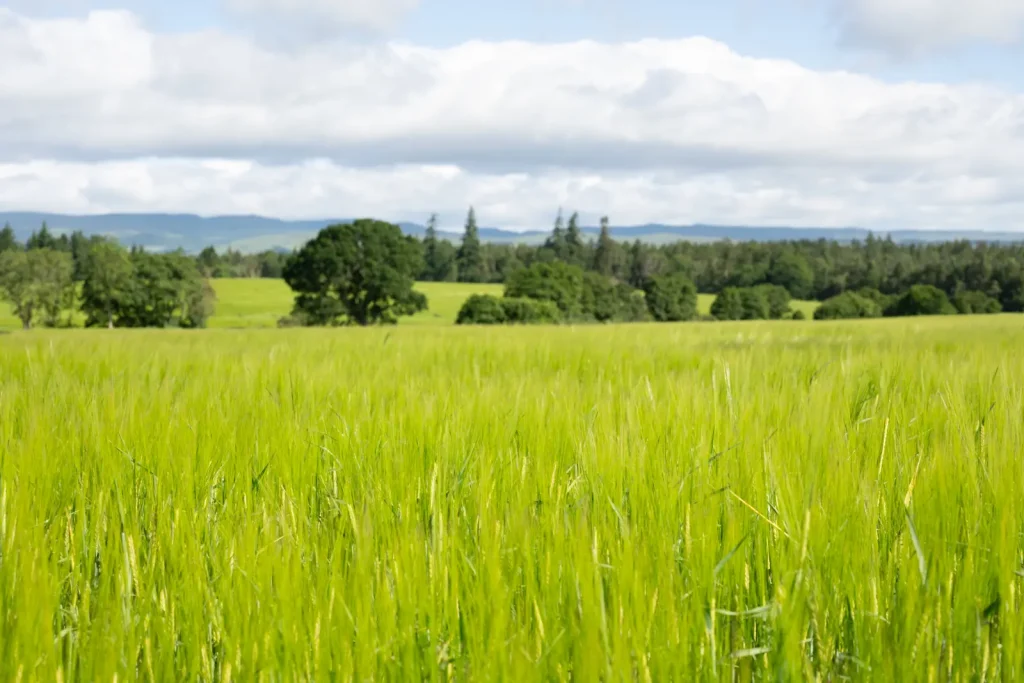
The problem, I found was that the 50mm focal length, didn’t allow me to get in close enough to feel immersed in the stems and seeds of the crop, while allowing enough depth of field and space in the frame to include the beautiful Oak tree in the distance that I had picked out as the anchor. I moved around, changed angles, raised the camera, lowered it, moved in closer, further out and stopped down my lens to f/16 but no matter what I did, it just wasn’t working. The second issue I was having is that I really wanted to capture the movement of the (wheat or barley, I think) as it swayed in the wind, almost as one organism rather than individual crops. Sadly, I hadn’t brought an ND filter and so in the bright sunshine, I couldn’t slow my shutter speed enough to capture the movement.

In the end, I got some shots, but they weren’t any good and didn’t capture the vision I imagined when I spotted the scene.
The 50mm is a fantastic lens that combined with any of my Nikon Z cameras, offers great image quality and performance. But having a fixed focal length meant I had to adapt my shooting style, which so far on the walk just wasn’t happening because of my pre-conceived ideas of the shots I would try and capture.
Thats was, until we continued walking along the path and to my right were tracks weaving thier way through the exact same field. I couldn’t resist trying to use these tracks in a photo as they created a beautiful S-curve through the crops.
Normally, I would have moved off the elevated path overlooking them and tried to get in close, using a similar thought process as my last unsuccessful attempt.
Instead, I saw clouds moving towards us which might offer some interesting shadows on the field. This could be the cherry on the cake of any image, if I could snap my brain in to thinking a little differently than it curretnly was.
This time I decided to stay on the elevated path as it gave a good vantage point over the field, emphasizing the shape of the leading lines of the path. In the distance, a beautiful row of trees framed the farmland. Knowing that I could use the compression of the 50mm focal length to pull the background closer, I framed up the shot multiple ways to see which worked best. The 50mm in this case, was actually giving me more sky in the frame than I wanted, but before the crop field was dead land, that was ugly and which I definitely didn’t want in the frame.
This is where a fixed focal length forces you to try multiple compositions and really think, often having to try multiple positions and framing options before settling on the one that works best. It forces you to really explore a scene and consider what it is that you want to show. Of course, the reverse of that is that sometimes, you have to make compromises you wouldn’t necessarily have to with a zoom.
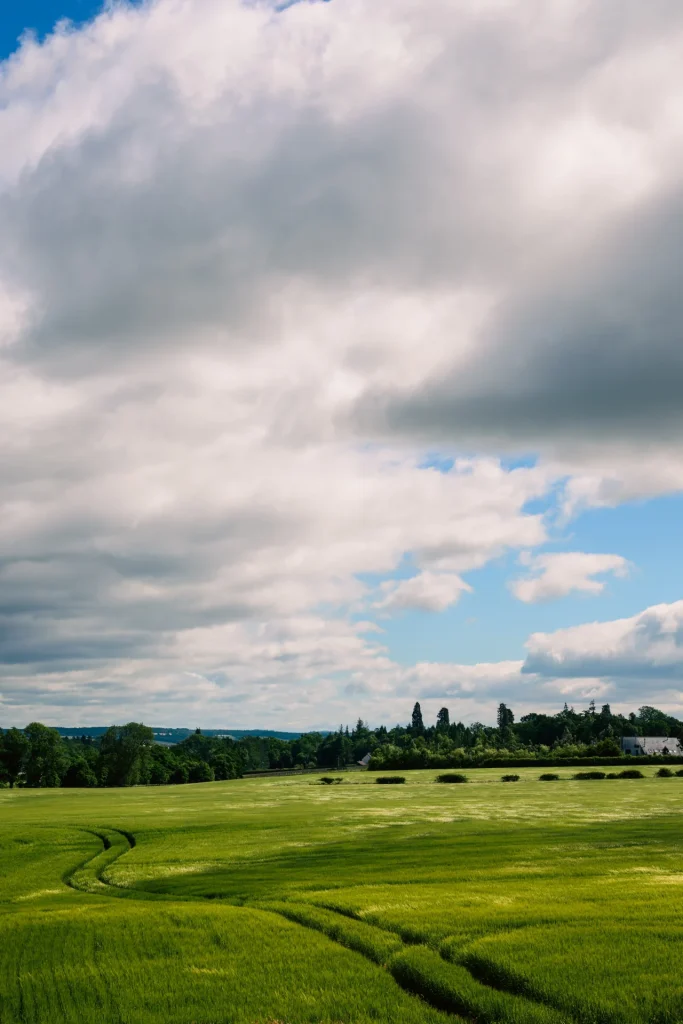
In the end, I shot in portrait orientation to better align the frame with the flow of the tracks leading through the frame. In landscape orientation, there was too much dead space on the right of the frame that looked out of place. I decided that this was the best compromise, including more sky, rather than more field. Then, I simply waited for those clouds to move in and create some light pockets over the field that would bring out the texture and add a little more depth to the shot.
There are a few scenes on this walk that remind me of the time I spent in Tuscany, Italy and so I edited the image with that in mind. I go in to more detail on my thought process and techniques when shooting and editing on my personal website.