

I’ve owned multiple iterations of the Fuji X100 and Ricoh GR series cameras which dominate compact camera lists and I’ve been a Micro Four Thirds user since around 2012. I used to own a Panasonic GX9 which was a great little camera when paired with some of the smaller lenses in the Micro Four thirds system. So when Panasonic recently announced the L-10 it caught my eye. I’ve written a comprehensive guide to the best compact cameras if you want to see more details on the Panasonic L-10’s competitors.
I’ve bitten the bullet and bought one with my own money and it arrived this week. Today was the first chance I’ve had to actually take it anywhere with me.
When I opened the box, to say I was underwhelmed would be a bit of an understatement. Not because of the camera but because of the way that manufacturers have stripped down everything to the absolute bare minimum. Call me old fashioned but when I’m spending £1300 on a camera I would expect a bit more than what feels like egg box internal packaging, the camera, the battery and a camera strap. No charger, no leads, no manual except the crappy quick start manual. I know manufacturers will claim it’s all better for the environment but I think its cost cutting and honestly, when I spend this kind of money or more I expect a certain amount of thought and effort to go in to the packaging to make the opening feel a bit special. Ok, rant over.
However once I got the camera out, I was pleasantly surprised by the design. It looks sleek, modern and perfectly sized to be functional. I see a lot of complaints that it’s too large and while I get that, for me it seems ideal. Small enough to fit in my jacket pocket but not so small as to feel toy like and awkward to handle. It doesn’t feel particularly light though at 556grams with the battery inserted.
This isn’t going to be an exhaustive first impressions, it’s going to go over the initial things that stood out to me.
The camera has just enough grip on the front to offer reasonable purchase but I already know a thumb grip is going to work wonders here so I’ll be researching those and testing some over the coming weeks. These buttons feel nicely spaced although the arrangement of them doesnt feel intuitive with placement of the tiny exposure compensation button being quite awkward to access. The buttons all feel well damped and respond as I’d expect with the exception of the rear rotating dial around the menu button which does feel a bit thin and cheap. it kind of spins without much resistance. Also it took me a moment to find where on earth to put the memory card as it’s in an unusual separate housing on the bottom of the camera. I’ve never seen it located in this position before so that threw me off but actually it’s quite ingenious and better than it being awkwardly slotted in to the battery compartment.
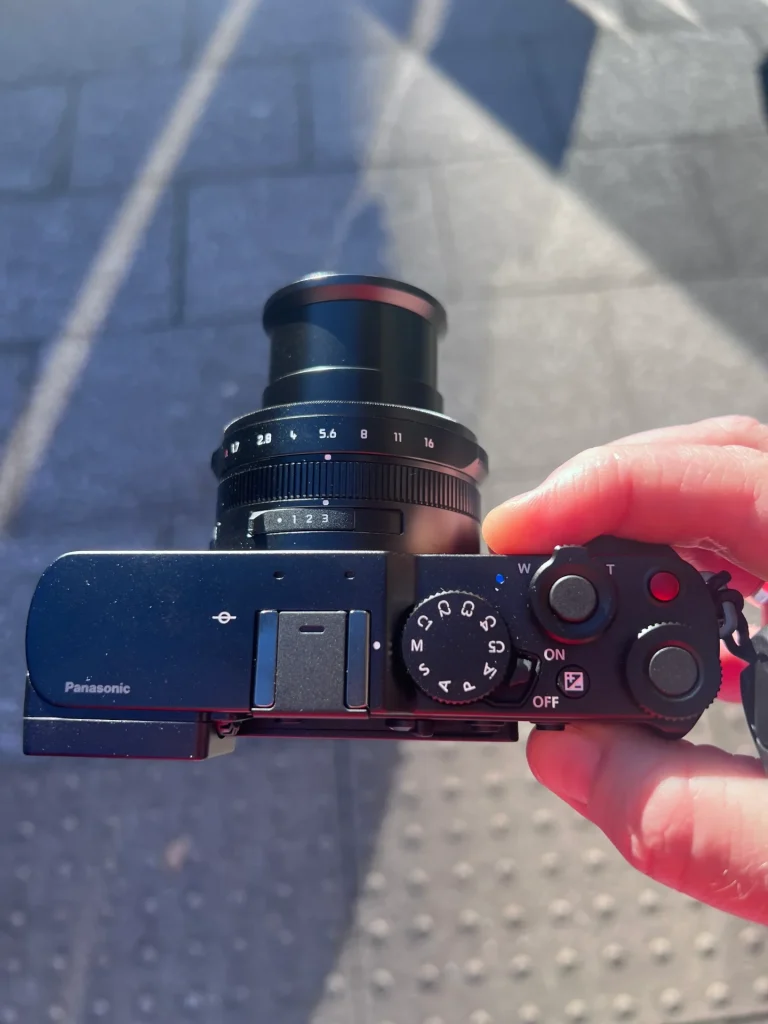
Once I switched the camera on and went through the basic setup its sleek design lost some of its visual appeal as the lens telescoped out and made it look quite ridiculous in my opinion. Still, it’s not noticeable when you’re behind the camera so I soon forgot about it.
The default setup is quite strange as in manual mode, you can change the aperture by rotating the aperture dial found on the lens so I immediately assumed the rear command dial would operate the shutter speed. Nope, that also changes the aperture. Eventually I remembered Panasonics UI and worked out that the dial around the Menu button also rotates and that is what controls shutter speed. I didn’t even realise it rotated up until this point. Luckily the buttons are customisable so I quickly went in to the Menu and made some changes and got it set up to roughly how I wanted it. The aperture ring itself feels a little awkward in use as it sits right at the end of the main lens housing, not quite within comfortable reach for my medium sized hands. The control ring, closer in to the camera body would have been a much more natural position for the aperture ring in my opinion.
Even so, the camera does feel good in the hand and with customisation will likely work well for travel and everyday shots. Of course, the lens itself is a power zoom and if I’m quite honest, it’s going to take me some time to get used to this. The lever to operate the zoom is in a great place and although I’ve read some comments about it being slow to zoom, I haven’t found it to be particularly frustrating to use on my first day out with the camera, although I’d rather be able to manually zoom the lens to speed things up. With a range from 24-75mm full frame equivalent it offers plenty of flexibility but I immediately noticed that the aperture, which starts out at a nice large f/1.7 drops down rapidly as soon as you operate the zoom, already reaching f/2 by its 28mm equivalent focal length. I’ll give more details on how the aperture drops away in a future article. But it only stays at f/1.7 at 24mm.
Reading this back, it sounds quite negative but I really don’t mean to be. I already like the camera design, the feel of it, the plethora of different picture profiles which in my opinion are very underrated for Panasonic cameras in general.
I’ve now posted examples of all the colour profiles available on the Panasonic L10 as well as detailed the aperture at the main focal lengths.
The autofocus seems reasonable enough for normal use and having this amount of flexibility in terms of focal range in a body of this size with a larger than 1” sensor really does open up a world of shooting possibilities.
I’ll be shooting the L-10 intensively over the coming months as I use it as my daily carry and compare it to the Ricoh GRIV that I’ve had for over a year now.
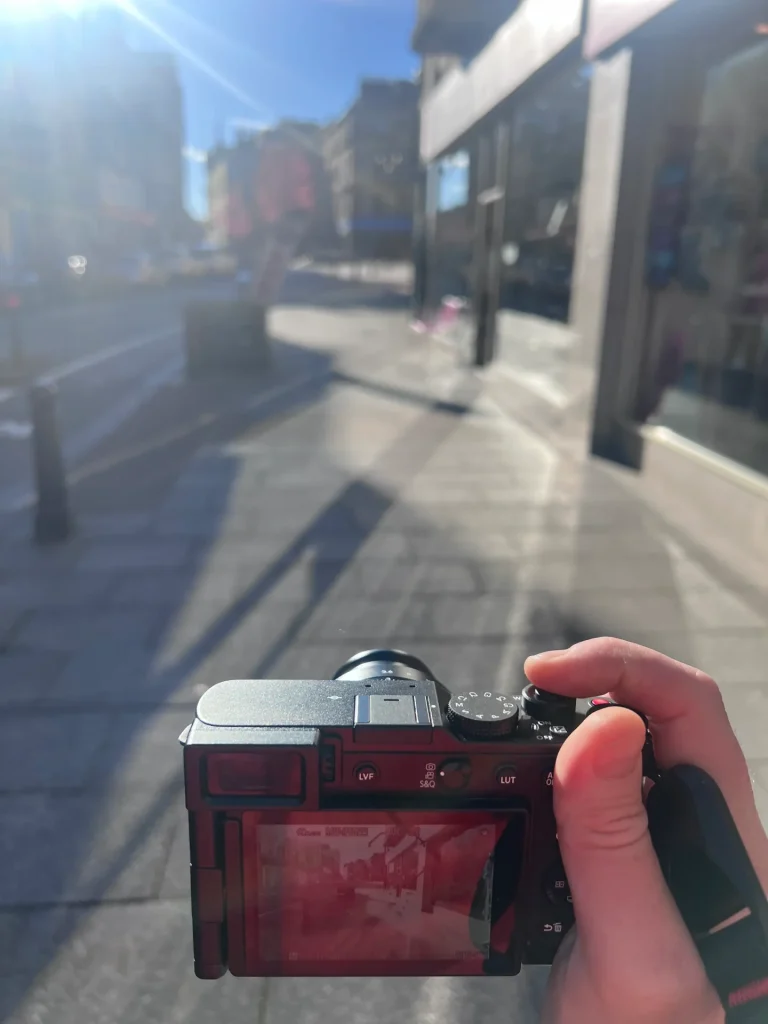
I took the camera to Stirling today as I wanted to take Sofia out and start seeing more of the local area. Plus she needed a bit of a shopping trip for new shoes and clothes as we left so many of our belongings in the Philippines when we moved here at the start of the year. For the most part we were in a shopping mall, an absolute nightmare scenario for any camera in terms of lighting but the few shots that I did take were well exposed and the auto white balance coped well. Autofocus managed to grab in focus shots of Sofia as she unapologetically refused to keep still for Dad’s annoying pictures.

This is where I noticed that for quick shots, the power zoom is going to be a bit of an issue as it isn’t lighting fast to move through the focal range. However, I adjust by locking the zoom off at certain focal lengths that I knew would work for the shots I was taking rather than constantly adjusting the zoom. By default the camera doesn’t remember your last used focal length which is annoying but you can change this in the menu. My instinct is that this camera is going to take a bit of setting up to get it working just right but the sheer amount of customisation options available means that should be entirely possible.
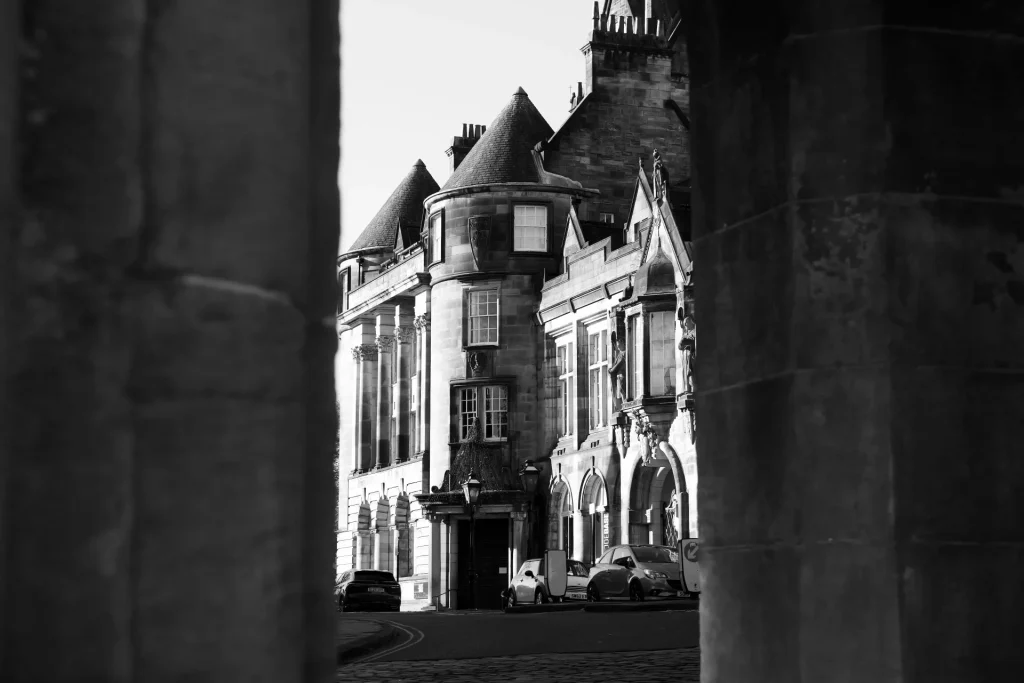
Once we exited the shopping mall and walked out on to the street, my wallet breathed a sigh of relief and the camera itself started to make more sense. Stirling is an old city, built on the side of a hill with the castle occupying the prime position at the top. We didn’t head up the castle today but we did venture around some of the streets to get a feel for the place and find some food. I switched the camera in to the Leica Monochrome mode and took a few shots. Using the AF tracking pad to place my focus point as there is no AF joystick, I found it pretty responsive and accurate for the most part and thanks to the Micro Four Thirds sensor’s deeper depth of field, shooting at f/4-f/5.6 I found I had plenty of depth of field to bring near and distant subjects in to focus easily. Initial thoughts were that the dynamic range was decent, giving me good exposures even in contrasty street scenes with dark old stone buildings against bright blue skies.

I can’t help but wonder how good a 15mm or 25mm f/1.7 fixed lens version of this camera would be.
So far in just a few days of playing with the camera and taking it out on a trip where photography wasn’t the focus, I’m not yet convinced, but it does seem promising. I need much more time with the camera to get used to it, push its limits and see if the flexibility of having that zoom lens outweighs the tradeoffs and whether ultimately, it competes with the likes of the Fuji X100Vi and Ricoh GRIV. That’s exactly what I’ll be doing over the coming weeks and months. I took the Panasonic L10 with me as an everyday carry camera and shot some beautiful Autumn scenes with it.