

I bought the Nikon Zf because I wanted it to be a full frame Fuji X-T5, a modern Nikon Df and while it doesn’t really feel like a full frame X-T5, it’s still a capable camera. I bought the Nikon Z8 as I wanted one camera to do everything well and the Z8 absolutely nails that but what if you’re split between wanting the beauty, retro aesthetic and ergonomics of the Zf but you’re wondering if it’s worth the extra money and losing the style of the Zf to just get the Z8? I’ve owned them both now for over a year now and considering I’ve been a long time Fujifilm shooter, I’ve been surprised at which one I pick up almost everytime, whether it’s travel, landscapes or family shots.
I’m going to get the key specs out of the way as some of them directly relate to my experience but the specs really don’t tell the story with these two cameras, well at least not with the Zf.
| Specification | Nikon Zf | Nikon Z8 |
|---|---|---|
| Resolution | 24.5MP Full Frame | 45.7MP Full Frame |
| Processor | EXPEED 7 | EXPEED 7 |
| Weight (with battery & card) | 710g | 910g |
| Dimensions | 144 × 103 × 49mm | 144 × 119 × 84mm |
| Rear Screen | Fully articulating touchscreen | Multi-axis tilting touchscreen |
| Typical US Price (Body) | ~$1,997 | ~$3,397 |
This article contains affiliate links. If you buy through these links, I may earn a small commission at no extra cost to you.

Firstly, lets talk about the design because theyre fundamentally different and because much of the Zf’s appeal is based on its beautiful retro design, and it is beautiful. I have the the silver Zf (see my full Nikon Zf review) , normally I tend to go for the black versions these days but only the silver one was available when I bought it in the Philippines. It’s a stunning camera. I’d probably rank it alongside my OM system OM-3 as the best looking camera I own. The silver finish isn’t too light or bright and the dials remind me of film cameras of years gone past. The Z8 on the other hand is purely functional, it’s basically a modern D850 DSLR (See my full Nikon Z8 review), nothing about it is designed to wow you or appeal to nostalgia. Well, unless you’re nosatgic about the DSLR era I suppose.

So on design alone, the Zf objectively has to be declared the winner but that doesn’t tell the whole story because not everyone wants a retro looking camera and when I look at both of them sat next to each other on my OCD shelf (I call it that as everything has its place, lenses in focal length order, cameras in size order etc) I don’t see them in the same way. Yes the Zf is undoubtedly the conventionally better looking camera but the Z8 calls to me because it screams, im going to get out of your way, get the job done and be really comfortable and easy to use while getting your shots. There’s an appeal to me in a camera that means business, is solid and leaves me knowing it can handle anything I throw at it. So lets just say, I don’t see one as the ugly duckling and the other as the beauty queen. One’s a Ducati 748, beautiful and will get you around the track quickly, the other is a Honda Fireblade, still looks good but is built to get the fastest possible lap time first and foremost. I like both.
What’s surprising is how close they are in weight and even size when you hold them. Although the Z8 is clearly bigger, its not night and day. The Zf feels very wide, almost too wide for it’s height and out of the box, it lacks any grip whatsoever making it awkward to hold. I’ve improved this by adding the Smallrig grip (full accessories for the Nikon Zf article) but even with that, the weight of the Zf pulls to the left, and the grip doesn’t offer enough extra purchase to stop the camera feeling like it wants to drop to the left which eventually, fatigues your hands more than I’d like.
The Z8 sits a lot taller and substantially deeper but that’s offset hugely by its really good grip.
If I’m packing for travel and I need to minimise space then the Zf definitely packs down smaller whereas the Z8 is more of a squeeze in my Peak Design Everyday Sling 10L once I attach the 50mm 1.8S, pack an additional prime like the 35mm 1.8S, spare batteries, memory cards, cleaning kit and my Ipad Pro 13″.
But in actual use, they don’t really feel like a completely different class of camera in terms of weight because the grip on the Z8 is so deep and well designed that it makes holding the camera with any lenses larger than the 40mm f/2 more comfortable than the Zf with anything more than the 28mm/40mm f/2 sized lenses.
If im packing light, going to wear the camera on a strap or keep popping it in and out of my bag all day, the size advantage of the Zf makes more sense and the grip of the Z8 is less of a factor. But if I’m going to have the camera in my hand most of the day, the Z8 is much more comfortable to hold.

The other major difference is the controls. The Nikon Zf has physical dials for shutter speed, ISO and exposure compensation. The dials work well when you’re in full manual mode and are a pleasure to use for slower paced or creative photography. Where it differs from the implementation on my Fuji X-T5 (full review here) is that the dials on the Zf are dependant on which mode you put the camera in on the MASP switch (the Zf’s equivalent to standard PASM dials). In manual mode, every dial works as expected, but because most Nikon Z lenses don’t have an aperture ring (although you can program it to the control ring if your lens has one) you have to use the front command dial to change aperture.
In Aperture priority mode, the shutter speed dial becomes inactive. The system makes sense but If you’re going to give me a physical control for shutter speed, I want that dial to overide the MASP setting. I’d say it feels incomplete because of a lack of aperture rings on Nikon Z lenses and, slightly disjointed because you have to mix using physical controls for shutter speed and ISO with command dial use for aperture as it comes out of the box. I’ve set up the lens control ring to function as the aperture dial on my Zf and while it works fine, it lacks the tactile feedback of having a physical aperture ring on a lens as there’s no clicks.

The Z8 uses a PASM based system. I shoot it almost exlusively in manual mode with auto ISO. I then use the front dial to control aperture and the rear dial for shutter speed. It’s very quick in use to adjust settings.
The next major difference is that with 45mp resolution, the Z8 basically doubles every lens you have, to give a usable FX and DX variant as DX still gives you 20mp files. Practically I consider 24mp to be plenty for normal use in most situations. I tend to think in terms of ‘is something enough’, rather than ‘is it the best available’, especially for resolution as I remember printing 30×20″ gallery prints from my Canon 5d mk II (which only had 20mp) and the quality was excellent.

But in use, the ability to turn every lens that you have in to two usable focal lengths has two main benefits that I’ve found could almost justify the cost difference between the Zf and Z8 alone.
I often travel with one camera and two prime lenses to keep things light. Usually I’d pick a 35mm and a 50mm lens to take with me, to cover normal wide and mid range. these are my most often used focal lengths for travel.

If I take the Zf with both lenses I get 24mp files for everything and the total weight is 1.6kg. But if i take the Nikon Z8 with just the 35mm 1.8S (reviewed here)and use it in FX mode for the 35mm focal length and in DX mode to get an equivalent 50mm field of view. I can leave the 50mm 1.8S lens behind (reviewed here) and get 45mp shots in FX mode and still only lose 4mp against the Zf with 20mp files in DX mode. The total weight for the Z8 and 35mm 1.8S is 1.28kg and I’m gaining a lot of resolution in Fx mode and only giving up minimal resolution in Dx mode. Yes, the 35mm 1.8S wont give quite the same subject separation or look as using the native 50mm lens but it’s close enough that at those focal lengths the differences probably wont make or break a shot.
The Z8 combination ends up being arguably more capable yet lighter.
If you still want to carry two lenses, with the Z8 you now have four focal lengths to use.
So if I’m talking purely about weight and functionality, the Z8 gives a lot of extra flexibility thanks to its higher resolution sensor. Ultimatley the Zf does pack down smaller if your kit is the same and that can be important for travel but it’s not a clear win for the Zf as there’s lots of different factors to consider.

Where the Zf does make more sense is for hobbyists and as a second camera for Nikon Z shooters. There’s no getting around the fact that the Zf offers a completely different shooting experience from the DSLR style of the Z8. The physical control dials make me feel more like an artist than a photographer, they slow me down, slow my thinking down and make the whole experience feel more tactile and about the joy of shooting as much as getting the shot. There’s also something to be said for using a beautiful camera, I know that sounds shallow but for someone like me, who’s professional life revolves around photography, having a camera that makes you feel pride in its appearance, even perhaps get the odd complimentary or inquisitive comment, is a pleasure. And, the third point I would definitely say is a factor for travel, is that turning up in some far flung location with a camera that looks like the Zf changes the way you are perceived and often, the reactions that you get when you point it at people.
The Zf definitely gives off the ‘harmless tourist vibe’ rather than the ‘professional photographer look’ which often allows you to get photos without disturbing the people you are shooting, which results in less stares, less changes in the way people behave in front of the camera and generally, more natural candid photos. I should say though that more than the camera you are using, how you interact and behave when you’re photographing a place has more impact on the reactions you get.

Finally, for a photograhy first camera, the Zf has a few strange design choices in my opinion, the first being the inclusion of a fully articluating screen. There’s nothing wrong with it but for photography, and especially if you’re trying to take advantage of the Zf’s more discreet nature, having to pull out the fully articulating screen and have it stick out of the side of your camera in order to shoot at the hip or shoot from higher or lower positions makes little sense.
The Z8’s screen is by far my preferred choice for photography as you can simply flip it up or down in-line with the camera which is much quicker to do and more discreet. The Z8 doesn’t make for much of a selfie camera because of this, but I reckon that probably loses Nikon about 2 sales a year.
Most of the article so far has been based on travel photography because, that’s really one of the main use cases I can see for the Nikon Zf. For landscape and general photography for most people, the Z8 simply makes more sense, if you can afford it.
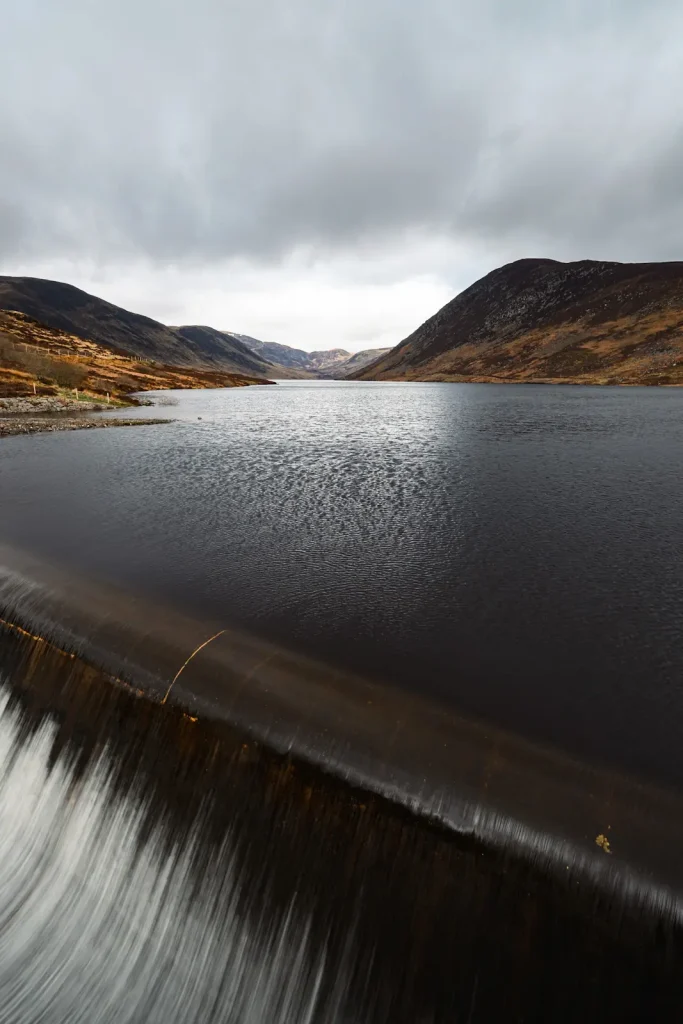
As I’ve now moved to Scotland, where I’m shooting landscapes more so than travel photography, my own use has switched to heavily preferring the Nikon Z8 over the Zf. In fact, apart from shooting for reviews, I honestly haven’t picked up the Zf for a couple of months until today.
Verdict
I’m sat here now, holding the Zf and asking myself why that is because it’s a really capable camera and one that is fun to use.
I think the answer is this: The Zf is very good but the Z8 is better in almost every area and with basically no weight penalty. I look at the Zf and think that looks lovely but it doesn’t make me want to pick it up becausue it’s not particularly comfortable to use and the implementation of the physical control dials feels half hearted, so I don’t get the full experience of aperture, shutter speed and ISO control that I would want from a camera like that.
For me personally, when I want to shoot in that way, my Fuji cameras still do it better and when I want to shoot Nikon Z, I’m doing so because the ergonomics and performance are what I need and the Z8 simpy performs better in those areas.

There is one area though where I would be much more likely to choose the Nikon Zf over both the Z8 and my Fuji cameras, and that’s family photography (the Nikkon Zf is recommended in my article discussing the best cameras for family photography). After years of shooting my kids, I’ve learned that how they react to the camera changes massively depending on what the camera looks like. If i stick a pro looking DSLR in their face, they stop what they’re doing, tighten up, change their expressions and stop acting naturally. If I use a camera that looks like the zf, they largely carry on with what theyre doing, especially if I put one of the smaller Z lenses on the camera such as the 40mm f/2SE (reviewed here). Although I do shoot a lot of my family photos on Fujifilm cameras, I’ll be the first to admit that the Zf’s autofocus is faster and more reliable which makes it easier to get shots of children racing around. So if I was choosing between buying the Z8 and the Zf purely to have a camera with me to take photos of my family, at home, special events, vacations or anything else, I’d pick the Zf, save the money and get an extra lens or an extra vacation.
That’s about the only use case where I can realistically see myself picking the Zf over the Z8 and on that note, I have to go and take Izzy’s first British passport photo….. and I’m still reaching for the Z8.
If you’ve decided which camera is right for you, you can check the latest prices here: Nikon Zf | Nikon Z8.
Was perusing another review on this site before bumping into this one.
I’ve owned both the Z8 and Zf as my only MILCs for close to three years, and I agree with every single point you make.
However, I sold my Z8 a week ago and kept the Zf for now. The main reason is that the Z8+one lens will NEVER be as light and compact to carry as the Zf+one lens. It will always be substantially heavier, and that weight is too much for me and my arthritis. The Z8+lens will also always be substantially larger, to the point of attracting unwelcome attention among people (friends, strangers, whoever). It singles the photographer out as more than a tourist, a geeky dad/mum or a happy street snapper. As a result, I barely ever walked out my flat with the Z8, except for (rare) paid sessions. It was a big waste for me despite all its objective qualities.
The Zf is not a light compact body either, but it is way less crippling or stressful for carrying around on hikes across cities or countryside, especially if you can be satisfied with one or two small primes. The 200 grs difference in body weight may read as minor but the extra pain is real. Also, It looks kind of quaint (fitting my own geeky semi-hipster dad persona) but procures great IQ and a fun shooting experience. Ergonomics are lousy indeed. That is the toll for such cool looks
I recently purchased a Z50II with the 24mm DX prime, and that ultra light and small (but fugly) combo is an absolute joy to use, combining the excellent ergonomics of the Z8/7/6/5 with the amazing reactivity, AF performance and recipe features of the Z6III/Zf. IQ is more than good enough for the majority of my use cases.
I am now contemplating downsizing my gear collection to Nikon Z DX altogether. Also evaluating the Fujifilm system as a possible alternative (again weight and size being priorities for me) even though it also suffers of the “form before function” syndrome.
Hi Alan,
Thanks for your insight. I can totally understand your position, even considering something smaller again than the Zf. Whatever you end up choosing, I hope you get to keep enjoying your photography. My mum suffers with arthritis, so I know how difficult it can be.
All the best
David