
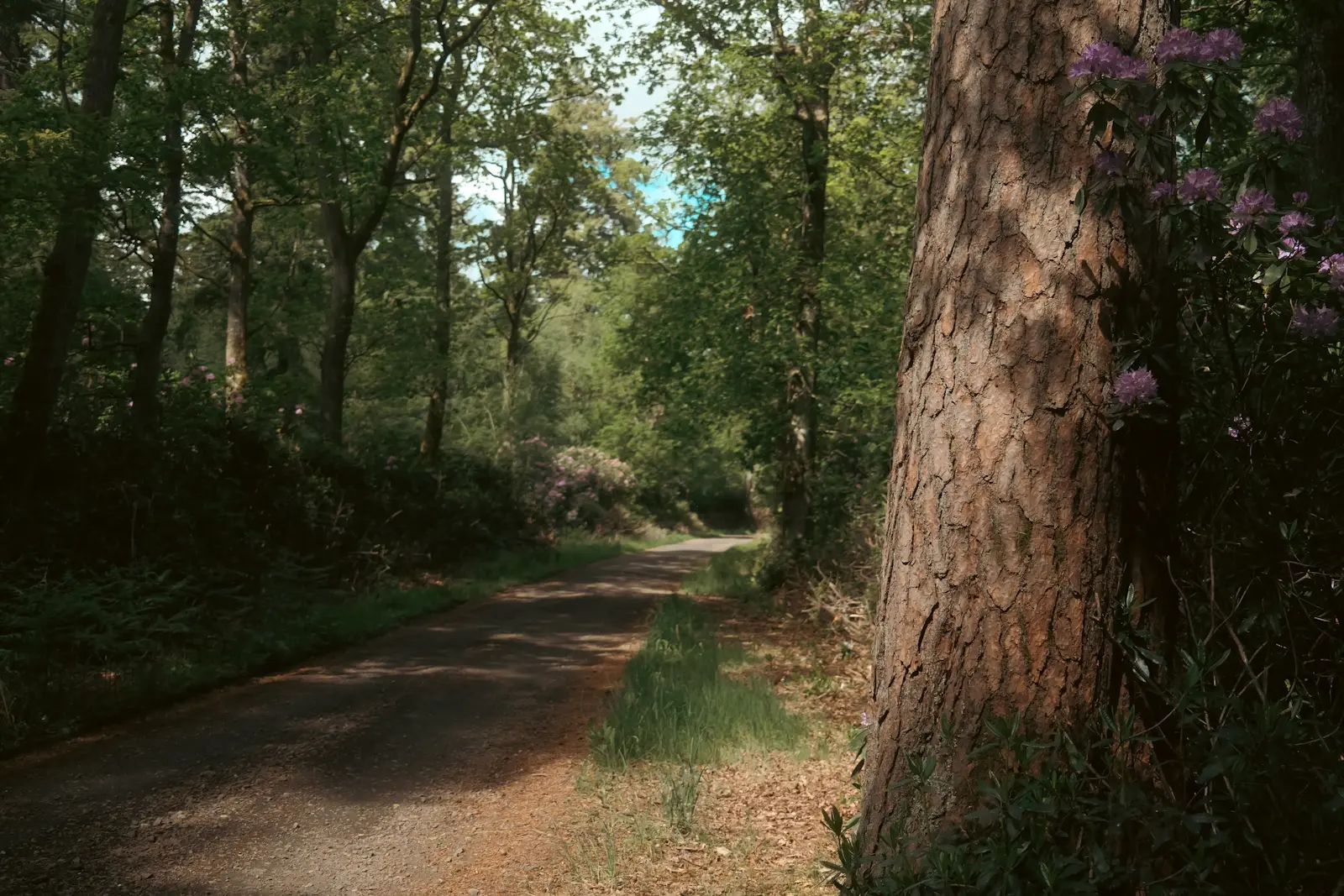
Over the past few weeks I’ve spent a lot of time shooting Nikon cameras. The Nikon Z8 in particular has become a regular companion on local walks around Perthshire, often paired with either the excellent 20mm f/1.8 S or one of Nikon’s other lenses.
As a result, the Fujifilm X100VI hasn’t seen as much use as it once did. That doesn’t mean I’ve fallen out of love with it though. In fact, after more than two years of ownership, I still consider it one of the most enjoyable cameras I’ve used. I’ve covered my experience in much greater detail in my Fujifilm X100VI review.
That changed this week.
A family walk through Strathearn Castle Estate gave me the perfect excuse to take the X100VI out again and remind myself why I enjoyed it so much in the first place. I’ve also been taking out the X-T5 more recently too.
A Camera That Fits Around Life
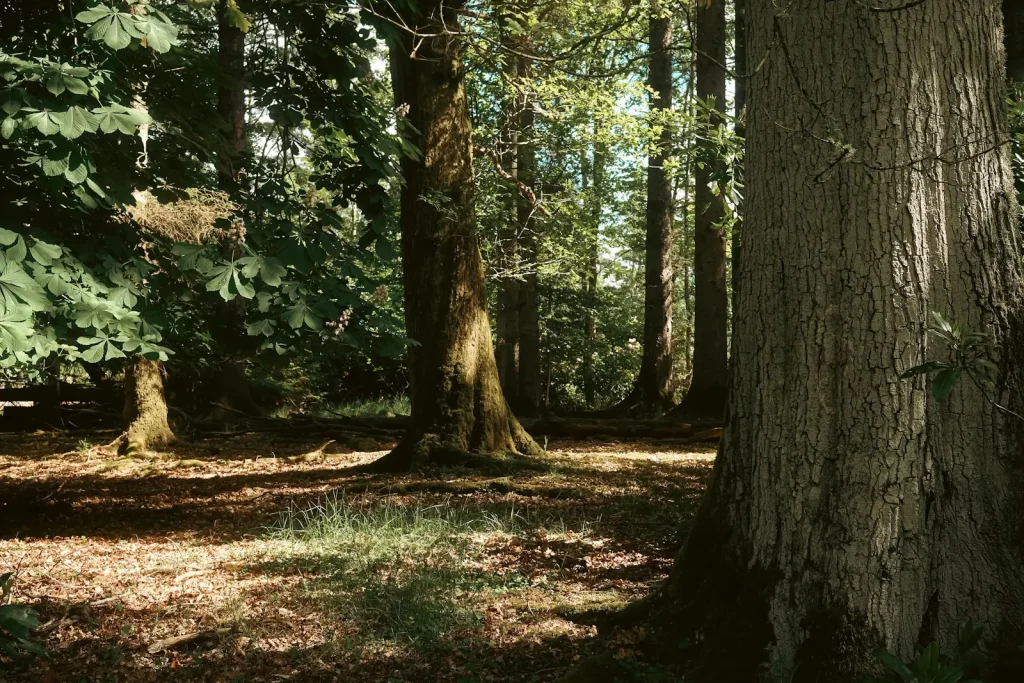
The main purpose of the walk wasn’t photography.
It was family time.
My wife, Sofia, Isobelle, my mum and I wandered through the estate’s old woodland, following the main track towards the lake below the castle.
Before long Sofia and my mum had wandered off together, leaving me pushing Isobelle’s pram for most of the walk.
That was exactly where the X100VI made sense.
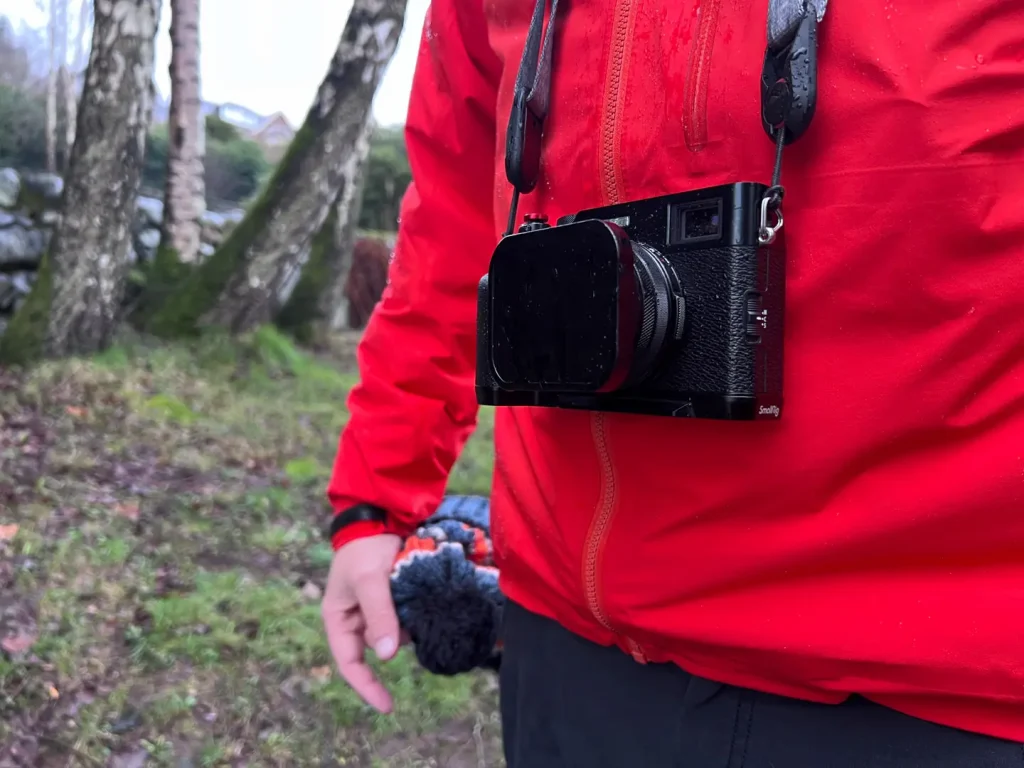
It’s small enough that bringing it along never feels like a commitment. If I use it, great. If I don’t, it never feels like a burden.
After carrying the Nikon Z8 with various lenses on recent outings, the X100VI felt tiny by comparison.
Not in a bad way.
Just refreshingly light.
Relearning an Old Friend
Initially I found myself needing a few minutes to readjust.
After shooting Nikon almost exclusively lately, the Fuji controls felt slightly unfamiliar.
That didn’t last long.
The old muscle memory quickly returned.
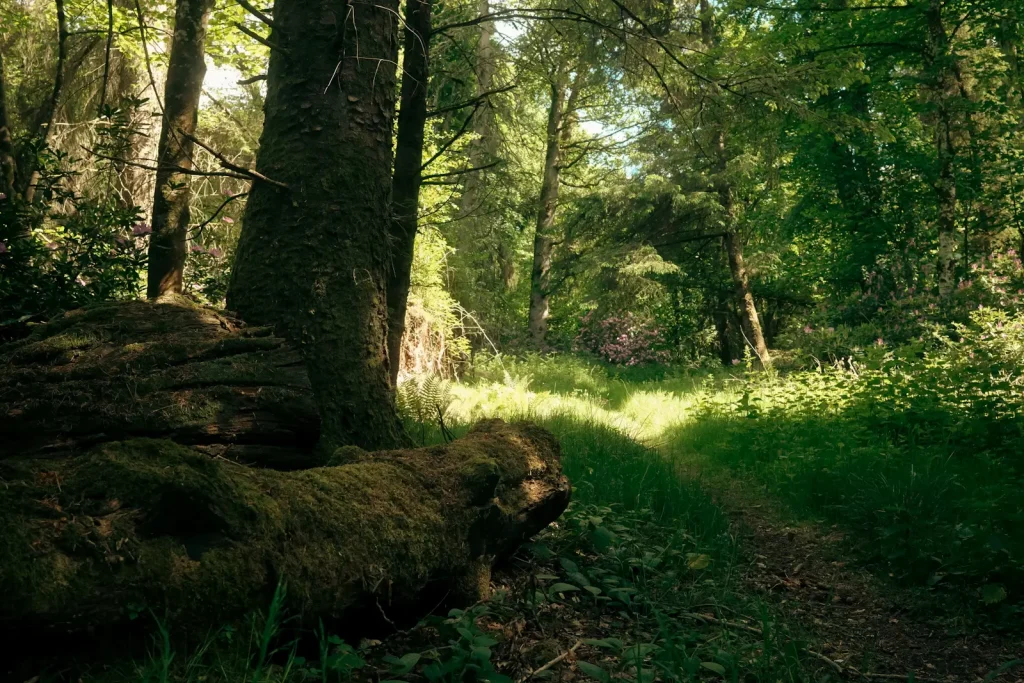
I shot in manual exposure mode using Classic Chrome, a simulation I’ve always enjoyed for its slightly muted colours and gentle contrast. It looks great straight out of camera while still providing an excellent starting point for later editing.
One thing I had to consciously remind myself was depth of field.
Having spent so much time shooting full-frame cameras recently, I automatically found myself thinking in terms of f/8. With the APS-C sensor in the X100VI, I often found myself comfortably working at f/5.6 instead.
Woodland and a Familiar Perspective
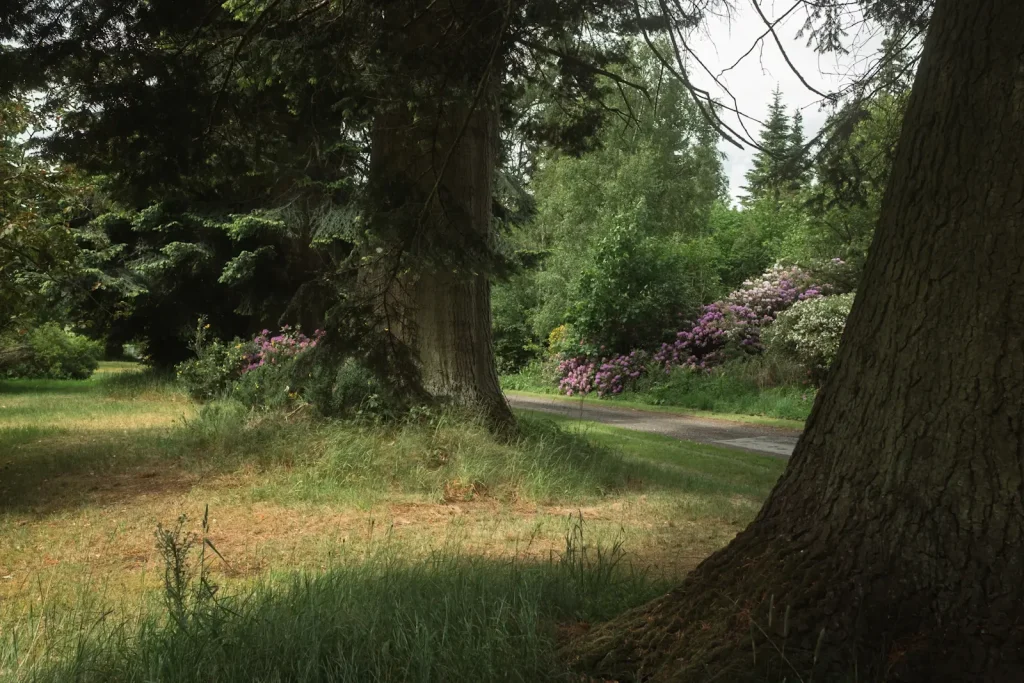
The woodland looked as beautiful as ever.
Scots Pines, birches and mature broadleaf trees filled the estate, their branches gently swaying in the breeze.
The light was subdued.
Not dark, but certainly flatter than when I visited recently with the Nikon Z 20mm f/1.8 S.
That brought another adjustment.
The X100VI’s 35mm equivalent field of view felt almost conservative after spending so much time shooting 20mm. In many ways, this walk reminded me why I continue to enjoy the X100VI despite owning larger and more capable cameras. I’ve previously compared it directly against an interchangeable lens setup in my X-T5 and 23mm f/2 vs X100VI comparison, and many of the same strengths became obvious again here.
At first my images felt a little flatter.
Less dramatic.
Less immersive.
But after a while I began to appreciate what the 35mm perspective offers.
The photographs remain about the subject rather than the lens. That’s one reason I continue to recommend the camera so highly for travel. It remains one of the few cameras that genuinely encourages me to carry it everywhere.
You don’t get the immediate visual impact that ultra-wide lenses can provide, but you gain flexibility and simplicity. Compositions become easier to arrange, and the field of view rarely calls attention to itself.
The result feels natural.
Perhaps that’s why the 35mm focal length remains so popular.
Why I Still Love the X100VI
What stood out most wasn’t image quality.
I already knew the image quality would be excellent.
What struck me was how enjoyable the camera remains to use, even after more than two years of ownership. In an industry where the excitement of new gear often fades quickly, the X100VI still feels like a camera I genuinely want to pick up and use.
The colours are beautiful.
The film simulations are still among the best available on any camera system.
The camera itself encourages me to stop thinking about equipment.
Actually, forget my understated British ways for a second.
I’ll just say it.
It felt great to be back shooting with the X100VI.
Its fixed lens, its constraints and its simplicity force me to stop thinking about lenses, specifications and endless choices.
Instead, I simply focus on photography.
And honestly, I think I need more of that.
Final Thoughts
This wasn’t a dedicated photography outing.
It wasn’t a review session.
It wasn’t a carefully planned landscape shoot.
It was simply a family walk through one of my favourite local woodlands.
And perhaps that’s exactly why the X100VI felt so at home.
Over the past few months I’ve spent a lot of time thinking about cameras, lenses and systems. Yet a simple afternoon in the woods reminded me that sometimes the best camera isn’t necessarily the most capable one.
Sometimes it’s simply the camera you want to carry.
And after more than two years of ownership, the Fujifilm X100VI remains one of those cameras for me.
If you enjoy photography field notes, personal projects, and seeing how different cameras and lenses are used outside of traditional reviews, you may also enjoy: