
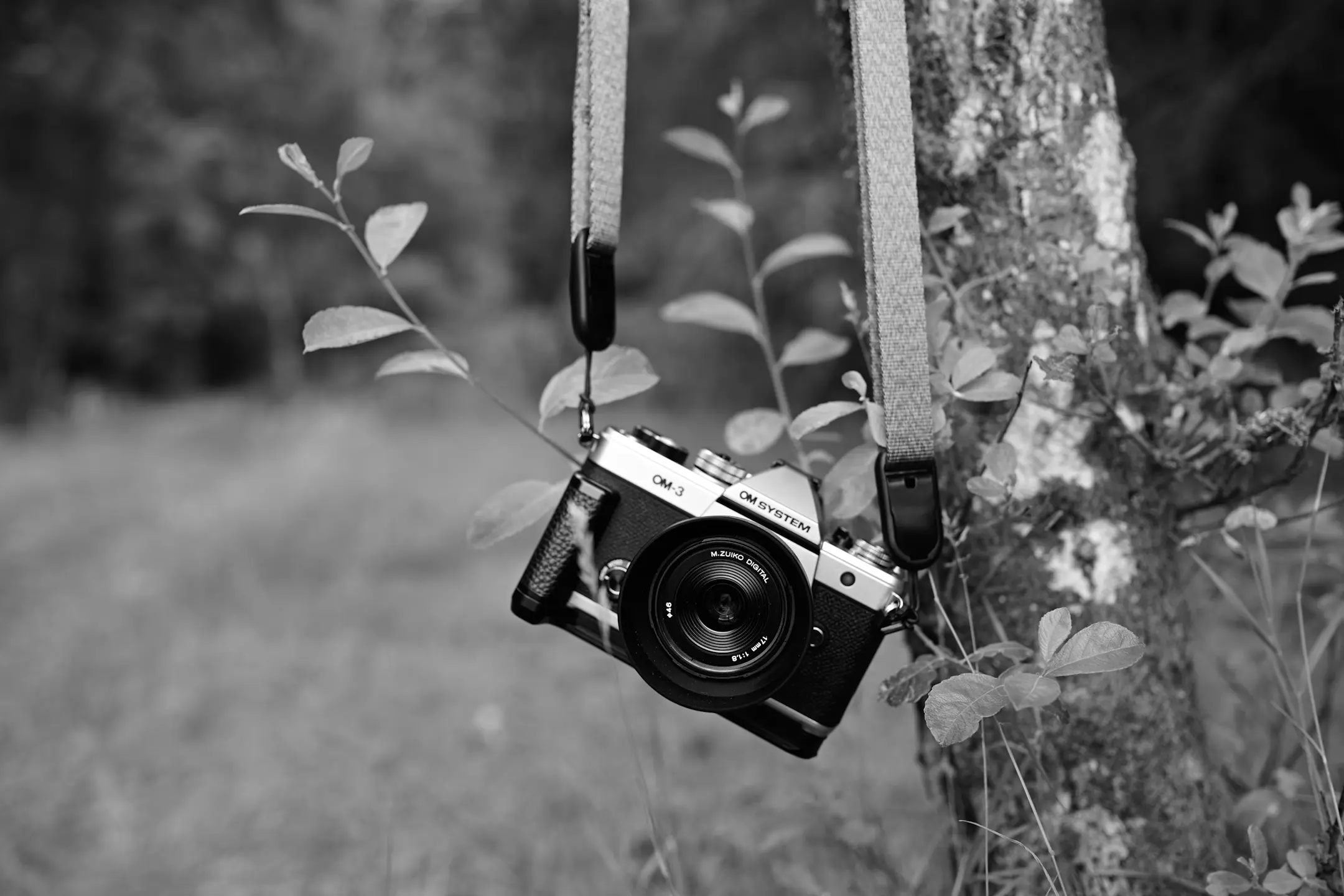
I shoot on both the Nikon Zf and the OM System OM-3. These two cameras have dedicated black and white modes accessible via dials and both can be tuned. I’ve been impressed with the black and white output from both. So yesterday, I decided to bring both along on a country walk and shoot only in their black and white modes to see whether one clearly wins over the other.
Of course, you could shoot RAW and process the files as you like, where the full-frame sensor files will be slightly easier to edit, having on paper more dynamic range and softer tonal transitions. However, if you just want to take advantage of the excellent built-in black and white modes of these two cameras, is there a discernable difference between the two in terms of quality?
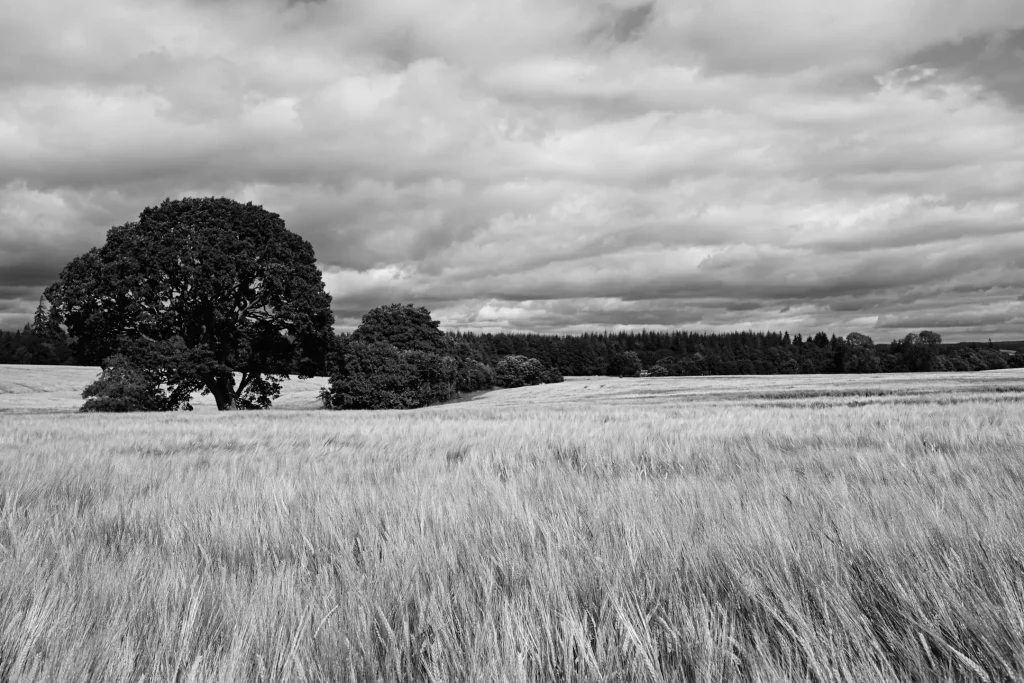
I shot both cameras in JPEG only, but on the files below I have matched them in Lightroom to get exposure as close as possible to make the test fair. Both cameras meter the same scene slightly differently, but I won’t go into that until later to keep the test below fair. I’ve also cropped the Zf file to match the 4:3 aspect ratio of the OM-3.
The weather was a mixture of sunshine with intermittent cloud coverage here in Perthshire, with strong contrast across the landscape.
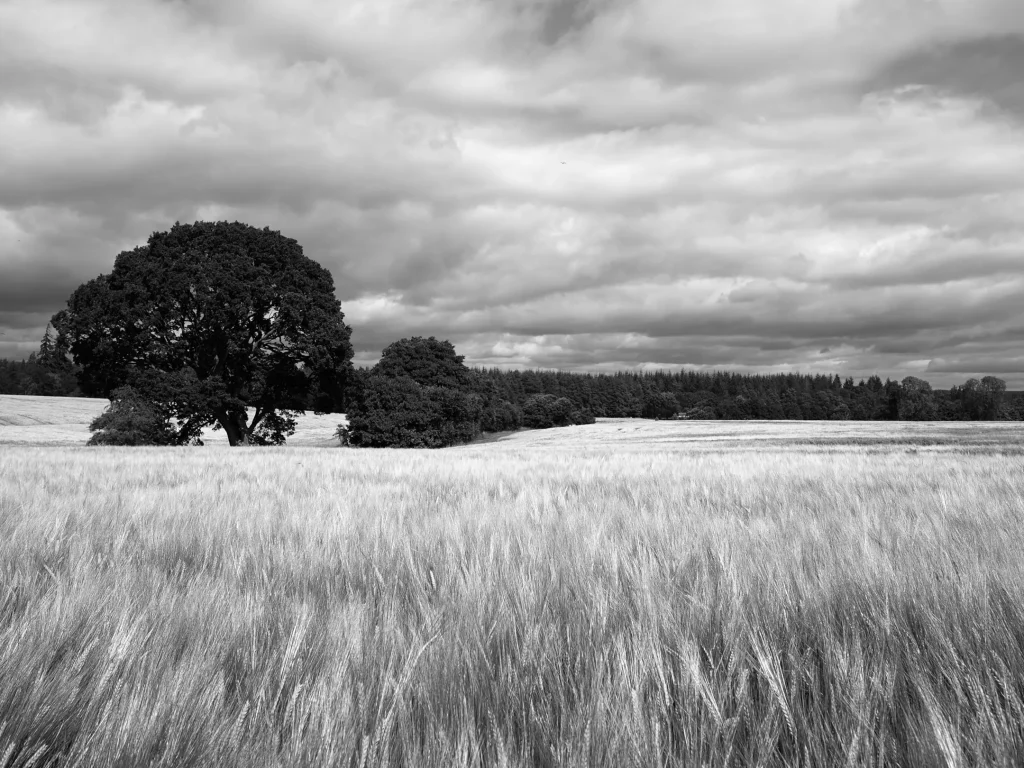
I’m not going to label the two shots below so that you can take a look without introducing confirmation bias.
Disclaimer: Some of the links on this website are affiliate links, meaning at no additional cost to you, I may earn a commission if you click through and make a purchase. This helps support the site and allows me to continue producing free content.
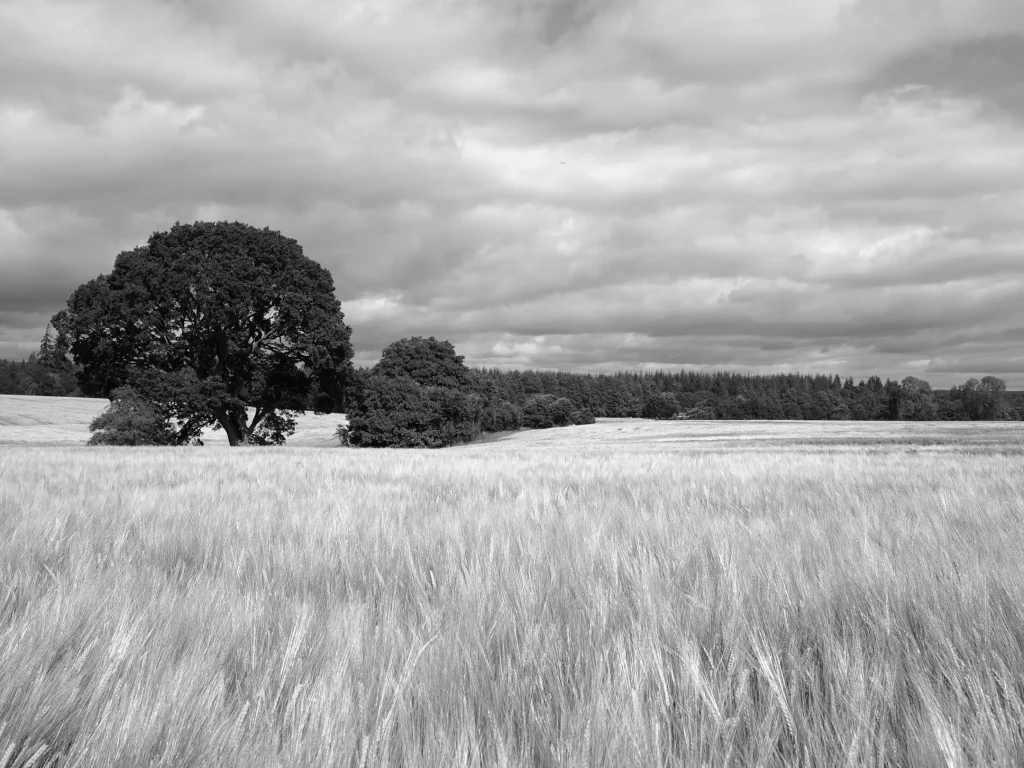
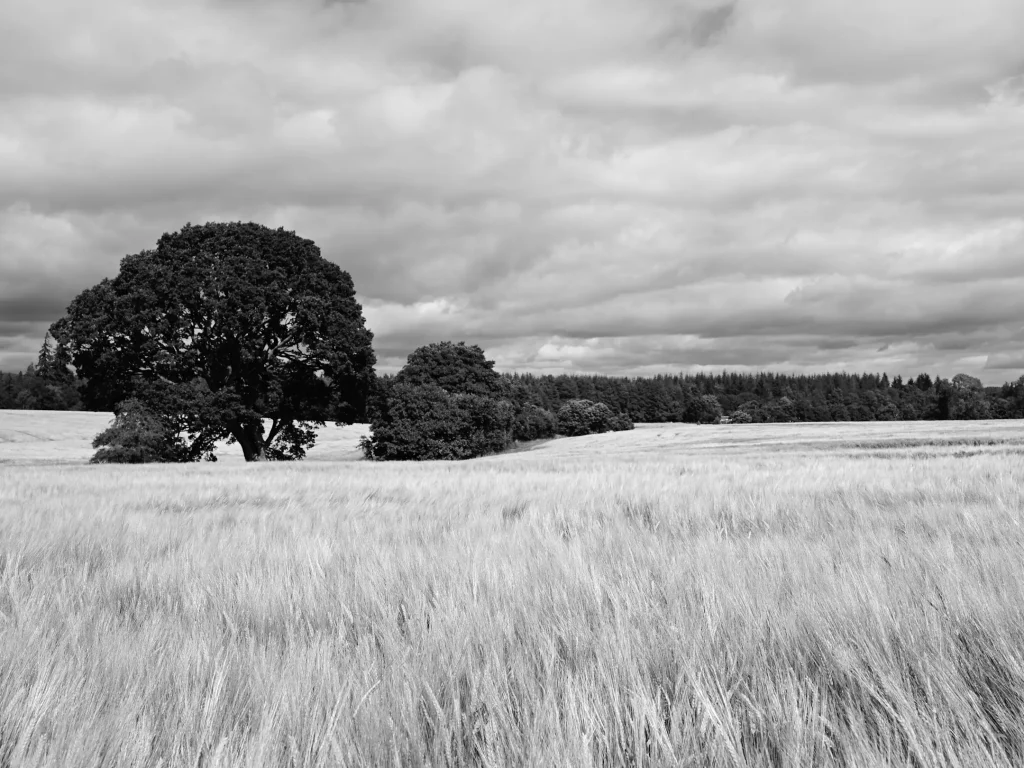
Which one do you prefer? Do you see a significant difference?
In my shooting yesterday, I noticed a couple of things. The Nikon Zf’s Monochrome profile is slightly more punchy than the OM-3’s default MONO 1 profile in the overall exposure, giving darker, deeper blacks SOOC, but the midtones were a little flatter and exposed darker. When viewed in isolation, I think the OM-3 Mono 1 profile with some slight tone curve adjustments looks punchy, but next to the Nikon SOOC they looked less contrasty and brighter overall.
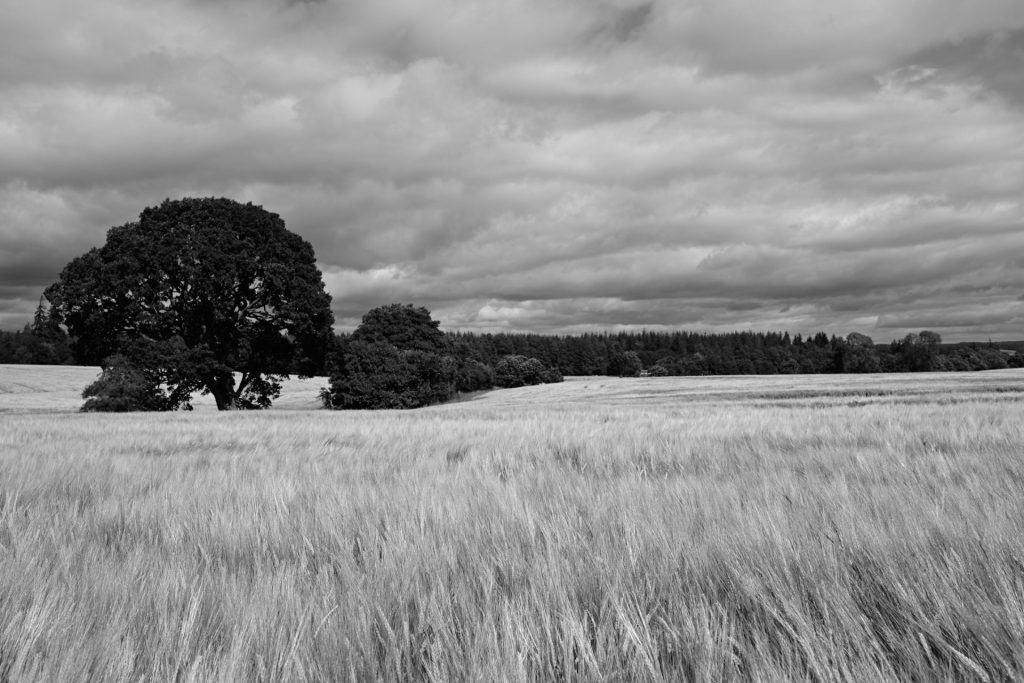
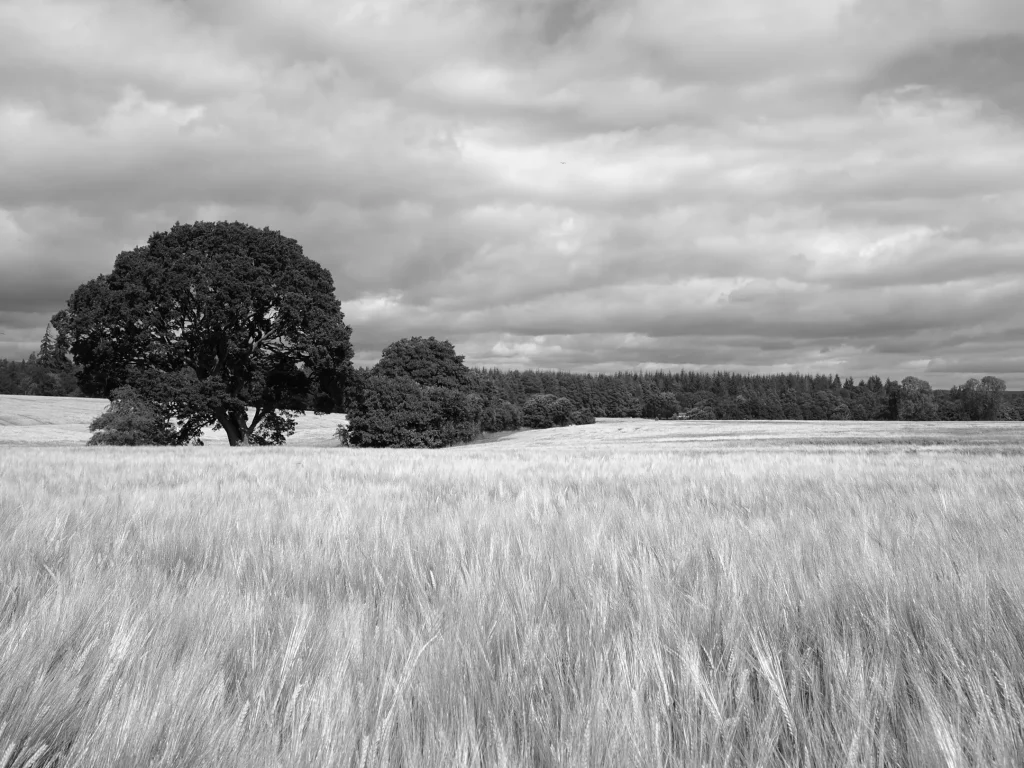
By adding a slight tweak to the tone curve in-camera via the color wheel on the OM-3, I was able to add a little contrast. I dialed in -2 shadows, +1 highlights, and +1 midtones, and that increased contrast. However, having now had a chance to look at the files back home and then push the JPEGs around a little bit in Lightroom, I’d bring the shadows down to -3 and put the midtones back to 0 for my next outing if I wanted to match the punchy output of the Zf SOOC without crushing blacks and ensuring I preserve the highlight detail.
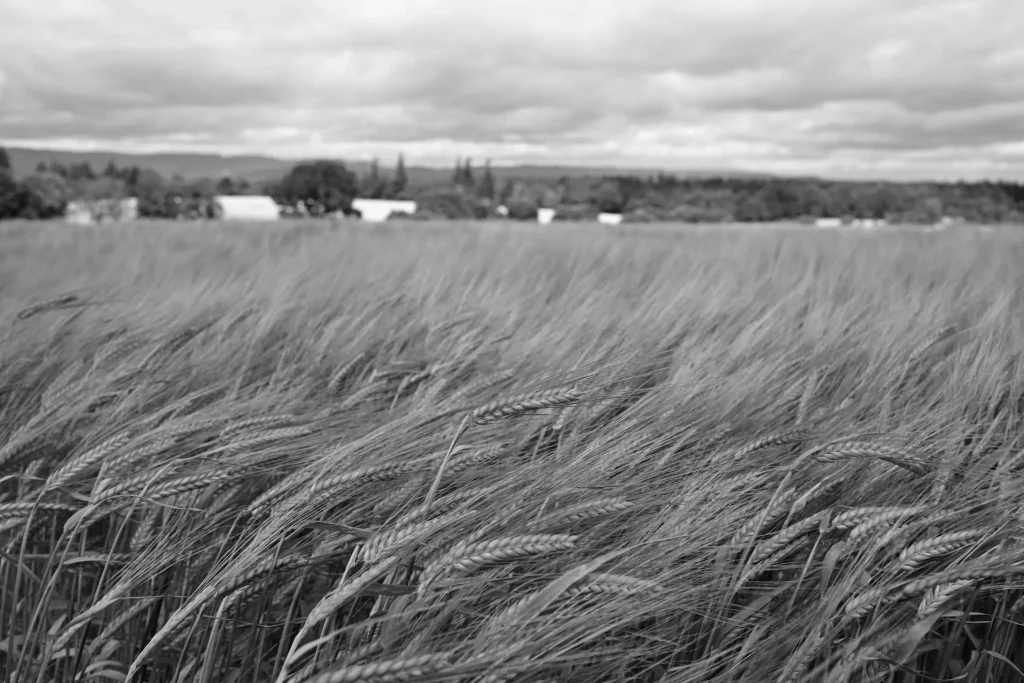
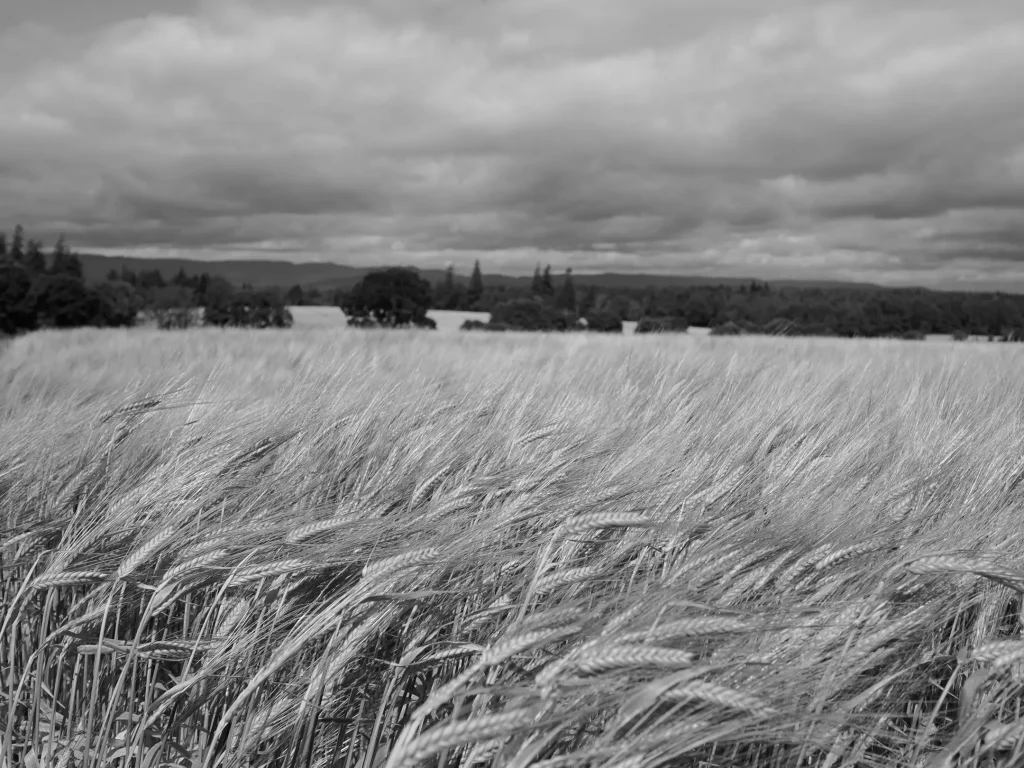
In terms of detail, with both having roughly 20MP sensors, it was a tie.
In my opinion, both the Zf and the OM-3 output excellent black and white files, and both cameras offer the ability to tweak the straight-out-of-camera look to adjust to your taste and the subject.
I do not see a huge advantage to the full-frame sensor in the shots here or the thousands I have taken with the cameras over the years. There are definitely differences—for instance, the tonal gradations between shades of grey in the clouds on the Zf are fractionally smoother, but it takes zooming in to 100% in Lightroom or printing large prints of 20×16″ or more to see that difference, and in a blind test, I’m pretty sure a huge percentage of people wouldn’t bet their house on which file is which.
Of course, the Zf will offer about 1.5 to 2 stops better high ISO performance so it will be better in low light too. I see this in skin tones being more natural on the Zf once the ISO level starts to climb. But then it is possible with a fairly still subject to shoot the OM-3 in Hi-Res mode, which not only gives you more detailed files, it gives you better high ISO performance and skin tones. It’s a workaround and one that is not suitable to every situation, but it is an option.
If your subject is stationary, the OM-3 offsets the low-light performance of full frame almost completely with its incredible IBIS, which allows slower shutter speeds than any other non-OM System camera that I’ve ever used. With the Zf, I may get sharp shots down to 1/4 of a second handheld; with the OM-3, I’m comfortable at 1 second.
There is also the aspect ratio to consider. If you have a strong preference for one over the other, that can influence your choice, with the Zf’s wider 3:2 aspect ratio against the OM-3’s more square 4:3.
And of course, depth of field is different, with the Zf being more easily able to create shallow depth of field while the OM-3 naturally gives you more in focus for a given aperture. One is not better than the other in my opinion. For shots like these, the extra depth of field meant I could shoot the OM-3 at f/4 rather than f/8 with the Zf. On the other hand, for black and white portraits, that shallow depth of field of the Zf can be an advantage if you want to isolate your subject.
In terms of handling, I enjoyed both yesterday, but that has as much to do with my need to get out and have some peace as it does with the cameras. I could happily use either of these for my black-and-white work. The OM-3 had the 17mm f/1.8 ii attached and the Zf had the Nikon Z 35mm f/1.8 S on it. The Nikon felt considerably heavier, yet mounted on my Peak Design Capture Clip, the extra weight made little difference. The OM-3 was slung around my shoulder on a Peak Design Leash camera strap and felt incredibly light.
Both lenses are available here:
A couple of points on handling. The Zf allows you to customize the control ring on the lens to act as an aperture ring. Even though it’s clickless, I still prefer it over using the command dials on the OM-3. However, the front command dial on the Zf which you can also use to change your aperture is awkwardly placed, and on more than one occasion I flicked the on/off switch instead of changing the aperture. Of course, I’d get used to that if I wasn’t swapping between cameras so much, but it’s worth noting.
The OM-3 dials just feel better.
So which camera is ultimately better for black and white shooters?
Like always, it really depends on several things: how much weight are you prepared to carry, how much money do you want to spend, and what is your subject and output.
If I was shooting black and white portraits and quality was my ultimate goal, I’d go with the Zf.
See the latest price for the Nikon Zf here
If I was shooting general photography, often landscapes, and I wasn’t going to be printing larger than 30×20″, then I think the OM-3 makes for a more fun and enjoyable camera to shoot with, and it’s easier to get good results with its deeper depth of field and computational modes.
See the latest price for the OM System OM-3 here
In terms of image quality, the Zf is the winner in my opinion, but the differences are nowhere near what the 4 times larger sensor would have you believe. Whether those differences are worth it to a photographer are absolutely subjective.
In my black and white photography projects here in Scotland, I will shoot whichever camera suits the day and subject, but after yesterday, I’ll never feel worried that I’m somehow missing out by using a Micro Four Thirds sensor. I’ll leave you with the final edited photos from yesterday.
Did you use any of the in camera color filters for bw like the red or green filters ect
Hi Steven,
Not on these particular shots. I do sometimes use them, green filter for skin tones for example or a red filter to darken skies.
All the best
David