

I own both the Fujifilm X-T5 and the Nikon Zf. In fact, Fujifilm and Nikon are my two main systems, and I regularly shoot with both.
Over the past few months I’ve been using the X-T5 and the Zf side by side, and I know a lot of people are trying to decide which modern, retro-styled camera makes more sense. I genuinely enjoy using both. They’re both excellent cameras, both offer more image quality and features than most people will ever need, and both are more than capable of producing great images.
But if you’re having to make this decision — if you can only choose one — then there are some important differences worth understanding.
This comparison isn’t just based on technical specs or marketing claims. It’s based on real-world use here in the Philippines, and on years of shooting with both Fujifilm and Nikon cameras. Below, I’ll walk through the areas that actually matter in daily use, to help you decide which one is the better fit for you.
This article contains affiliate links. If you choose to buy through these links, I may earn a small commission at no extra cost to you. I only recommend gear I use myself or genuinely believe in.
Both the Fujifilm X-T5 and Nikon Zf are excellent cameras, and neither is worth switching to if you’re already invested in one system.
The X-T5 makes more sense if you value a smaller, lighter setup, a more intuitive dial-based shooting experience, and greater flexibility with straight-out-of-camera looks.
The Zf is the better choice if you prioritise faster autofocus tracking, stronger low-light performance, and full-frame image quality.
Check latest price
Check latest price
- 40MP APS-C sensor
- In-body image stabilisation (IBIS)
- Dual SD card slots
- 3-way tilting rear screen
- Approx. 557g (body with battery & card)
- Fujifilm X mount
- 24MP full-frame sensor
- In-body image stabilisation (IBIS)
- SD + microSD card slots
- Fully articulating rear screen
- Approx. 710g (body with battery & card)
- Nikon Z mount
Autofocus: Nikon Zf vs Fujifilm X-T5

In practice, the Nikon Zf is the stronger autofocus camera.
AF-C tracking is faster and more confident, particularly with moving subjects, and Nikon’s tracking mode is simply more reliable overall. Eye detection in continuous autofocus is also better on the Zf, locking on quickly and holding focus with less hesitation.

That said, the Zf isn’t perfect. The lack of a joystick is frustrating, especially coming from the X-T5, where focus point control is more immediate and tactile. Fuji’s autofocus performance is still very good, but when it comes to tracking consistency and motion, Nikon has the edge. Nikon’s 3D tracking performance does somewhat negate the need for a joystick, as you can simply place the focus point over your subject and recompose while the camera maintains focus. Of course, there are still times when you want to move the focus point manually, and in those situations the joystick on the X-T5 works more intuitively and feels quicker to use.
If autofocus performance — especially tracking — is your top priority, the Zf wins here.
Is the X-T5 going to hinder you? Very unlikely.

Despite what you might hear on YouTube, the Fujifilm X-T5 has very good autofocus performance. It can take a little longer to dial in the best settings compared to some other cameras, but paired with Fujifilm’s more modern lenses it works extremely well in real-world use. I have made my Fuji X-T5 settings file available for free to help you get quickly set up with settings that work well.
If you regularly shoot wildlife, sports, or very fast-moving subjects, the Nikon Zf does have the advantage. Even then, it’s worth saying that for those specific genres there are other cameras that would outperform both. If you want the best settings for your Nikon Zf then I’ve published my settings here.
Size, Weight & Handling
This is one of the biggest differences between the two cameras.
The Zf is noticeably larger and heavier than the X-T5, and that difference becomes more obvious once you start mounting lenses like the Nikon 50mm f/1.8 S. Nikon Z lenses are optically excellent, but they’re not small — and the lack of aperture rings removes some of the tactile shooting experience.
The question I’d be asking myself is this: does the Nikon Zf feel significantly larger than the X-T5, and if so, will that actually affect whether I bring the camera with me?
Here’s my honest answer: yes, the Zf does feel noticeably bigger than the X-T5.
When I switch from the Nikon Zf with the 50mm f/1.8 S to the X-T5 paired with the 33mm f/1.4 WR, the Fuji immediately feels compact. It’s lighter, more manageable, and easier to live with day to day.
The Zf doesn’t feel too big, but it is big enough that it subtly changes the mindset from “I’m going out and I’ll take a camera with me” to “I’m going out with my camera.” That’s a small distinction on paper, but in real life it makes a meaningful difference.
The Zf also uses a single SD card slot located in the battery compartment, which isn’t ideal from a handling or workflow perspective.
By contrast, the X-T5 feels lighter, more compact, and better balanced for long days of shooting. Even Fuji’s faster f/1.4 “red badge” primes are still lighter than Nikon’s f/1.8 S lenses, which makes a real difference if you’re building a camera you want to carry everywhere.
Image Quality & Colour

Technically, the Zf has the edge.
You get roughly 1–1.5 stops better low-light performance, with more flexibility when pushing shadows before noise becomes an issue. Nikon’s out-of-camera colour is excellent — Natural Picture Control looks genuinely pleasing, black and white modes are strong, and Deep Tone Portrait produces very attractive results. Skin tones look good on both cameras, but Nikon’s are slightly more realistic and neutral straight out of camera.
That said, Fuji still offers something different.

The X-T5 gives you far more creative control straight out of camera thanks to film simulations and custom recipes. Image quality is still excellent, and while the 40MP sensor won’t matter to most people, those who crop heavily will appreciate the extra resolution. The 24MP vs 40MP debate isn’t something you need to overthink — if it matters to you, you already know why.
The question I’d be asking myself here is this: does the improved image quality of the Nikon Zf actually make a meaningful difference to the photos I can create?
The honest answer is: it depends.
If you shoot in low light a lot, then yes — the Zf is meaningfully better. You have more flexibility, cleaner files, and more room to push shadows without penalty.
For almost everything else, technique, vision, and the lenses you use will make far more difference than the camera itself.
Controls & Shooting Experience

The PASM lever on the Zf takes some getting used to.
If you’re not in the correct mode, the physical dials are overridden, which can feel unintuitive at first. Shooting in full manual mode largely solves this, as the dials then behave as expected — but you do need to consciously select the shooting mode first.
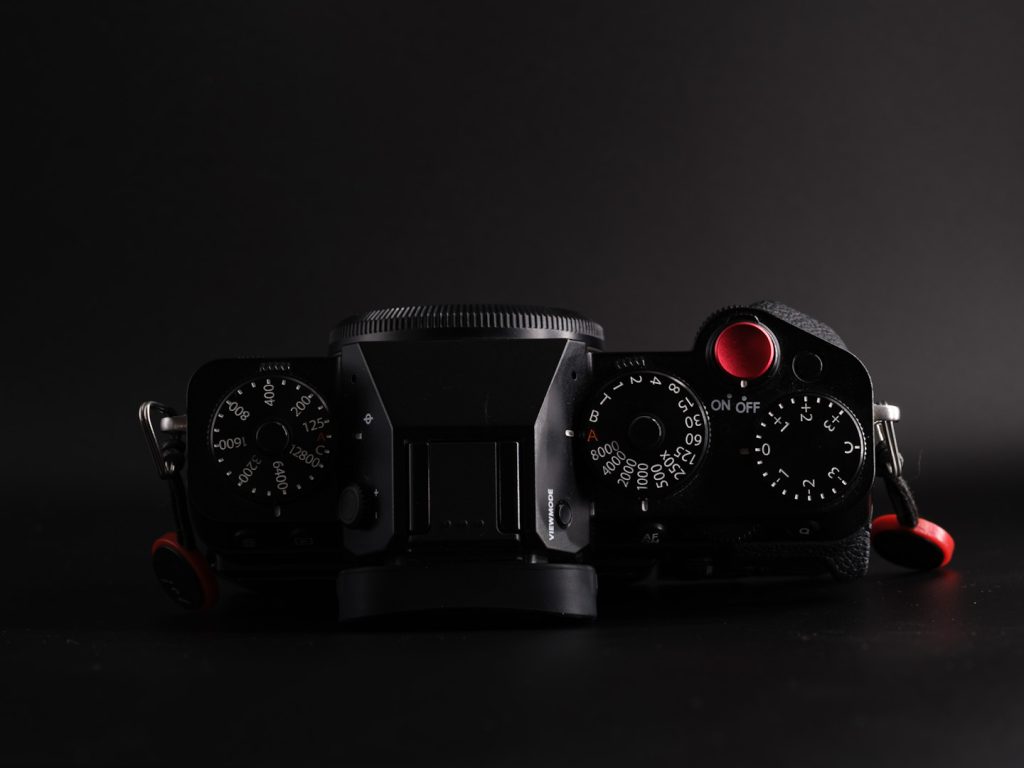
Fuji’s system is more fluid. Simply operating the shutter speed or ISO dials on the X-T5 automatically puts you into the relevant mode. It’s faster, more intuitive, and better aligned with a traditional, dial-based shooting experience.
If you care about how a camera feels when you use it, Fuji does the physical dials better. For everything else, both are enjoyable.
Screens, EVF & Build Quality
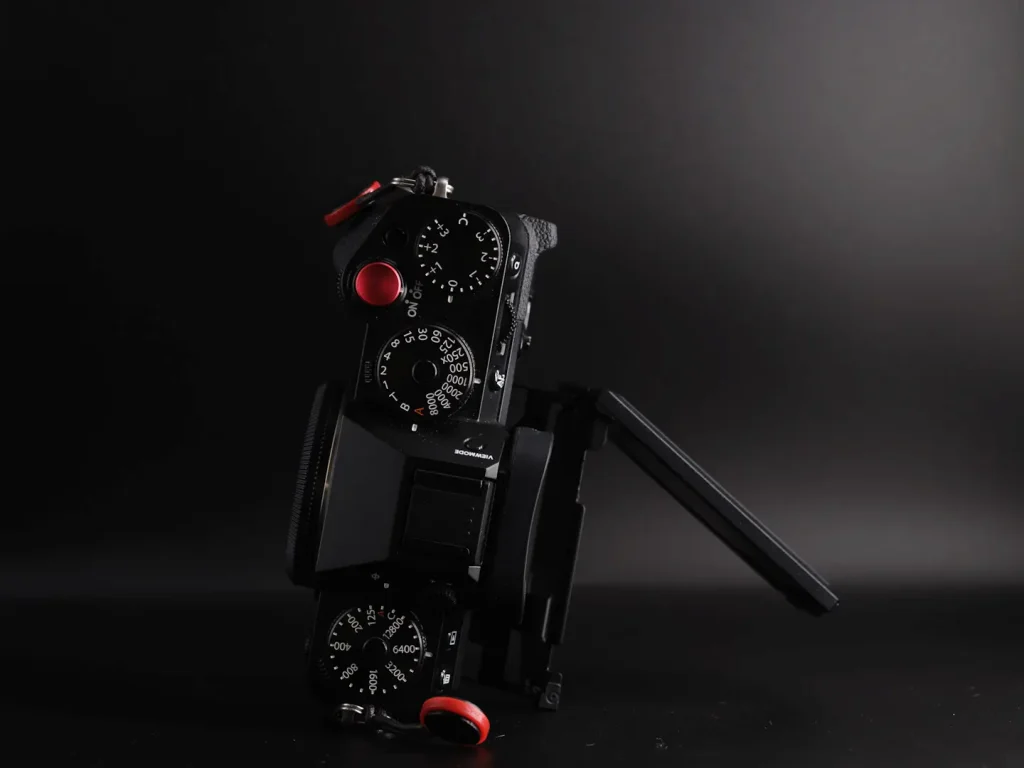
The X-T5’s three-way tilting screen is better suited to photography than the Zf’s fully articulating screen, especially for waist-level or vertical shooting.
EVF quality is effectively a wash — neither camera has a meaningful advantage here.
Both cameras are fully weather-sealed and have handled rain without issue. The Zf’s dials feel more substantial, with firmer clicks and a more premium tactile feel, while the X-T5’s dials function better in day-to-day use.
Battery life is also effectively a wash.
Dual Card Slots
The X-T5 uses dual full-size SD card slots, which is the cleaner and more practical solution.
The Zf technically has dual slots, but one is microSD. It works, but it’s not ideal and is worth factoring in if redundancy matters to you.
Final Thoughts: Which One Should You Choose?
It really comes down to priorities.
If you value size and weight, the X-T5 is noticeably lighter with equivalent lenses. If you want a genuine retro shooting experience, Fuji gets you closer. If you crop heavily, the 40MP sensor provides some extra flexibility.
If you’re looking for a camera you’ll always want to carry with you, one you’ll build a full kit of lenses around, and you don’t need the thinnest depth of field or the absolute best low-light performance, the X-T5 is still the better overall choice — especially if it’s your only camera.
If, however, you already shoot Nikon, want a beautifully designed secondary body to complement something like a Z6 III or Z8, want to use your existing lenses, and expect the same autofocus behaviour you’re used to, then the Zf makes more sense.
Both cameras are excellent. And honestly, neither is worth switching to from the other if you’re already invested in lenses for one system.
If you’re buying fresh, though, the decision really comes down to:
If you value a smaller, lighter setup, a more intuitive physical shooting experience, and greater flexibility with straight-out-of-camera looks, the Fujifilm X-T5 makes more sense.
If you prioritise faster autofocus, full-frame image quality, and stronger low-light performance, then the Nikon Zf is the better choice.
Check latest price
Check latest price
I wonder what’s with the red shutter button? An add-on, as a gimmick or with some practical benefit?
Hi Hendrik,
It came with the SmallRig grip I bought. It’s called a soft shutter release. In the film days, it was used to minimise shutter shock when shooting at slower shutter speeds.
I always thought they were a gimmick on digital cameras until I tried one, but I now leave it on as it makes the shutter button easier to find and gives a slightly better feel when half-pressing. It’s definitely not essential — some people swear by them, others don’t see the point at all.
All the best,
David
zf makes more sense if you are into vintage lenses for obvious reasons .
Hi Christian,
Yes, the Zf does make a lot of sense then.
All the best
David
Your post really helped me decide between the two camera models. I wanted to buy you a coffee, but it looks like the button isn’t working.
Cheers,
ZM
Hi ZM,
Thanks for your comment. I’m really pleased that the article helped you and thank you for your kind gesture. I’ll take a look at the link and ensure its working for future use.
All the best
David