
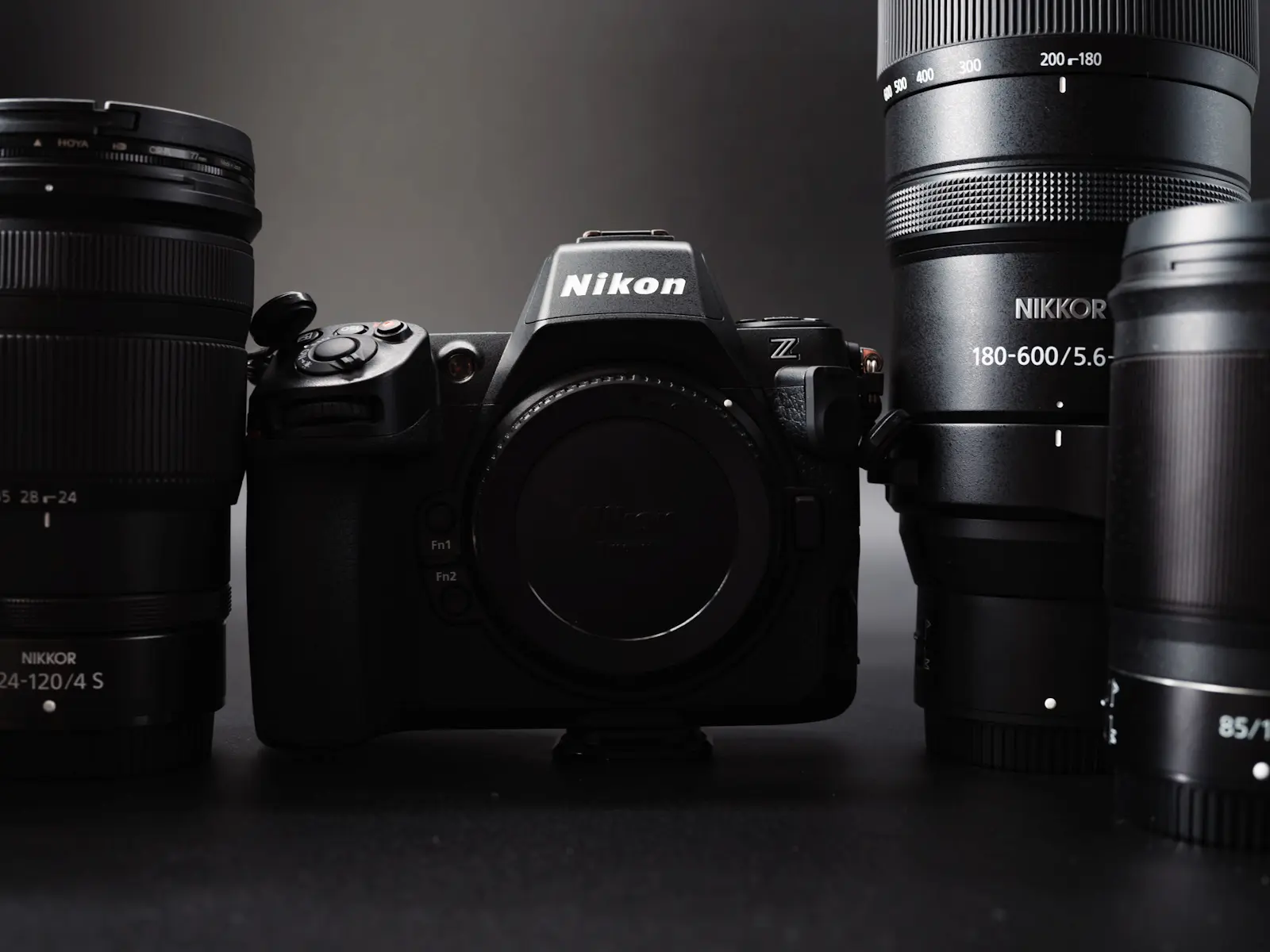
If you’ve bought — or are thinking about buying — the Nikon Z8, which is one of the best cameras for photography available right now, then choosing the right lenses matters just as much as the camera itself.
TL;DR: Best Lenses for the Nikon Z8
If you just want the quick answer, these are my main picks. Click any section to jump straight to the explanation.
- Best wide-angle lens: Nikon Z 14-24mm f/2.8 S
- Best value wide-angle lens: Nikon Z 14-30mm f/4 S
- Best professional standard zoom: Nikon Z 24-70mm f/2.8 S II
- Best all-round standard zoom: Nikon Z 24-120mm f/4 S
- Best wildlife lens: Nikon Z 180-600mm f/5.6-6.3 VR
- Best portrait lens: Nikon Z 85mm f/1.8 S
- Best all-round prime: Nikon Z 50mm f/1.8 S
This article contains affiliate links. If you buy through these links, I may earn a small commission at no extra cost to you. This helps support the site and allows me to keep producing independent, real-world photography content.
I bought the Z8 when I was still living in the Philippines, mainly shooting travel photography along with some street and candid work. I used it mostly with the 1.8 S series of primes, and at that point, the true benefits of the Z8 were somewhat wasted on me as I wasn’t really testing it to its limits. For more details see my full Nikon Z8 review.
Since moving to the Scottish Highlands in January, that’s changed completely.
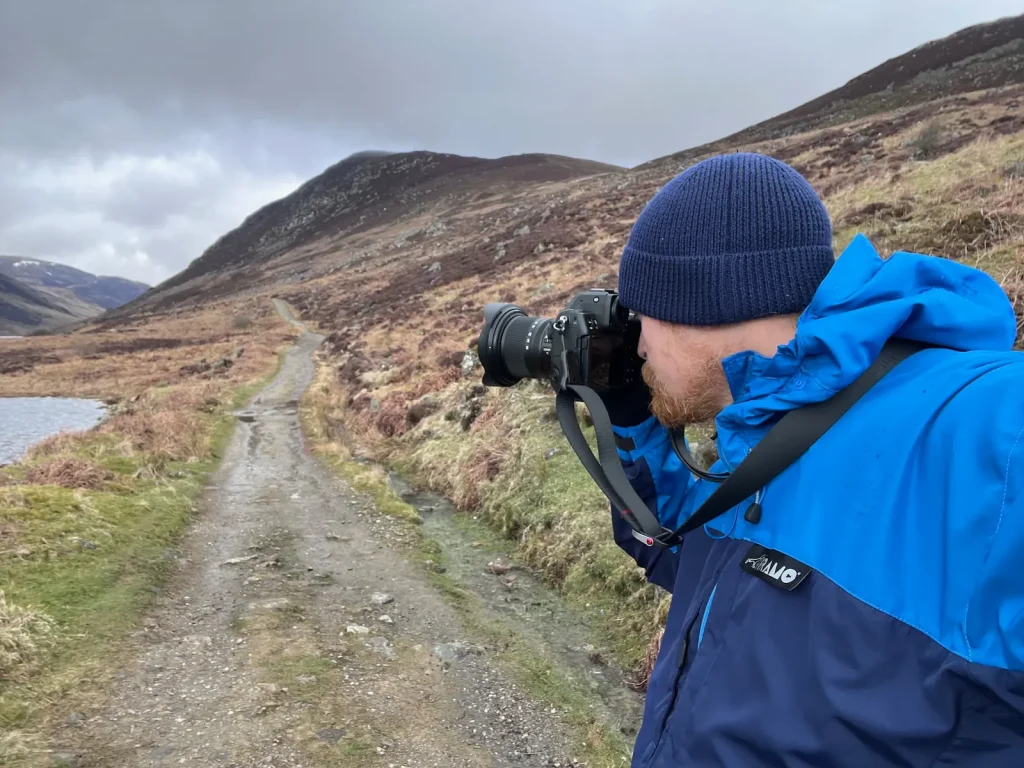
The Z8 has taken over as my primary camera for a lot of my shooting, particularly landscapes and wildlife. It’s incredibly versatile and capable — offering great image quality for landscapes, autofocus that handles everything including wildlife, my favourite ergonomics of any camera when I want to get the shot with as little friction as possible, and build quality that inspires confidence in Scottish weather. With a few key accessories it’s just an incredible tool. Also see my guide to which filters you actually need for photography.
After taking it out into Scottish glens in the middle of winter and scouting wildlife locations locally, it dawned on me that this is the right camera for the job when things are demanding. When I have the Z8 with me, I’m not left wishing for another option.
Some people who own the Z8 will simply want — and be able to afford — the most expensive and absolute best lens for every situation, and there’s nothing wrong with that. The Z8 is a serious tool for serious photographers, and it can justify top-end glass.
But there’s also a point where a lens is more than good enough to produce professional-level results while saving a bit of money.
That’s the route I’ve personally taken with my Nikon Z8 lenses. Having moved countries and with a focus on settling my two children, I can’t always justify the most expensive glass. Childcare and other commitments come first, so I’ve spent a lot of time working out where I can get excellent performance while saving some money.
Where a subject is one of my core shooting scenarios, I’ll invest in the best I can afford. In other areas, I look for the best balance — lenses that do the job extremely well without paying for diminishing returns at the very top end.
These days in Scotland, I’m shooting far more landscapes and wildlife and much less travel. For those subjects, given the choice, I’d pick the Z8 nearly every time. I don’t use it as much for family or casual photography — for that, the size, weight, and feel of the Nikon Zf or my Fuji cameras make more sense.
By the end of this guide, I’ll show you the absolute best lenses for each type of shooting, but also where I’ve chosen to save money — and why — on lenses that still perform extremely well for the price.
Wide Angle Lenses for the Nikon Z8
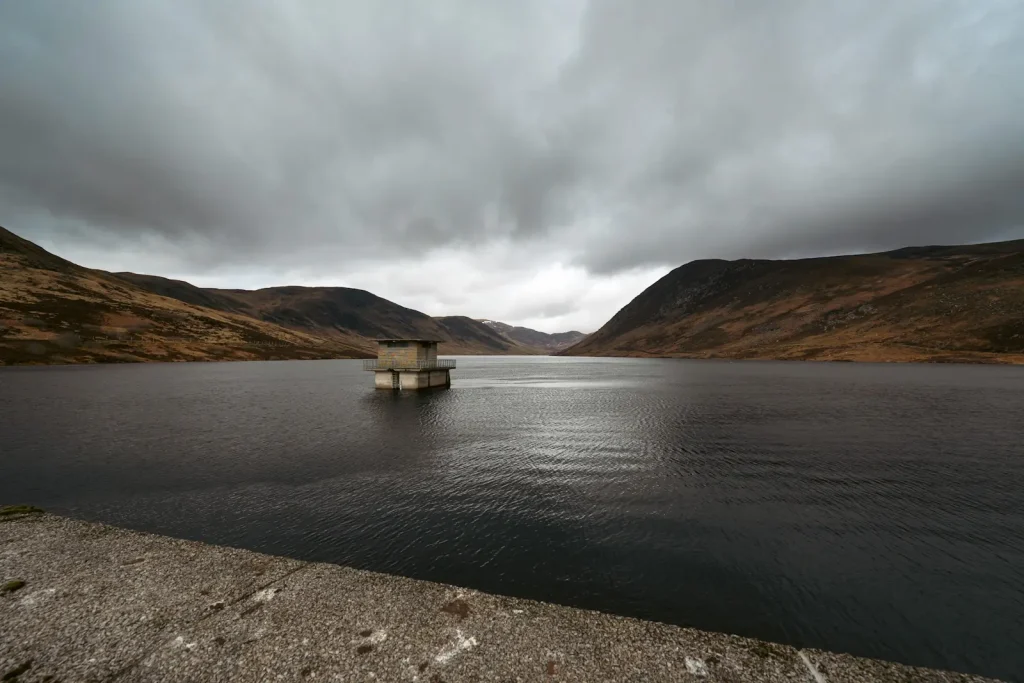
I used to shoot wide angle lenses almost exclusively when I was working as a professional landscape photographer in the Outer Hebrides. I then moved away from them for a number of years, but since returning to Scotland, I’ve found myself using them more and more again.
The Scottish Highlands just suit wide angle photography. The ability to capture grand vistas with depth and drama is hard to ignore.
These days, my approach is a bit different. I’m more of a wander-and-discover photographer than someone who locks everything down on a tripod and waits for the light. But once I’ve found a location worth returning to, I’ll absolutely go back with a tripod, filters, and a more deliberate approach.
Best Wide-Angle Lens: NIKKOR Z 14-24mm f/2.8 S
If you want the absolute best wide angle lens for the Nikon Z system, this is it.
I used this lens extensively on the Z7 II, and the results were outstanding. It’s optically superb, very well corrected, and produces stunning files on high-resolution Z bodies — especially at ISO 64. Sharpness across the frame is excellent, and the overall rendering is about as good as it gets for a zoom of this type.
It’s also surprisingly light for an f/2.8 ultra-wide, and the build quality is exactly what you’d expect at this level — solid and confidence-inspiring.
If your priority is maximum image quality with no compromises, this is the lens to get.
That said, there are trade-offs.
It isn’t cheap, and for the way I shoot now, it’s a more specialist lens than it used to be for me. Even though it’s relatively light for what it is, it’s still noticeably larger than the alternative, which means it takes up more space in the bag for something I won’t use all the time.
For landscape work, f/2.8 also isn’t a major advantage in most situations, as I’m stopped down 99% of the time anyway (outside of astro work).
Then there’s the filter setup. You’re looking at 112mm filters or a dedicated system, which adds both cost and complexity. I’ve used the NiSi system before, and while it works well, it’s not something I particularly wanted to go back to.
Nikon Z 14-24mm f/2.8 S
This is the best wide-angle zoom available for the Nikon Z system. If you want top-tier image quality with minimal compromises, this lens delivers exceptional sharpness, build quality, and performance across the frame.
Best Value Wide-Angle Lens: NIKKOR Z 14-30mm f/4 S
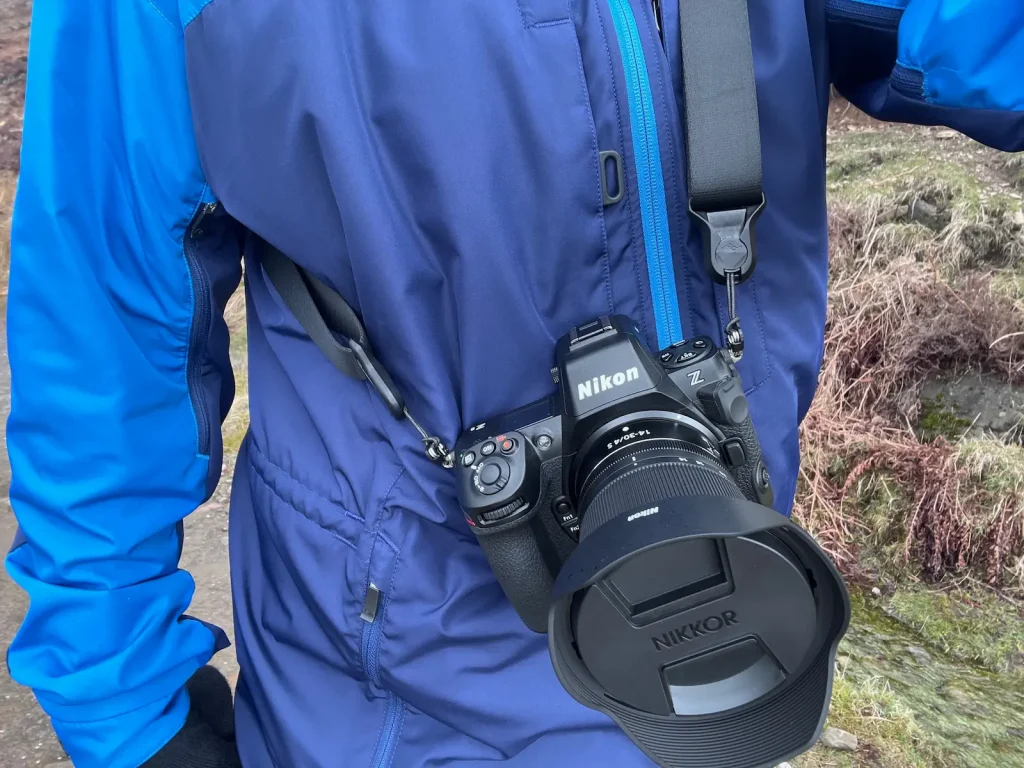
After considering the options, I ended up buying the Nikon Z 14–30mm f/4.
It’s still a very sharp lens, especially when stopped down for landscapes. The corners aren’t quite as good as the 14–24mm f/2.8, but across most of the frame it delivers excellent, professional-level results.
It also costs significantly less and is noticeably more compact and lighter, which makes a real difference. It takes up less room in my bag, and that means I’m far more likely to actually bring it with me.
For landscape work, f/4 is more than enough. I’m stopped down most of the time anyway, and importantly, this lens is still properly built for real-world use. It’s weather sealed, has a gasket at the mount, and includes a fluorine coating that helps shed water — all things that matter when you’re shooting in Scottish conditions.
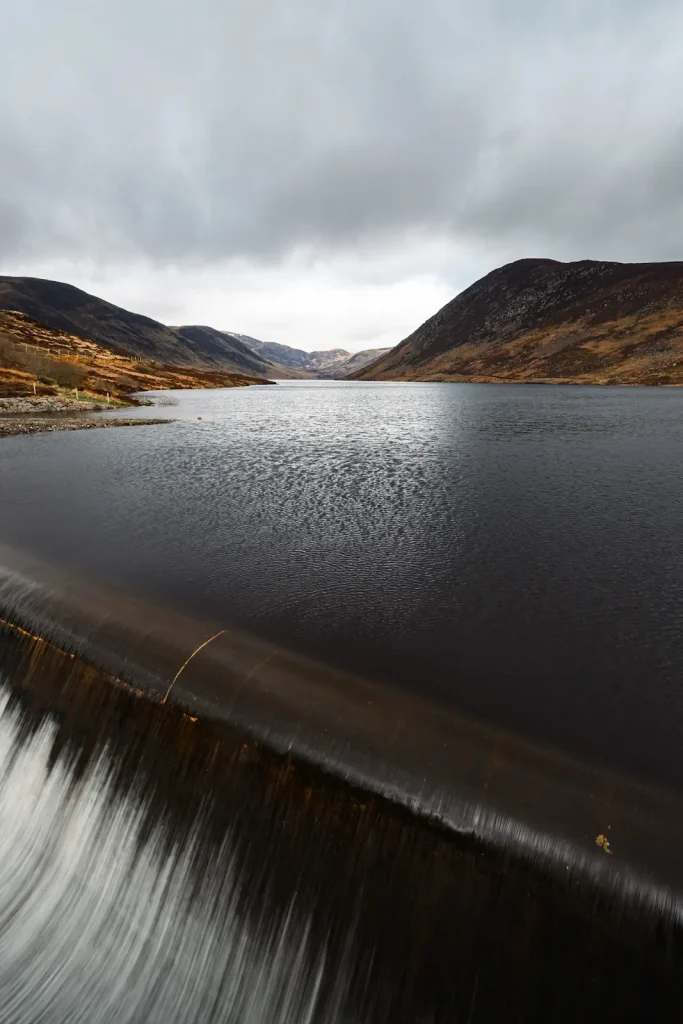
One of the biggest advantages for me is filters. It takes standard 82mm filters, which are far more affordable and practical. I already owned a full set and was able to keep using them, rather than investing in a larger, more specialised system.
In real use, this lens is more than capable of producing beautiful landscape images at a professional level — and it does so while saving a significant amount in cost, weight, and size.
It’s not the absolute pinnacle of performance, but it doesn’t need to be. There are no major weaknesses here, and that’s what makes it such a strong choice.
The only real downside — and it’s minor — is the retractable design. When the lens is collapsed, you have to twist it into position before shooting. Nikon did this to keep the size down, and it works, but I do find it slightly irritating to have to “unlock” the lens each time.
That said, given the overall performance and value, it’s an easy compromise to live with.
Nikon Z 14-30mm f/4 S
This is the best value wide-angle zoom for the Nikon Z system. It delivers excellent image quality in a smaller, lighter package, making it ideal for travel and landscape photography where flexibility and portability matter.
Which Should You Buy?
Buy the Nikon Z 14-24mm f/2.8 S if you want the best possible image quality and don’t mind paying for it.
Buy the Nikon Z 14-30mm f/4 S if you want excellent real-world performance in a smaller, lighter, and more affordable package.
Standard Zoom Lenses for the Nikon Z8
In Scotland, a standard zoom is my most used lens for general photography and landscapes. For most people, this is likely to be the lens that lives on their camera the majority of the time.
It needs to be optically excellent, cover a useful focal range, and ideally be weather sealed if you’re shooting outdoors. You’re also going to be carrying it a lot, so size and weight matter more than you might expect.
Best Overall Standard Zoom: NIKKOR Z 24-70mm f/2.8 S (and Mark II)
The best standard zoom for the Nikon Z system — and one used by a lot of professionals — is the 24–70mm f/2.8.
I owned the original version with my Z7 II, and it’s one of the best professional standard zooms I’ve ever used. It’s extremely sharp across the frame from 24–70mm, optically close to flawless, and delivers consistently excellent results.
The f/2.8 aperture makes it very flexible. You can shoot landscapes stopped down, then switch to portraits at the long end with strong subject separation. It also performs much better in low light than an f/4 zoom, which means you’re less likely to need to swap to a prime mid-shoot.
The focal range is practical, covering wide-angle shots at 24mm through to a useful short telephoto at 70mm. Build quality is excellent — solid, well balanced, and fully weather sealed — yet still relatively light compared to older DSLR equivalents.
The Mark II version improves things further with a new optical design, internal zoom (which helps with balance and weather resistance), and faster autofocus. I haven’t personally used the Mark II yet, but based on how good the original is, it’s safe to assume it’s an outstanding lens.
These aren’t cheap lenses, but if you want the best possible standard zoom for the Z8, this is it.
For photographers who rely on their gear professionally — wedding shooters, event photographers, or anyone needing reliability and performance in all conditions — this lens makes a lot of sense.
Nikon Z 24-70mm f/2.8 S II
This is the best professional standard zoom for the Nikon Z system. It delivers outstanding sharpness, excellent low-light performance, and the flexibility of an f/2.8 aperture, making it ideal for everything from landscapes to portraits and event work.
But for more general use, there’s a more balanced option.
Best Value Standard Zoom: NIKKOR Z 24-120mm f/4 S

My requirements for a general zoom here in the Scottish Highlands are fairly simple: it needs to be optically excellent, weather sealed, not too large or heavy, and justifiable in terms of price given my current situation.
That’s why I chose the 24–120mm f/4. For more details see my full Nikon Z 24-120mm f/4 S review.
In terms of size and weight, it’s about a perfect fit for the Nikon Z8. It feels substantial enough to match the ergonomics of the camera, but not so heavy that it becomes a burden. It balances extremely well when I’m out walking and exploring, and when mounted on my Peak Design Capture Clip, it still feels within what’s reasonable to carry without putting undue stress on the mount.

It’s a very well-balanced combination that just feels right in real use.
Optically, it’s very good. You get sharp images throughout most of the range, with the usual minor trade-offs you’d expect from a zoom that covers 24–120mm. It’s slightly softer at the long end, but still performs more than well enough in practice.
What makes it so useful is the range. It works as a genuine one-lens solution — from 24mm for wide landscapes through to 80–120mm where you can start isolating details. That flexibility matters when you’re out exploring and don’t want to keep changing lenses.
One thing that often gets overlooked is the minimum focusing distance of just 35cm. It’s genuinely useful for picking out details — flowers, textures, small elements in the landscape — and for general close-up work, it almost removes the need for a dedicated macro lens unless you’re specialising in it.
The f/4 aperture is also more usable than people sometimes assume. On a full-frame camera like the Z8, you still get a reasonable amount of subject separation at the longer focal lengths for portraits or family shots.
Build quality is solid, and like the rest of Nikon’s S-line lenses, it’s properly weather sealed. I’ve used it in wind-driven rain on the Z8 without concern.
This is the lens I use when I just want to head out, explore, and come back with strong images — and it hasn’t disappointed me.
If I could only keep one lens for the Z8, this would probably be it.

No, it’s not quite as sharp wide open as the 24–70mm f/2.8, but for the way I shoot — especially landscapes — I’m usually at f/5.6 or beyond anyway, where performance is genuinely excellent. It’s sharp where it matters, including in the corners at typical landscape apertures, and it easily resolves the full 45MP sensor.
And this is something I don’t often say about gear — but paired with the Z8, I realised on a walk last week that I simply love this combination.
It might not be the absolute best on paper, but it’s my favourite for its balance of image quality, focal range, size, weight, and build quality.
Nikon Z 24-120mm f/4 S
This is the best all-round standard zoom for the Nikon Z system. It offers excellent image quality, a highly versatile focal range, and a constant f/4 aperture, making it ideal for landscapes, travel, and general photography.
Which Should You Buy?
Buy the Nikon Z 24-70mm f/2.8 S if you need the best possible performance, shoot professionally, or regularly rely on f/2.8 for low light and subject separation.
Buy the Nikon Z 24-120mm f/4 S if you want a more flexible, better value lens that hits the right balance of performance, price and size — especially for landscapes, travel, and general photography.
Best Telephoto Lens for Wildlife: NIKKOR Z 180-600mm f/5.6-6.3 VR

I’ve wanted to get into wildlife photography for a long time, but time and location have never quite lined up until this year.
Part of the reason I bought the Nikon Z8 was because I knew it was capable of supporting that shift — but pairing it with the right lens wasn’t a straightforward decision.
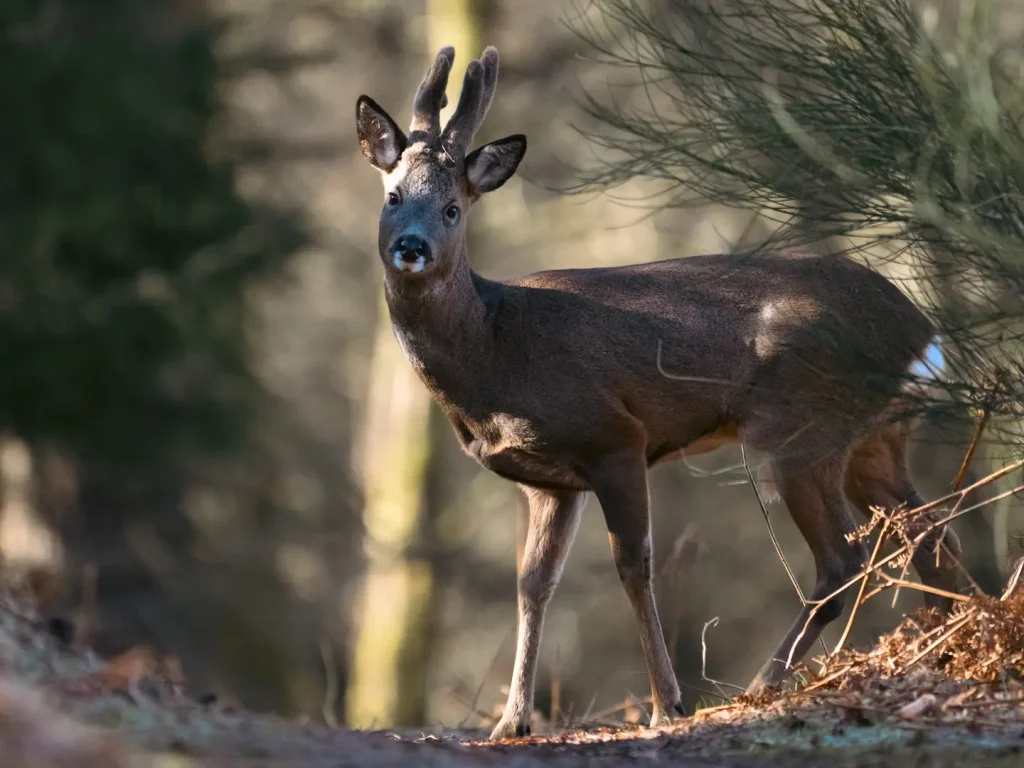
In an ideal world, I’d own every top-tier wildlife lens. But in reality, the decision came down to what I could afford that would still do the job properly.
Would the 100–400mm give me enough reach?
Is the 180–600mm actually good enough?
Would one of the PF primes be worth the extra cost?
Like a lot of people, I kept coming back to the 180–600mm as the lens that could potentially do everything — if it performed well enough.
Having now used it extensively on both the Z8 and Z6 III here in Scotland, I can say it absolutely does and it’s a core part of my wildlife photography kit.
Optically, it’s excellent throughout most of the range, with a slight drop-off beyond 550mm — but even there, it still performs well in real-world use. What stands out is that I never feel like I’m compromising on image quality by using it, which is exactly what you want from a lens in this category.
The focal range is what really makes it. Going all the way to 600mm puts you firmly into proper wildlife territory, and combined with the Z8’s DX crop mode, you can effectively reach a 900mm field of view while still getting usable 20MP files.
That kind of reach changes what’s possible.

Compared to my NIKKOR Z 400mm f/4.5 VR S, the prime is a little sharper and significantly lighter — but for a zoom covering this range, the 180–600mm is still very manageable. I can carry it comfortably on a strap or by the tripod collar, and it fits easily into my Think Tank MindShift BackLight 36L alongside a second body and additional lenses.
In terms of handling, it’s a very well thought-out lens. The build quality feels solid and premium, even without the S-Line badge. You get all the controls you need — custom buttons, focus limiter, AF/MF switch — and crucially, it’s an internal zoom design, so the lens doesn’t extend or shift balance when zooming.
Autofocus is also strong. Paired with the Z8, it’s fast enough to track demanding subjects, including birds in flight.
And importantly, it’s one of the most accessible serious wildlife lenses available. It’s cheaper than the 100–400mm and significantly more affordable than the prime options, while still delivering the kind of performance most people actually need.
There are some downsides.
At f/6.3, it’s not a low-light lens, but the Z8’s sensor handles higher ISO well enough that it’s still usable at dawn and dusk. It’s also not an ideal match for the 1.4x teleconverter, where you start to see a noticeable drop in image quality, along with the expected loss of light.
But taken as a whole, for the price, performance, and flexibility it offers, I think the 180–600mm is hard to beat.
If you own a Z8 and want to get into wildlife photography, this is the first lens I’d seriously consider — and ultimately, the one I’d recommend buying.
Nikon Z 180-600mm f/5.6-6.3 VR
This is the best-value wildlife lens for the Nikon Z system. With its huge 180–600mm range, fast autofocus, and internal zoom design, it gives you the reach and flexibility needed for serious wildlife photography without the cost of high-end primes.
Building a Wildlife Kit for the Nikon Z8

One of the strengths of the Nikon Z system is that it offers some of the best wildlife lens options available right now.
The NIKKOR Z 180-600mm f/5.6-6.3 VR is a great-performing zoom and the lens I would recommend either as a one-lens solution or as the starting point for a wildlife kit. It gives you enough reach to take wildlife photography seriously without locking you into a fixed focal length.
From there, you can build a system around it.
A natural pairing is the NIKKOR Z 400mm f/4.5 VR S. This gives you better low-light performance, improved subject separation, and a much lighter option when you don’t need the full reach of the zoom.
Then, if you eventually want more reach — or plan to focus more heavily on bird photography — the NIKKOR Z 800mm f/6.3 VR S is the obvious addition, and one I’m personally planning to add in the future when funds allow.
There is another way to build a wildlife setup.
You could start with the NIKKOR Z 100-400mm f/4.5-5.6 VR S as a more general-purpose telephoto, then add a longer prime like the NIKKOR Z 600mm f/6.3 VR S or 800mm f/6.3 for extra reach.
That approach makes sense if you prioritise a lighter, more versatile starting point.
The reason I went with the first option is that it gives me a better balance for how I actually shoot.
- The 400mm f/4.5 gives me a lightweight, high-quality option with better low-light performance
- The 180–600mm gives me flexibility and enough reach for serious wildlife work
- And I still have a clear upgrade path to something like the 800mm f/6.3 later on
Importantly, I’m not left feeling short of reach while I work towards that next step.
Of course, the right setup depends on what you’re shooting.
But one thing is clear — with the Nikon Z8 and the Nikon Z system in general, you’re almost spoiled for choice when it comes to wildlife lenses.
And that’s before you even consider the more exotic options like the NIKKOR Z 400mm f/2.8 TC VR S or NIKKOR Z 600mm f/4 TC VR S, which represent the absolute pinnacle if money is no object.
Portrait / Prime Lenses for the Nikon Z8
If you make your living from shooting portraits, then you probably already know which lenses you want — and you may be considering the higher-end options like the NIKKOR Z 50mm f/1.2 S or NIKKOR Z 85mm f/1.2 S.
But for most people using the Z8 — shooting family, friends, or general portraits — those lenses are hard to justify for the advantages they bring if you’re not making money from them.
Best Portrait Lens: NIKKOR Z 85mm f/1.8 S

The best portrait lens for the Nikon Z8 is the 85mm f/1.8 S. For more details see my full Nikon Z 85mm 1.8S review.
It’s not cheap, but if you want to create portraits with strong subject separation that your standard zoom simply can’t match, it’s absolutely worth it.
The lens is incredibly sharp, focuses quickly and accurately, and at f/1.8 on a full-frame sensor, gives you a really nice level of background blur. The bokeh is smooth, the rendering is pleasing, and overall it produces images that look more “professional” straight out of the camera.
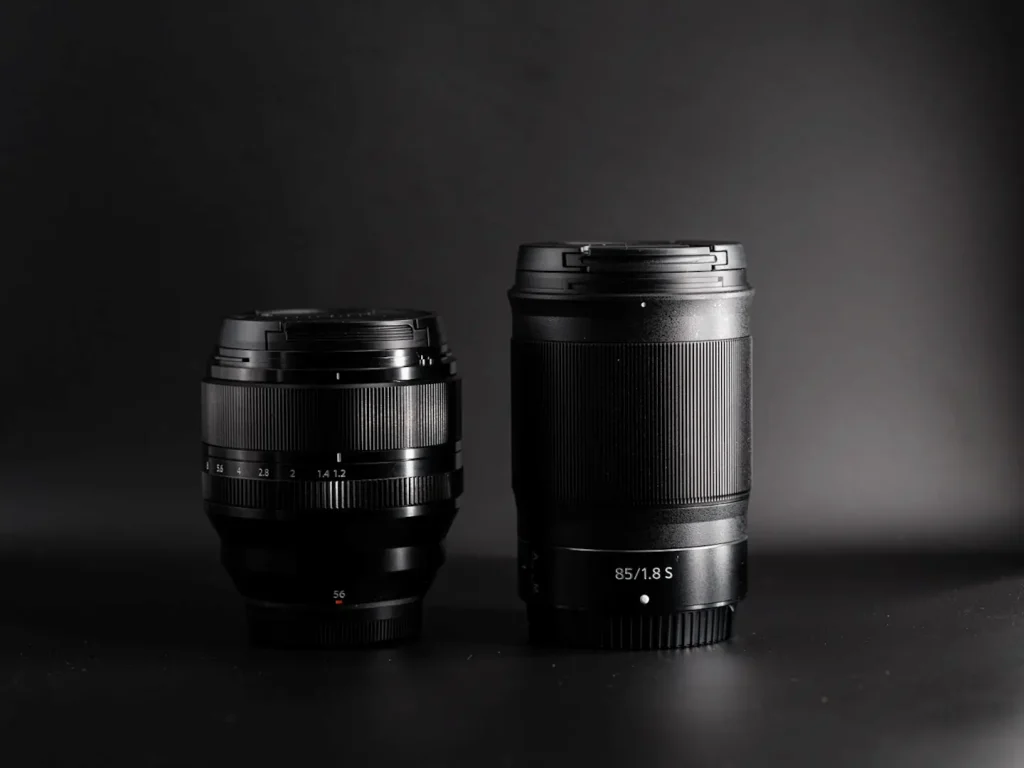
It’s not the smallest prime — it’s a little long and narrow in design — but on the Z8 it balances well and feels comfortable to use.
For most people, this is the portrait lens to buy if you want to take your photos of people to the next level.
Nikon Z 85mm f/1.8 S
This is the best portrait lens for most Nikon Z8 users. It delivers excellent sharpness, fast autofocus, and beautifully smooth background blur, making it ideal for portraits of family, friends, and general people photography.
Best All-Round Prime: NIKKOR Z 50mm f/1.8 S

A more flexible and slightly cheaper alternative is the 50mm f/1.8 S. For more details see my full Nikon Z 50mm 1.8S review.
This is actually my favourite prime in the Nikon Z system. The focal length is more versatile than 85mm, the image quality is excellent, autofocus is quick and reliable, and it’s also smaller and lighter.

If you prefer your portraits to include a bit more context — showing more of the environment around your subject — then 50mm can be a better choice.
However, for tighter portraits, headshots, and anything where you want the most flattering look, it doesn’t quite match what the 85mm delivers. The 85mm just has that slightly more compressed, flattering perspective that tends to make people look their best.
Nikon Z 50mm f/1.8 S
This is the most versatile prime lens in the Nikon Z system. It offers excellent image quality, fast autofocus, and a flexible focal length that works for portraits, everyday photography, and general use.
Which Should You Buy?
Buy the Nikon Z 85mm f/1.8 S if your main focus is portraits and you want the most flattering look with strong background separation.
Buy the Nikon Z 50mm f/1.8 S if you want a more flexible prime that can handle portraits, everyday photography, and general use.
A Quick Note on Other Lenses
The Nikon Z system has a huge number of excellent lenses, and there are some outstanding options that I haven’t included in this list.
For example, the Nikon Z 70-200mm f/2.8 VR S is probably the best f/2.8 telephoto zoom I’ve ever used. It’s an incredible lens. But for how I currently shoot — and what I prioritise — I just can’t justify the cost in my lineup right now.
For photographers who don’t shoot wildlife and want a high-quality telephoto option, it could easily make more sense than something like the Nikon Z 180-600mm f/5.6-6.3 VR.
Rather than list every Nikon Z lens available, I’ve focused on the ones I’ve owned, used, or seriously considered when building my own kit around the Nikon Z8. That keeps this guide practical and grounded in real-world use.
Final Thoughts
The Nikon Z8 is one of the best cameras currently available, and it deserves great lenses. It also deserves to be set up properly which is why I have written an article on the best wildlife settings for the Nikon Z8.
But it’s very easy to fall into the trap of buying the most expensive option in every category and spending an absolute fortune.
I’ve taken a different approach.
I’m happy to spend more on the lenses I use the most — where the benefits are clear and actually make a difference to my photography. But if there’s a lens that gives me everything I need while saving a bit of money, I’ll choose that instead, even if it’s not the absolute best on paper.
And I think that’s the balance that makes the most sense for most people.
Allocate your budget based on how you actually shoot.
If you’re constantly shooting wide-angle landscapes, then by all means go for the NIKKOR Z 14-24mm f/2.8 S. If you want to take better portraits but only do it occasionally, then it probably doesn’t make sense to spend on something like the NIKKOR Z 85mm f/1.2 S when the NIKKOR Z 85mm f/1.8 S will give you most of the performance for much less money.
Like a lot of photographers, I’m not in a position to own every lens in the system — even if I’d like to.
So for me, building a Nikon Z kit is about choosing lenses that deliver the performance I need, at a price I can realistically justify.
And if you take the same approach, you’ll end up with a kit that not only performs well — but actually makes sense for the way you shoot.
Nikon Z8 Lenses FAQ
What is the best overall lens for the Nikon Z8?
For most people, the Nikon Z 24-120mm f/4 S is probably the best all-round lens for the Nikon Z8. It gives you excellent image quality, a very useful focal range, weather sealing, and a good balance of size and weight. If I could only keep one general-purpose lens for the Z8, this would probably be it.
What is the best wide-angle lens for the Nikon Z8?
The best wide-angle lens for the Nikon Z8 is the Nikon Z 14-24mm f/2.8 S if you want maximum image quality. However, the Nikon Z 14-30mm f/4 S is the better value choice for many landscape photographers because it is smaller, lighter, cheaper, and works with normal 82mm filters.
Is the Nikon Z 24-120mm f/4 good enough for the Z8?
Yes. The Nikon Z 24-120mm f/4 S is easily good enough for the Z8’s 45MP sensor. It may not be quite as sharp wide open as the 24-70mm f/2.8, but stopped down for landscapes and general use, it performs extremely well and gives you far more flexibility.
What is the best wildlife lens for the Nikon Z8?
The Nikon Z 180-600mm f/5.6-6.3 VR is my top wildlife recommendation for most Z8 users. It gives you serious reach, strong autofocus, internal zooming, and excellent value compared with Nikon’s more expensive wildlife primes.
Is the Nikon Z 180-600mm good with the Z8?
Yes. The Nikon Z 180-600mm pairs very well with the Z8. The autofocus is strong, the reach is excellent, and the Z8’s DX crop mode gives you an effective 900mm field of view while still leaving you with usable 20MP files.
What is the best portrait lens for the Nikon Z8?
For most people, the Nikon Z 85mm f/1.8 S is the best portrait lens for the Z8. It is sharp, focuses quickly, gives strong subject separation, and produces a flattering look without the size, weight, and cost of the 85mm f/1.2 S.
Should I buy f/2.8 zooms for the Nikon Z8?
If you shoot professionally, work in low light, or need the best possible performance, Nikon’s f/2.8 zooms make sense. But for landscapes, travel, wildlife, and general photography, lenses like the 14-30mm f/4, 24-120mm f/4, and 180-600mm often give a better balance of performance, cost, size, and practicality.
How should I choose lenses for the Nikon Z8?
Choose lenses based on what you actually shoot, not just what looks best on paper. Spend more where the benefits genuinely matter to your photography, and save money where a slightly cheaper lens still gives you the results you need.
Do you really shoot one-handed like that?
Hi Steve,
No I don’t. Especially not with a high resolution body like the Z8. My left hand is under the lens supporting it when I shoot. That photo is purely for the website.
All the best
David