
I’ve had several cracks at YouTube in the past, and I’ve spent countless hours looking for the right setup. I’ve tried action cameras, the DJI Osmo Pocket 3, full-frame rigs from Panasonic, Sony, Canon, and now Nikon, alongside lighter crop-sensor bodies like the Fujifilm X-T4 and X-T5.
And I’ve always run into the same fundamental problem.
I’m a stills photographer first. I’ve always felt that video is a useful medium to showcase my photography, but I’ve never quite worked out the correct format for doing it. I’ve leaned into gear reviews, basic vlogs, and documentary-style videos, but I’ve always considered video an inconvenience when I’m out trying to do both. Trying to capture video seriously impacted my ability to get what I considered good photos.
To counter that, I tried POV with a lightweight action camera so I could just run video in the background without thought while focusing on my stills. I was never happy with the results. Not technically, but in how the video represented the act of photography. It never met the vision I had in my mind of what my videos should look like and convey.
A couple of years ago, everyone was raving about the DJI Osmo Pocket 3 as giving great quality while minimizing friction. Even up until last week, I shot using it as my primary video camera. It really does make things easier when you’re a photographer first: I can slip it in my pocket, pull it out at a second’s notice, and because it’s on a gimbal, the footage is smooth. The quality is decent, and it can quickly flip from forward-facing to backward-facing. I have no complaints about it—it does exactly what it says on the tin.
But when I look through the footage, it just doesn’t match my vision.
The video coming from it looks very digital, stuck at the same focal length, with a strange floating feeling due to the gimbal. I also had some issues with micro-jitters and focus hunting during shots. All of these issues I’m sure have fixes, but given the final look of the image, I simply didn’t want to spend the time hunting them down.
During last week’s walk at Knock of Crieff, I shot just a handful of clips with my Nikon Z8 in 4K 30 using the standard picture profile. Seeing those clips side by side with the Pocket 3 footage, the difference jumped right out at me. Everything felt more natural, more organic, and infinitely closer to the feel I produce with my stills photography.
After my recent gear sell-off, I settled on keeping my Nikon Z8 and Z6III—the latter specifically for video and as a backup stills body. But I had reservations. From past experience, I know that anything that creates friction in my video process is likely to lead to me simply not recording as many clips as I need, or abandoning the video entirely.
Would the weight put me off? Would having to shoot dual video and stills become irritating? Would the dual-body approach impede my mind from getting the photos I’m actually out there for?
Now, here’s the thing. I always hear about LOG footage being considerably better than straight-out-of-camera profiles. In the back of my mind, I know this is true. But I’m not a colorist. I can work with raw photo files all day and know my way around image processing to the point that it’s second nature.
Yet, I’ve had many attempts in the past at shooting LOG video, and I always ended up butchering the grade and getting worse results than the standard in-camera profiles.
The problem is that there are so many conflicting opinions online about the process of color grading. There are countless different techniques that pull you straight down a rabbit hole of contradictory advice: Use the official LUT. No, grade it from scratch yourself. LOG is noisier, it’s not worth it. Use nodes—build a complicated node tree. Put the LUT at the start of your node tree! No, put it last.
Now, the footage straight out of the Nikon Z6III and Z8 using their Neutral and Standard profiles does look good, but it doesn’t maximize dynamic range because the contrast is baked right into the file. Sometimes that results in crushed blacks and a slightly digital look that I couldn’t help but feel wasn’t optimal. I knew LOG would give me the flexibility to create a more organic-looking video, so I had this nagging voice telling me I finally needed to sort out this whole LOG puzzle.
I spent many hours last week doing just that, and set out yesterday to put everything into practice.
If I’m going to do video regularly—which I am—I don’t want to live with that constant feeling of disappointment when the final result doesn’t match my vision. I’d noticed technical issues in my previous videos: micro-jitters from handholding, focus hunting, and awkward framing. I decided that if I’m going to do video, I need to do it properly.
And that means separating my video body from my stills body and giving them both equal weight.
It means not treating video as an inconvenience I have to tolerate, but putting the same thought and effort into it as my photography. It means bringing the gear needed to get the quality to match what I see in my mind. Ultimately, it meant tweaking every single thing—from testing mic setups to finally giving in and packing a tripod and fluid head on my hill walk.
For someone who has often espoused the benefits of a minimalist, lightweight setup, it was quite the mental leap.
This week’s trip was intended to test whether that extra weight and effort are actually worth it, and whether this workflow is right for me.
And here’s the surprising bit…
Once I changed my mindset to giving video equal weighting—in fact, priority weighting, since my video skills need more work than my stills do—I actually started to enjoy the process.
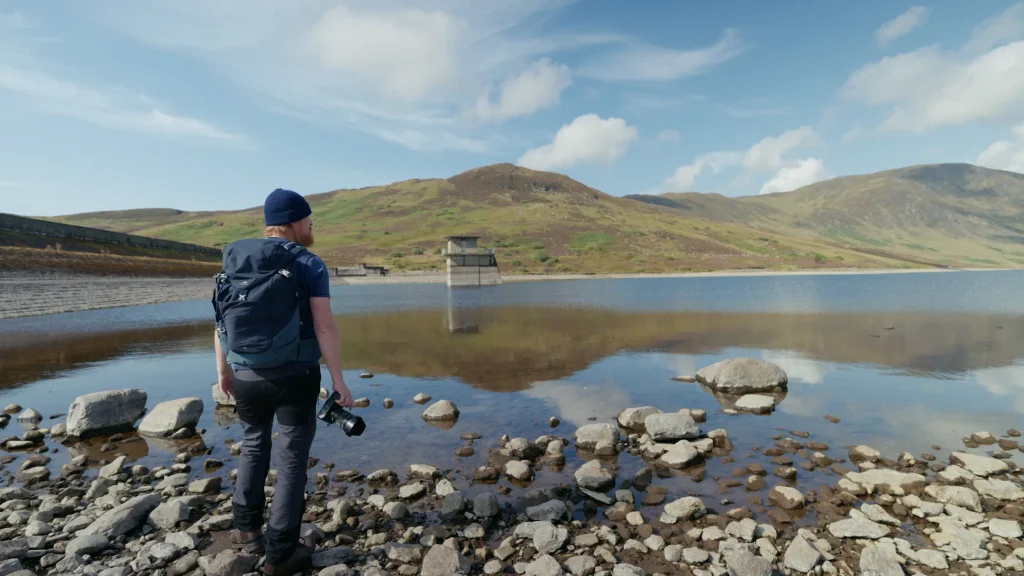
This was not a lightweight setup. I had my 30L backpack, which contained a waterproof jacket, fleece, lunch, and a drink, as well as basic essentials like a compass and first-aid kit. It also held my 85mm f/1.8 S lens wrapped in a sock and stuffed in a dry bag, along with audio gear, spare batteries, and a camera cleaning kit. Clipped to the strap was my Nikon Z8 paired with the 24-120mm f/4.
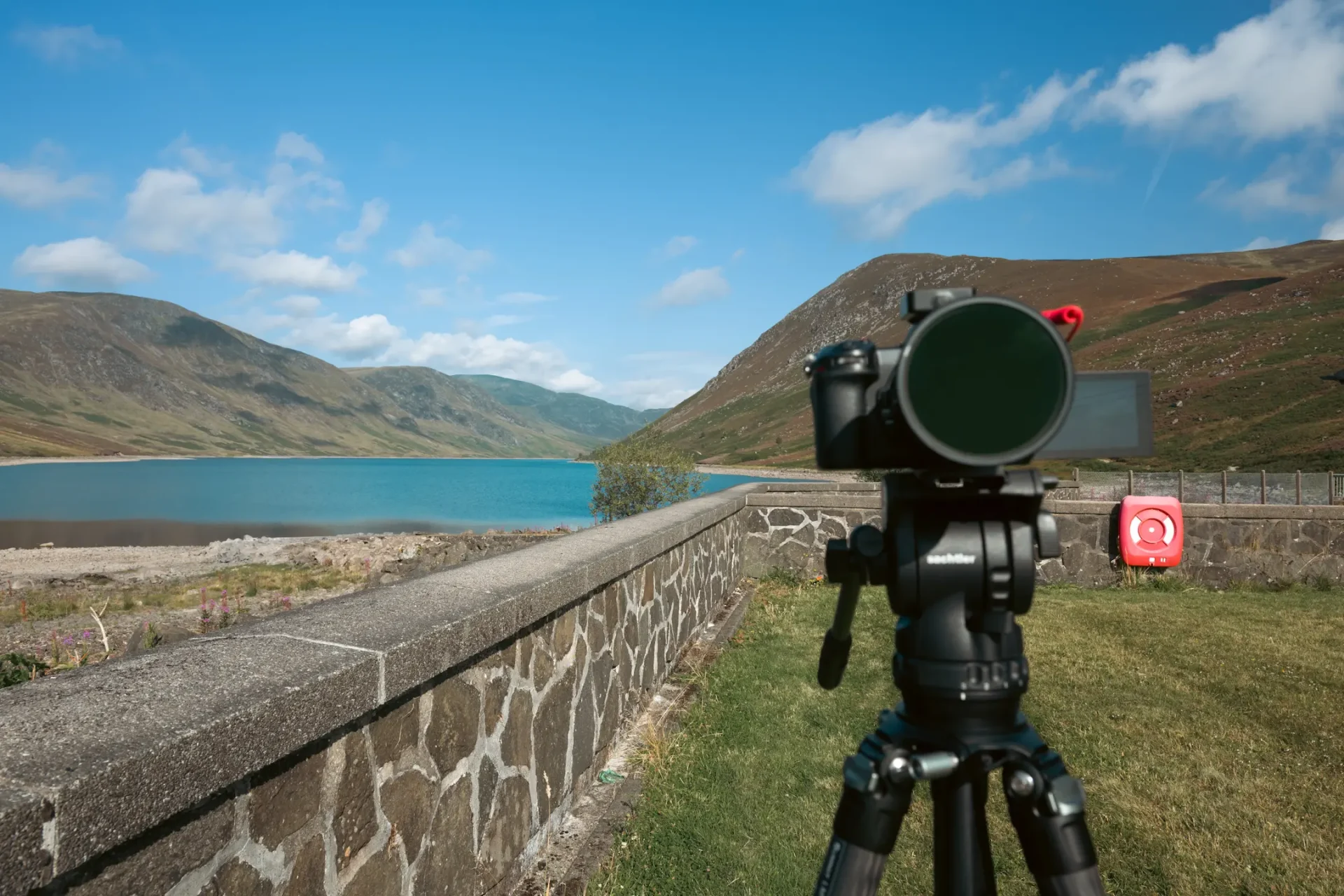
On top of that, I carried my Leofoto LM364-C carbon-fiber tripod, a Sachtler Ace XL fluid head, and the Nikon Z6III with the 14-30mm f/4 S mounted to it.
In the past, one of the main friction points I found with video was the constant setup: mounting the camera to the tripod, attaching mics, checking audio levels. So I went out yesterday with the intention to avoid most of that by simply sticking the Z6III on the tripod, leaving it there all day, and carrying the whole rig across my shoulder.
Was it heavy? Yes, if you count the kilograms. But was it restrictive? Not really.
I’m not some super-fit 20-year-old. I’m 44, my right shoulder hurts, and I’m building my fitness back up naturally through walking after a sedentary decade living in the Philippines with little exercise and a bad diet. I’m not particularly overweight, but my daughter Sofia does like to point out that I have a belly.
Yet I found the whole setup surprisingly friction-free in terms of workflow and weight. With the Z8 clipped to my Capture Clip, I could simply place the video rig down and shoot stills. When I wanted to switch to video, I could quickly re-seat the Z8 and be hands-free to focus entirely on motion.
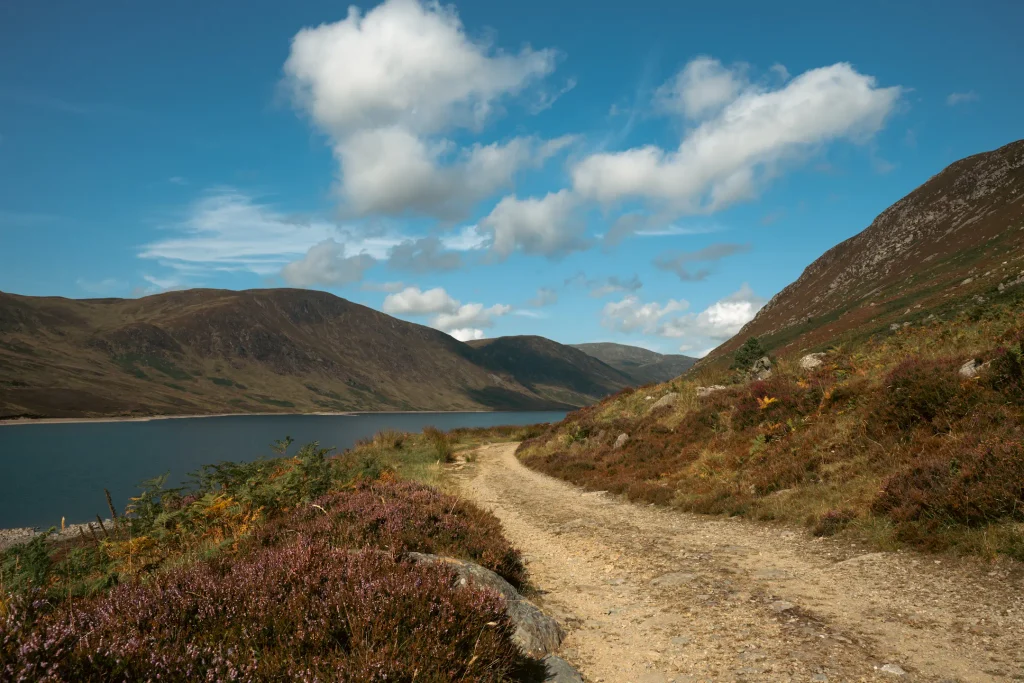
I walked about 8km around Loch Turret. It was only on the final stretch home—where I had to rush back for about 2.5km non-stop because I was late picking Sofia up from school—that I felt a little discomfort across my shoulder from carrying the tripod and Z6III. I changed its position a couple of times on the walk back, switched shoulders at one point, and it wasn’t too bad.
The thing is, once I checked the initial video clips and saw how great they looked right there on the back of the screen, that was all the motivation I needed. It pushed me to shoot way more clips and angles than I normally would, and to actually think about how to convey what I’m doing in a video format.
And because I have so many years of stills experience, I found I was still able to get photos I was happy with in a very short time. One did not negatively impact the other in the way I used to feel it did.
Once I got home and viewed the LOG footage, running it through my simple workflow to bring the color back to a Rec. 709 look for viewing, the results instantly confirmed it: this setup, and this way of working, is worth the slight inconvenience of carrying a bit more gear. It resulted in me capturing more coverage, getting better-looking clips, and ultimately, it’s going to get me much closer to using video the way I envision to showcase my photography.
Now, could I just use one camera and make the Z8 pull double duty?
Absolutely. But the mental friction that adds is simply too much. I know I would miss both photos and video clips because it would require constantly removing the camera from the tripod to shoot stills, or vice versa—resulting in me doing both much less often. It would mean constantly switching camera settings between stills and video mode (not a massive deal, but another small point of friction), and my suspicion is I’d end up heavily prioritizing one format over the other out of sheer annoyance.
Is a single-body approach doable? Absolutely, but…
I’ve always been of the opinion that if something is worth doing, it’s worth doing properly. My mum instilled that in me. As I’ve got older, I’ve realized there are no real shortcuts in life. If you want the results, you have to be prepared to put in the effort and the work. I think that goes for content creation, photography, video, and every aspect of life. In today’s age of instant gratification, this middle-aged stills photographer is quite happy to put in the work before any rewards. I’m not quite there yet but for the first time ever, with video, I see the way forward.