

Over the past year I’ve had the chance to shoot with a wide range of cameras — from the Ricoh GR series through to Fujifilm’s GFX system. I discussed the Ricoh GRIV vs the X100VI to see which is better. More recently I’ve been spending time with Nikon Z bodies, and before that the OM System OM-3.
I won’t list everything here, except to say this: I’m not short of choice. When I go out with my family or head somewhere without a specific plan to photograph, I can take almost anything.
And yet, more often than not, I still reach for the Fujifilm X100VI.
Why is that?
I pre-ordered the X100VI knowing exactly what I was getting. Before that I owned the X100V, and earlier still I spent more than a year travelling around the Philippines with an X100T as my only camera.
The form factor, the fixed lens, the way the camera encourages you to slow down — none of this was new to me. I wasn’t buying into an idea or chasing something different.
Even so, the X100VI has proved to be more of a constant companion than I expected. With so many other cameras around me at any given time, that’s not something I take for granted.
What the X100VI offers

The X100VI has been incredibly popular since its launch. It would be easy to dismiss that popularity as TikTok or Instagram hype — and yes, I’m sure some of it comes from people wanting the latest “cool” camera. But if the camera were genuinely rubbish, that interest would fade quickly and people would move on to the next shiny thing.
The reason it hasn’t is because the X100VI doesn’t rely on one headline feature. Instead, it combines a number of strengths into a package that, taken as a whole, I haven’t found another camera that truly matches.
First, it’s small. That alone matters more than most specifications. When the primary purpose of an outing isn’t photography, size determines whether a camera comes with me or stays at home. The X100VI hits that balance point where bringing it “just in case” still feels reasonable.
So why not take something even smaller, like the Ricoh GR III or GR IV? For me, particularly here in the Philippines, the lack of a viewfinder becomes a real limitation. Bright light makes composing on a rear LCD unreliable, and more importantly, I’ve never been as comfortable working from a screen as I am from a viewfinder — even when visibility isn’t an issue. I’m old-fashioned in that sense.
The X100VI’s hybrid optical/electronic viewfinder solves that problem completely. I always know what I’m shooting, regardless of conditions.
Image quality matters too. The lens is sharp, with lovely rendering, and the files are consistently pleasing. So why not reach for something like my Nikon Zf instead? Simply put, it’s larger and heavier. It requires a level of commitment that turns a casual decision into a conscious one. The X100VI doesn’t feel like a burden in the same way — it slips into life more easily.

Autofocus is now good enough that it rarely gets in the way. Tracking fast-moving subjects isn’t its strength, but that’s not what I’m usually shooting on casual trips or family outings anyway. In real-world use, it does exactly what I need it to do.
It also helps that the camera is genuinely nice to use. The design is simple and understated, and while it may not be quite as striking as something like the OM System OM-3 or Nikon Zf, it’s still a camera I enjoy picking up. Physical dials for shutter speed and ISO, along with an aperture ring on the lens, make a real difference to how fluid the experience feels.
When I’m out with family and just want to capture moments as they happen, being able to glance at my settings without lifting the camera to my eye matters. I can stay present, keep an eye on the kids, and only bring the camera up for a second to make the photograph. There’s also a simple pleasure in using physical controls when shooting primarily for enjoyment rather than output.
Battery life is good enough that it doesn’t become a concern, and when the purpose is memory-keeping rather than art, I’m perfectly happy shooting JPEGs and relying on Fujifilm’s colour science and film simulations. The results are dependable and consistent.

But more than anything else, what keeps me coming back to the X100VI is the simplicity of a fixed-lens camera. It removes choice. I can’t zoom. I can’t change lenses. That limitation clears my head and allows me to focus entirely on seeing.
The 35mm full-frame equivalent focal length happens to be my favourite. It’s flexible enough for landscapes, street photography, and contextual portraits without feeling overly wide. With something like a Leica Q3, you have the resolution to crop from a 28mm lens, but the perspective still feels like 28mm — and for photographing people, that can feel too expansive and detached.
I have no doubt that a Leica would be a remarkable camera, but at around $6,700 the last time I checked, it’s a purchase I’d struggle to justify — especially given how many cameras I already own (according to my wife, at least, it’s too many). The X100VI isn’t cheap, but it sits in a range where I don’t feel guilty owning it, and that matters more than people like to admit.

For me, the X100VI is about the joy of seeing and making photographs, not about productivity or coverage. It’s not a workhorse; it’s a companion. It’s unobtrusive, doesn’t draw attention, doesn’t slow you down, and yet remains deeply satisfying to shoot.
There are very few compromises that feel like deal-breakers. As a result, it’s become something I keep coming back to — always available, never in the way, and perfectly suited to enjoying photography even when photography isn’t the point.
Who the X100VI is really for
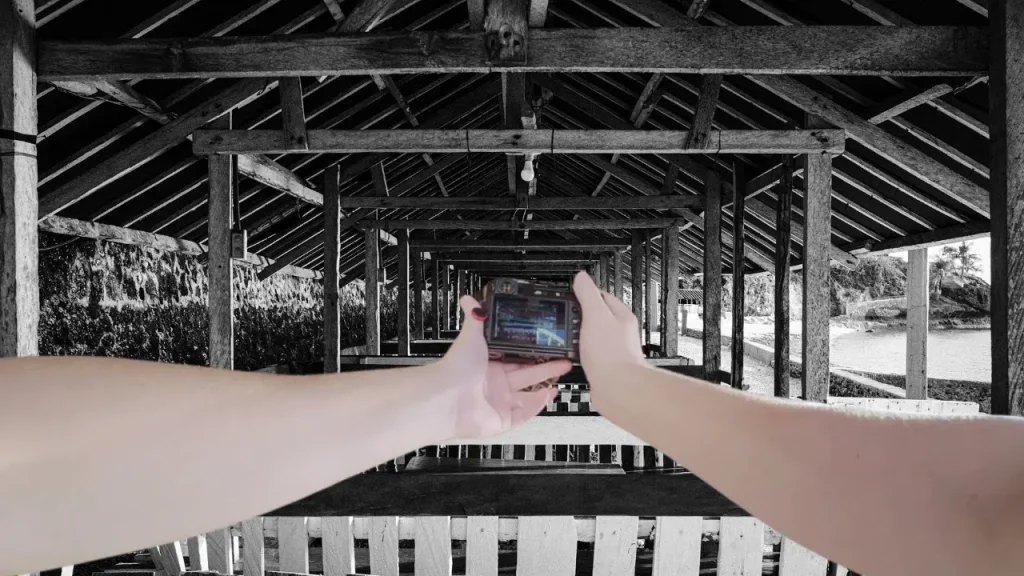
The X100VI is a great camera — if you know what you’re getting into. I see it less as an all-rounder and more as the ideal second camera for photographers who already shoot seriously with another system.
I originally bought mine to accompany my X-T5, but it fits just as naturally alongside Nikon Z bodies. If you shoot professionally or seriously with cameras like the Z6 III or Z8, the X100VI makes a lot of sense as a lighter, more discreet camera for off days — something you can enjoy using without feeling weighed down.
It’s not the camera I’d reach for when shooting fast action. It’s not my first choice for demanding low-light work, even though its performance there is perfectly respectable. And while it can be used as a sole camera — I did exactly that with the X100T for a year — it wouldn’t be my default recommendation for most people as an only camera.
Where it excels is as an everyday, “just in case” camera. One you actually want to bring with you. One that doesn’t feel like a commitment, but still delivers serious image quality when the moment matters. Despite its size, the files hold up well for printing, and the APS-C sensor, colour, build quality, and handling feel more than good enough.
Crucially, it does all of this without drifting into Leica pricing. The X100VI isn’t cheap, but it sits in a space that feels justifiable — and guilt-free — for what it offers.
That’s ultimately why it continues to earn its place in my kit. It’s there for enjoyment rather than obligation, for seeing rather than producing. Unless a future model fundamentally changes the equation, I can’t see a reason to let it go, and I expect to shoot a lot more with it in Scotland in 2026.
Thank you for taking the time to review in an absurdly detail your experience with this and other cameras.
I’m looking to upgrade my rookie equipment (Rebel T6s) and I discovered that your blog is an oasis in the middle of the desert.
Cheers from Mexico
Hi Huri,
Thanks so much for your comment, it brightened up my day. Lots more to come next month once I have completed my move from the Philippines to Scotland.
Have a great 2026.
David