

Fujifilm X100VI vs Ricoh GRIII – Which compact camera is better in 2026?
Last updated: January 2026: Since writing this article, I’ve bought the Ricoh GR IV and published both a Ricoh GR III vs GR IV comparison and a full GR IV review. The GR IV is now my preferred pocket camera, and you can also see how it compares to the Fujifilm X100VI here.
Even so, I still think the GR III is worth considering while it’s available — especially if you can pick one up at the right price.
The Fujifilm X100VI and Ricoh GR III both offer compact bodies, fixed lenses, and excellent image quality — but which one is actually better to use?
🛠️ Field-Tested in the Real World
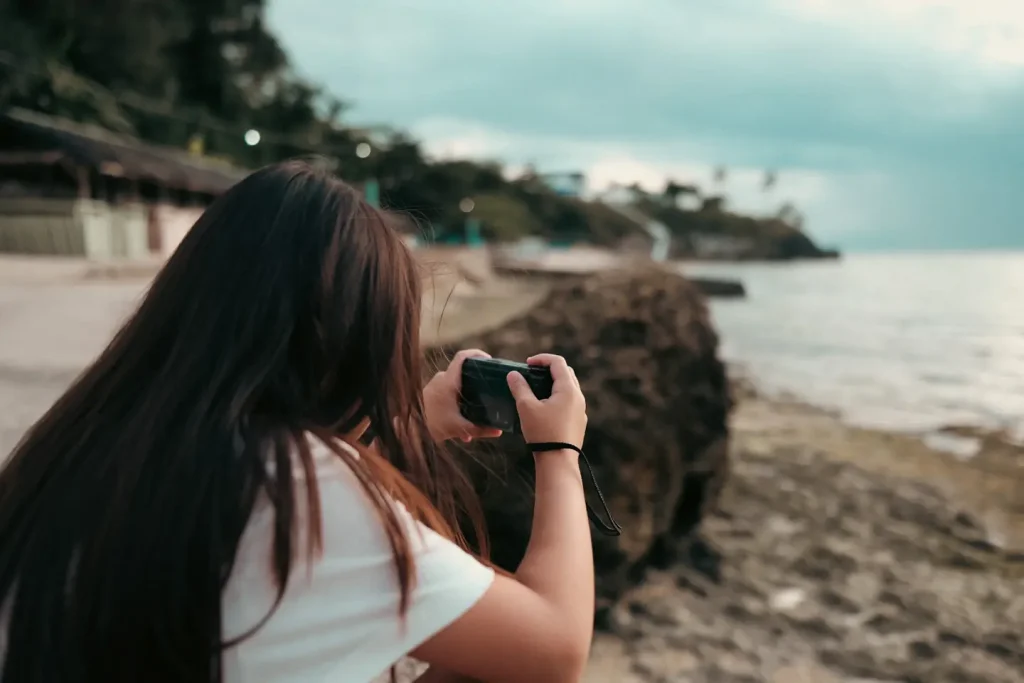
I’ve been using both the Fujifilm X100VI and Ricoh GR III extensively for nearly a year, across a wide range of real-world scenarios. They both feature in my best small cameras for travel article. If you want more flexibility than a compact camera, here’s my guide to the best interchangeable-lens travel cameras
Most recently, I shot with them side by side during a multi-day trip to Dumaguete in June — testing them in harsh light, low light, and fast-moving situations. Everything in this comparison comes from hands-on use, not spec sheets — from candid street moments to everyday travel photography.
By the end, you’ll know which of these high-end compacts is the better fit for your shooting style.
I have also put the X100VI against the OM Systems OM-3 if you are interested in a small, compact interchangeable lens camera.

📊 Specifications Snapshot
| Feature | Fujifilm X100VI | Ricoh GR III |
|---|---|---|
| Sensor | 40.2MP APS-C X-Trans CMOS 5 HR | 24.2MP APS-C CMOS (Bayer) |
| Lens | 23mm f/2 (35mm equivalent) | 18.3mm f/2.8 (28mm equivalent) |
| Image Stabilisation | Yes, 5-axis IBIS (up to 6.0 stops) | Yes, 3-axis IBIS |
| Autofocus System | Hybrid AF (Phase + Contrast Detection) | Hybrid AF (Phase + Contrast Detection) |
| Viewfinder | Hybrid OVF/EVF (OLED, 3.69M dots) | None |
| Rear Screen | 3″ Tilt Touch LCD, 1.62M dots | 3″ Fixed Touch LCD, 1.04M dots |
| Video | 6.2K/30p, 4K/60p, F-Log2 | 1080p/60p |
| Build & Weather Sealing | Weather-sealed (with filter adapter) | No weather sealing |
| Size & Weight | 128 x 75 x 55mm, 521g (with battery) | 109 x 62 x 33mm, 257g (with battery) |
| Battery Life (CIPA) | ~300 shots (NP-W126S) | ~200 shots (DB-110) |
| Storage | 1x UHS-I SD Card | 1x UHS-I SD Card + 2GB internal memory |
| Custom Modes | 7 Custom Slots | 3 Custom Slots (C1–C3) |
| Price (Launch) | $1,599 USD / £1,599 GBP | $899 USD / £799 GBP |
Check the latest prices and availability below:
TL;DR – Fujifilm X100VI vs Ricoh GR III
The Fujifilm X100VI is the better all-around camera, offering superior autofocus, in-body stabilization (IBIS), higher resolution, a hybrid EVF/OVF, and a more immersive user experience.
However, the Ricoh GR III is truly pocketable, around 50% cheaper, and delivers very similar image quality — especially if you prefer the slightly wider 28mm equivalent field of view.
Choose the X100VI if you want versatility, build quality, and creative flexibility.
Choose the GR III if you value stealth, size, and simplicity.
What These Cameras Are — and What They’re Not

The Fujifilm X100VI and Ricoh GR III have both developed something of a cult following — and for good reason. With compact bodies, high-quality APS-C sensors, and the simplicity of fixed lenses, they’ve become go-to choices for everyday carry, travel, and street photography. I recently featured both in my roundup of the best compact travel cameras for 2026 —
But while they share similar goals, they approach them in very different ways.
Fujifilm leans into a premium feel and a feature-rich experience, including their signature hybrid electronic/optical viewfinder. Ricoh, on the other hand, strips things back to the essentials — delivering a minimalist, pocketable camera that does exactly what street photographers want, without distraction.
Both cameras excel when you want to travel light, stay discreet, and capture candid moments as they unfold. They’re not designed to replace your interchangeable-lens system — they’re built to complement it. These are the cameras you carry when you don’t want to haul a bag full of gear, but still want to be ready when the shot presents itself.

How I Use These Cameras — And Why I Own Both
I bought the X100VI first. As a long-time X100 series user — starting with the T, then the V — I already knew what I was getting. I use the X100VI when I want to go out specifically to take photos, but I also want to keep things simple. No lens changes, no indecision about focal length — just a camera that lets me focus on shooting and being present. If you’re deciding between the latest model and the previous one, I’ve written a full X100VI vs X100V comparison to help you choose.
When I want inter-changeable lenses I use the Fuji X-T5. See how the X-T5 compares to the X100VI.
So why did I buy the GR III just a month later?
Actually, I bought both the Ricoh GR III and GR IIIx at the same time — not just for myself, but to share photography with my daughter. The GR is the perfect size for her to carry without strain or fuss, and my intention was to encourage her to explore her creative side alongside me. We can both grab a Ricoh, slip it into a pocket, and head out together to capture shared moments.
It’s become more than just a tool for photography — it’s become a way to connect.

Some of the links below are affiliate links. If you buy something through them, I may earn a small commission — at no extra cost to you. This helps support the site and keeps content like this free.
Real-World Differences — X100VI vs GR III
Let me break down the key differences between these two cameras from actual use.
Portability and Handling
The X100VI is compact, beautifully built, and clearly premium — but it’s not truly pocketable. Unless you’ve got unusually deep coat pockets, you’ll likely carry it on a strap. I use the Peak Design Slide Lite and sling it across my back when I want to keep things light. At 521g (with battery and card), it’s certainly light enough for all-day carry, but it’s still a camera you bring when photography is a focus, not an afterthought.
Its physical size — 128mm x 74mm x 55mm — makes it feel small compared to any interchangeable-lens camera, but unlike the Ricoh, it won’t disappear in your jeans or jacket pocket.

So what do you get in exchange for that extra size and weight?
First, a more substantial grip. While both cameras are great for one-handed use, the X100VI also allows for more comfortable two-handed operation thanks to its larger body and better balance.— especially with the right accessories. (I’ve detailed these in my X100VI Accessories article). Once set up, it’s genuinely comfortable to carry all day, even without a strap.
Despite its retro styling, the Fuji is also discreet. I’ve found it rarely draws attention on the street or changes people’s behaviour — except for the occasional photographer who clocks it and follows me just to marvel at the fact I actually have one. It’s still nearly impossible to find in stock.

Controls and Customisation
This is where the X100VI shines.
You get physical dials for shutter speed, ISO, and aperture — which makes changing settings fast and intuitive, and lets you see your setup at a glance. There’s also a generous helping of custom function buttons, allowing near-total control over your shooting experience. While it lacks a D-pad unlike some Fujis, I’ve never found that limiting. You can still map all your essential functions to buttons or swipes and get to everything you need quickly.
In contrast, the GR III takes a minimalist approach — and that changes how you use it. It’s genuinely pocketable at 257g and 109 x 61 x 33mm, and that size difference impacts not just how you carry it, but when you bring it.
How the Ricoh GR III Works in the Real World

As Sofia and I waited at the port for our boat to Negros, we decided to jump out of the car and brave the scorching heat to see if there were any photo opportunities. Without even thinking about it, I grabbed my Ricoh, and she grabbed her GR IIIx.
The GR III doesn’t scream “photographer.” It looks more like an old compact camera a tourist might have carried before smartphones took over. And that’s its superpower — no one notices you. No one reacts. You blend in. Only fellow photographers really understand what this tiny, unassuming camera is capable of.
The Ricoh uses a PASM dial setup with a front dial, a rear command dial, and a small selector switch. Honestly, as much as I enjoy the physical dials on my Fuji cameras, I’m perfectly happy using PASM — as long as it’s well implemented. And in Ricoh’s case, it absolutely is.

You can customise which function each dial controls. I have my front dial set to aperture, the rear dial to shutter speed, and the rear command dial to ISO (which requires a quick press of the ISO button to activate). In practice, though, I most often shoot in aperture priority mode and use the rear adjustment dial for exposure compensation. It’s fast, intuitive, and well-suited to the GR III’s shooting style.

There are also a couple of genuinely useful function buttons — one at the rear, which I currently have set to crop mode (yes, the GR III lets you crop in-camera), and another on the left side of the body, which I use to change picture profiles on the fly.
Custom settings are another area where Ricoh has nailed the implementation. The C1–C3 positions on the PASM dial can be linked to any of six stored custom presets, letting you assign your three favourites for quick access. It’s efficient, logical, and genuinely helpful in the field.
Honestly, the Ricoh feels like it was designed by photographers for photographers — and it shows in the little touches and the way it works.
While I have more experience with the Fuji menu system — which I’d rate as okay (not great, but certainly better than something like the old Olympus menus) — I’ve been pleasantly surprised by the Ricoh GR III’s UI. Despite being less familiar with it overall, I find that when I go looking for a setting, it’s almost always exactly where I expect it to be. That says a lot about the logic and simplicity behind Ricoh’s menu design.

That incredible size does come with a few compromises worth considering.
For one, there’s no viewfinder — and while you can buy one separately, I haven’t bothered. To me, it defeats the purpose. It adds bulk and complexity to what should be an effortlessly minimal setup.
The 3″ fixed rear LCD (1,037,000 dots) is crisp, with pleasing colours, and works well in most conditions. But in harsh sunlight — something we get a lot of here — it can be difficult to fine-tune compositions. Reflections and screen glare sometimes make it hard to see clearly, and the screen just isn’t bright enough to overpower direct sun.
Another area I’d love to see improved (hopefully in the upcoming GR IV) is the addition of a tilting screen — something similar to what you get on the X100VI. A simple flip-up and down design that stays flush to the body would preserve the minimalist feel while adding real versatility.
Are these flaws dealbreakers? Not for me.
But if I were travelling only with the GR III, I’d have to adjust the way I shoot in certain situations — especially in bright light or when framing from low or high angles. It’s not about limitations, but knowing how to work around them.
While we are comparing the two, we must mention battery life. While neither camera has the best battery life around, I have found that the Fuji’s 1250mAh NP-W126s lasts significantly longer (a full days shooting for, 1 hour before and after both golden hours, with 3/4 level left) compared to the tiny 1350 mAh DB-110 found in both the GRIII and GRIIIX which lasts for around 2-3 hours of shooting. If you’re planning on buying the GRIII , I’d suggest two spare batteries to get you through a day.

Focus — Ricoh GR III
Both of these cameras offer a full suite of autofocus options, including face detection, but it’s worth noting that the GR III was released in 2019 — and its AF system reflects that. While it’s capable of handling still subjects and simple scenes reasonably well, it’s not on par with more modern systems.
In practice, I find it perfectly acceptable for most static shots. Where it tends to struggle is in low light or when subjects are moving. Face detection is present, but after a few real-world attempts, I gave up and returned to manually selecting the focus point — which tells you all you need to know.

That said, don’t let this be a dealbreaker. In most everyday scenarios, it holds its own just fine. And Ricoh has implemented a couple of incredibly smart features that go a long way to making up for any limitations.
Snap Focus and Infinity Focus
The GR III includes two standout tools: Infinity Focus and Snap Focus — both of which are incredibly photographer-friendly.
- Infinity Focus is exactly what it sounds like: it locks focus at infinity, and displays a helpful depth of field scale based on your current aperture.
- Snap Focus, however, is the star. This feature lets you predefine a fixed focus distance — 0.3m, 1m, 1.5m, 2m, 2.5m, 3.5m, 5m, or infinity — and instantly trigger it by fully pressing the shutter button in one go. The camera switches to manual focus at the preset distance and fires immediately, bypassing the need to wait for autofocus.
Not only is this incredibly fast and reliable for street photography, but the GR III also displays the approximate depth of field for your selected aperture, helping you visualise what will be in focus. If you regularly shoot subjects at, say, 2 meters, you can set the snap focus at the appropriate distance and alter your F-stop to ensure your depth of field covers your subject. It allows you to react quickly and without relying on auto focus.
It takes a bit of practice to judge distance by eye, but once you’ve dialled it in, Snap Focus becomes one of those features you can’t believe other manufacturers haven’t adopted.

Highlight-Weighted Metering
Another small but incredibly thoughtful touch is Ricoh’s inclusion of Highlight-Weighted Metering, alongside the usual Multi, Centre-Weighted, and Spot options. It prioritises highlight retention, helping you avoid blown-out skies or bright surfaces — perfect for high-contrast scenes or dramatic street shots where you want to play with shadows.
Again, this is one of those simple additions that shows Ricoh truly understands photographers. I wish more brands would follow their lead here.

Focus — Fujifilm X100VI
The X100VI doesn’t offer the same clever tricks as the Ricoh — there’s no snap focus or highlight-weighted metering — but what it does offer is a significantly more modern and capable autofocus system.
Autofocus on the X100VI feels fast, reliable, and well-suited to the kind of candid, real-world shooting this camera excels at. I often hear criticism online about Fuji’s AF performance, but in my experience, it’s more than good enough for its intended purpose. Is it as blisteringly fast and sticky as Sony’s latest offerings? No. But it’s quick enough to shoot street scenes, travel moments, and portraits with confidence.
At f/2 using face and eye detection, I’ve found the hit rate to be very high — especially in well-lit conditions. No, it won’t track someone’s head from 200 metres away as they race toward you on a motorbike at 200 mph, but for normal use? It does the job well — and it’s clearly a step or two above the Ricoh.


Where I’d switch to snap focus on the GR III when there’s fast movement in the frame, with the Fuji I’d simply trust the autofocus to handle it. Even in low light, while the performance slows down a little, it’s still noticeably better than the Ricoh and remains generally reliable. I’ve also never experienced the “false positive” AF lock issues that some people report with Fuji.
Manual focus is another area where the Fuji has a clear edge.
Thanks to the larger body and lens, it’s easier to get your hands where they need to be for manual operation. The X100VI also includes a depth of field scale, focus peaking, magnification, and a helpful digital overlay when using the EVF — all of which make manual focusing genuinely usable if you ever need it.
That said, the focus ring is still a fly-by-wire design, so it’ll never match the feel or precision of a true manual focus lens — like those on a Leica or a dedicated MF system. But compared to the Ricoh, it’s noticeably more usable and far more confidence-inspiring when you do need to switch to manual.
Overall, the X100VI wins the focusing battle quite easily. It’s faster, more reliable, and more flexible — even without the clever tricks found on the Ricoh.

Startup Time
Given that the Ricoh has a retractable lens, you might expect it to be noticeably slower to start up — but in practice, that’s not the case. I’ve tested both cameras side by side in real-world conditions, and their startup times are virtually identical.
At first, I thought the Fuji was a fraction quicker, but after testing further, I’ve found that not to be the case. Both cameras are responsive enough that neither feels like it slows you down when grabbing a quick shot.
Image Quality
Both cameras are using APS-C sized sensors although of different generations. Let me be frank here, the difference in image quality between sensors of 5 years ago and now are minimal. While the X100VI uses the latest 40mp X-Tranz V sensor, it doesn’t leave the 24mp sensor of the Ricoh for dust. Performance is very similar with a few small caveats.
The X100VI does allow you to crop into photos more while retaining more usable resolution. However the difference between a 40mp and 24mp image is less than you may think. Honestly, it’s virtually a non factor to real world photography.
Both the X100VI and Ricoh offer bright fixed lenses but the Fuji outdoes the Ricoh with its 23mm f/2 lens vs the Ricoh’s 18mm f/2.8. This gives the Fuji an advantage in two areas, creating shallow depth of field thanks to both the larger focal length and brighter aperture, and secondly its low light perfmance. Its not just the lens that helps the Fuji to do better in low light, the newer sensor and possibly Fuji’s magic X-Trans sauce give me noticeably better results in low light than the GRIII. The noise is finer and less digital looking on the Fuji which particularly shows when photographing people. 6400 on the X100VI looks as good as 3200 on the GRIII.


Both lenses are sharp wide open and get a little sharper when stopped down. If my photos arent sharp, its not the cameras fault it’s mine.
While image quality is a factor when considering these two compact cameras, for me it is not as significant as the choice of which focal length you prefer. I have generally gravitated towards the 35mm (equivalent) focal length for my story telling persepective but in part I think that was due to lack of skills. The 23mm lens on the Fuji is more forgiving of compositional errors due to the field of view giving less coverage and therefore less to think about in your frame. You can focus in on the subject more, throw the background out of focus a little more and not worry as much about the distortion that can present itself in wider focal lengths.


However, as I have used the GRIII more and more I have found myself to like the 28mm (equivalent) focal length just as much as the 35mm (equivalent). I enjoy the challenge of using it, i enjoy the immersive feel, the ability to engulf the viewer within your frame and draw them in as well as the way in which it forces me to consider layering. I feel that 28mm (equivalent) is enabling me to grow as a photographer and ultimately, thats my desire. The choice of focal length is completely subjective but I would just give these thoughts for consideration. If you air on the side of shooting people then the Fuji is likely a better focal length choice (or the GRIIIX, article coming soon). If you enjoy capturing more of the surroundings, layering compositions and immersing yourself in the scene, 28mm might well be your choice. Neither is better, theyre just different and one of the reasons I keep both cameras. I discuss the differences more in my recent Fuji 18mm 1.4 vs 23mm 1.4 comparison.


Colour Rendering and JPEG Profiles
How each camera renders colour is also worth discussing. While colour can be tweaked in post, it’s still interesting to note the differences between the two — especially since both of these cameras will appeal to photographers who enjoy shooting JPEGs as well as RAW.
Fuji is well known for its film simulations, and in my experience, that reputation is well-earned. I don’t use all of them, but the ones I do use — particularly Classic Chrome and Acros — are genuinely excellent and give images a distinct, often nostalgic look straight out of camera.

That said, Ricoh isn’t far behind. One of my favourite colour profiles on the GR III is the Positive Film preset — it’s vibrant, punchy, and really well-tuned for street and travel shooting. While the two brands approach colour rendering differently, Ricoh also offers a great deal of control and flexibility.
Both systems also support a thriving recipe-sharing community. With Fuji, you can draw on the massive library of custom film looks from Fuji X Weekly, while Ricoh users can turn to Ricoh Recipes for an equally impressive selection. I have the apps from both on my iPhone, and they make it easy to load new profiles and experiment with different aesthetics.

Lately, I’ve been using a custom Leica-inspired recipe on my GR III that I particularly enjoy in bright sunlight. If there’s interest, I’ll share it in a future post.
So for those who like to shoot JPEGs, I don’t think either camera will disappoint. Both produce excellent out-of-camera colour, offer meaningful ways to customise the look, and provide a satisfying creative workflow.
As for RAW files — they’re very similar in overall quality and flexibility. The only consistent difference I’ve noticed is that Fuji tends to skew slightly towards magenta, while Ricoh leans a little green. Neither is problematic, and both are easy to correct in Lightroom.


Check latest prices and availability here:
Which One Should You Choose?
I hate to sit on the fence — it’s not in my nature — but the truth is, both of these cameras hit the mark as high-quality tools that allow you to focus on your photography above all else. And for me, that’s the reason I rate them both so highly.
That said, their use cases are slightly different — and we shouldn’t forget that the GR III is currently about 50% cheaper than the X100VI.
But let’s forget about price for a moment.
I use the Fujifilm X100VI because I care about how a camera feels in the hand, and how it either encourages or discourages me from shooting. Yes, I want a certain level of technical performance — but the experience matters just as much. And the X100VI delivers that in spades.
Its design, its finish, the physical dials, the optical/electronic viewfinder — everything about it feels purposeful. It offers both technical excellence and simplicity. It removes distractions. It removes indecision. And it gives me everything I need, and nothing more, when I head out for photo-centric trips and travels. The 35mm-equivalent focal length lets me shoot wide or tighten in for more intimate moments — without ever feeling limited.
So if you like to shoot with intention, and enjoy that immersive photographic experience, the X100VI won’t disappoint.
The Ricoh, on the other hand, takes simplicity and size to another level. If you genuinely want a pocketable everyday carry camera — or photography is part of your trip rather than the focus of it — the GR III is the clear choice. It fits in your pocket. It’s light and discreet enough to bring anywhere — even when you’re with family or on the move. And if you don’t end up using it that day? No big deal — you’ll hardly notice it was there.
If you prefer a wider, more immersive field of view, often find yourself in tight urban spaces, or tend to photograph scenes that include people rather than portraits of people, then the GR III — even six years into its life cycle — is still more than capable, and still competitive with modern offerings.
And here’s the real truth: there’s no wrong choice.
These two cameras are so good at what they do that there’s a genuine argument for owning both — or even going the GR III + GR IIIx route. They’re small, capable, and discreet. One’s always with you. The other turns a trip into a creative session.
And the best part? You could buy both the GR III and GR IIIx — and your wife, husband, or partner would never even notice. To the untrained eye, they look identical. 😄
Final Verdict: X100VI or Ricoh GRIII?
Choose the Fujifilm X100VI if you want:
- Faster, more reliable autofocus
- IBIS and higher resolution for cropping or printing
- A hybrid EVF/OVF experience and more tactile controls
- Better battery life and weather sealing (with adapter)
Choose the Ricoh GRIII if you value:
- True pocketability and minimalism
- A discreet everyday carry camera
- A wider 28mm equivalent field of view
- Roughly 50% lower cost while retaining excellent image quality
Both are capable tools for street and travel photography. It really comes down to which compromises you’re willing to make — portability vs flexibility. There’s no wrong answer
Frequently Asked Questions
Which is better for street photography?
They’re both excellent choices. If you rely on autofocus and prefer the 35mm equivalent field of view, go for the X100VI. If you want something ultra-discreet and truly pocketable with a wider 28mm equivalent field of view, the Ricoh GRIII is ideal.
Are both the X100VI and Ricoh GRIII pocketable?
Not quite. The GRIII is genuinely pocketable — it’ll fit in a standard trouser pocket. The X100VI is more compact than most cameras, but it’s better suited to a jacket pocket or small bag.
Are both the Ricoh GRIII and X100VI weather sealed?
No. Only the X100VI is weather-sealed, and that’s only when paired with the optional filter adapter and protective filter. The GRIII is not weather-sealed, and there have been reports of dust on the sensor in some cases.
Which camera has the better battery life?
The X100VI will typically last most of the day with moderate use. The GRIII, on the other hand, tends to last only a couple of hours — it’s wise to carry a spare battery or power bank.
Which camera is better as an everyday carry?
If you’re looking for a true everyday carry camera that stays out of your way and still delivers exceptional image quality, the Ricoh GRIII wins. Its size and stealth are unmatched.
Which camera has better JPEGs?
Both are excellent. Fujifilm and Ricoh offer highly customisable JPEG output with strong community support for “recipes” or custom looks. You can fine-tune either system to your liking.
Documenting Life and Land in Scotland
My personal photographic projects, writing, and life in Scotland are now centered over at davidjfleet.com. Follow the journey, read deeper essays and project insights, and support the work.
Visit davidjfleet.com →