

Last Updated: May 2026 — Added extended long-term impressions after moving back to Scotland, including wildlife use alongside the Nikon Z8 in the Scottish Highlands and further observations on autofocus, ergonomics and real-world field use.
I’ve been shooting Fujifilm for over a decade now, and I still love my X-T5 — but the Nikon Z6III has impressed me more than any camera in the last few years. In my opinion, this is the best full-frame camera for most people in 2025 and it even makes more sense for a lot of people than the Z8 as I found in my Nikon Z6III vs Z8 comparison.
It’s fast, it’s reliable, it’s comfortable, and it delivers legitimately brilliant image quality. It’s the camera you buy when you just want to get the job done with a tool that simply works — nothing flash, just efficient. If you already have yours then these are the best settings for the Nikon Z6III that I use for general photography and these are the best wildlife settings. If you’re still wondering who the Nikon Z6III is really for take a look at my full breakdown.
Take a look at how this camera compares within the system, see my guide to the best Nikon Z camera for photography.
If you’re building out a Nikon Z kit, I’ve put together a complete Nikon Z lens guide based on real-world use.
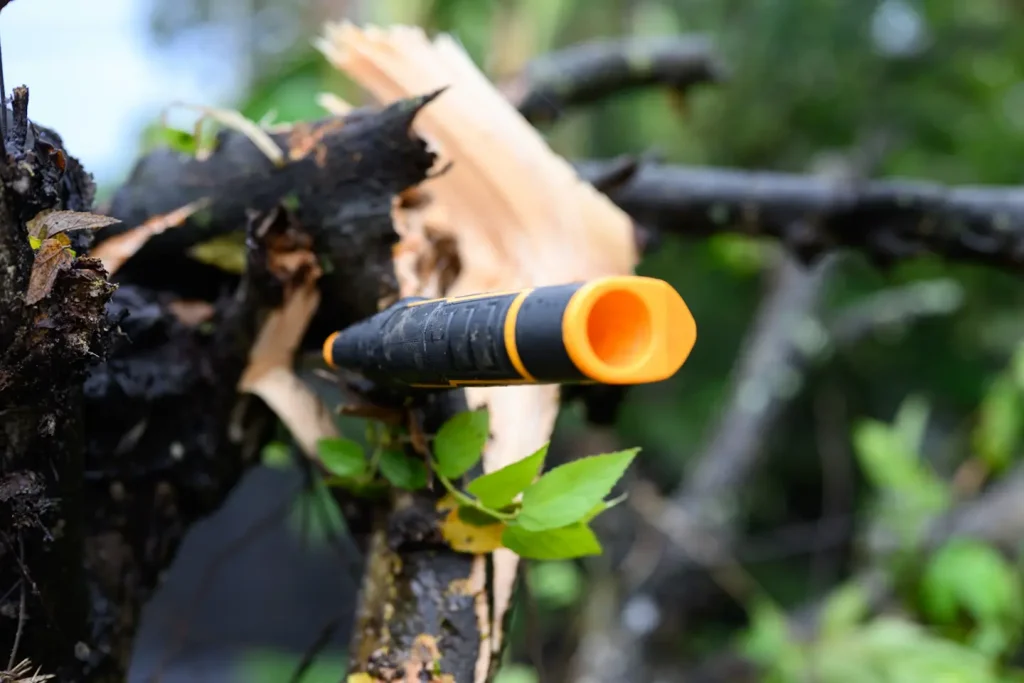
Yesterday, during the tail end of Typhoon Tino, there were trees snapped and uprooted laying strewn across our front garden — and I grabbed the Z6III instinctively. Not because it’s the newest thing I own, but because I knew it wouldn’t make me think. That’s the point. There’s something very refreshing about a camera that feels like it’s on your side immediately. The Z6III doesn’t try to impress you — it simply performs, as I found when I compared it with the Nikon Zf.
TL;DR — Nikon Z6III
The Z6III is the full-frame camera I’d buy in 2025 if I wanted one body that just works. It’s the “professional daily driver”: excellent ergonomics, fast/sticky AF, rich natural image quality, a great EVF, serious weather sealing, and access to a superb Z-mount lens lineup — all at a price below the flagship tier.
- Ergonomics: Deep, secure grip, sensible controls, top LCD, extensive customisation.
- Autofocus: 3D tracking + eye detect is fast, sticky, and simple to use.
- Image quality: 24MP files with pleasing tonality; high ISO (12,800–16,000) genuinely usable.
- EVF & screen: 5.76M-dot EVF feels clear and responsive; fully-articulating LCD.
- Reliability: Weather sealing you can trust; confidence in rough conditions.
- Cards: Dual slots (CFexpress Type B + SD) — speed plus everyday flexibility.
- Who it’s for: Photographers who want maximum capability before flagship pricing.
- Who it’s not for: People who want the lightest possible kit, don’t need or want full frame, or professionals who want more resolution and are willing to pay for the next 10% of performance.
• Nikon Z6III vs Fujifilm X-T5
• Best Lenses for Nikon Z6III
• Best Accessories for Nikon Z6III
Pros & Cons
Pros
- Deep, comfortable grip — genuinely all-day usable with primes.
- 5.76M-dot EVF is clear and non-fatiguing — manual focus is genuinely easy.
- 3D tracking AF + eye detect is fast, sticky, and reliable.
- 24MP sensor gives rich tonality + excellent high ISO performance (12,800–16,000 genuinely usable).
- Top LCD + custom button layout speeds up real use — not menu driven.
- Dual card slots: CFexpress Type B + SD (fast + practical flexibility).
- Build + weather sealing that inspires real trust.
Cons
- Custom modes aren’t as flexible as the pro-level memory banks on the Z8/Z9.
- Not quite as comfortable as the Z8 for prolonged use.
- AF not quite as sticky as the Z8 in real use.
- No illuminated back buttons for low-light use.
Some of the links in this article are affiliate links. If you buy something through them, I may earn a small commission at no extra cost to you. This helps support the site and lets me keep creating content like this.
Key Specifications — Nikon Z6III
| Sensor | 24.5MP full-frame partially-stacked CMOS, EXPEED 7 |
| Autofocus | 273-pt system with 3D Tracking & subject detection (9 types) |
| Viewfinder | 0.5" OLED, 5.76M-dot, high refresh; wide-gamut (DCI-P3 capable) |
| Rear Screen | 3.2" fully-articulating touchscreen, 2.1M dots |
| IBIS | Up to 8 stops (5-axis, CIPA rating) |
| Burst Rates | Up to 14 fps (mechanical), 20 fps (electronic); C30/C60/C120 JPEG modes |
| Card Slots | Dual slots — 1× CFexpress Type B/XQD + 1× SD UHS-II |
| Weather Sealing | Dust/drip-resistant; rated for use down to −10 °C |
| Weight | Approx. 670 g body only; ~760 g with battery & card |
What The Nikon Z6III Is Best At
The Nikon Z6III is at its best as an all-round camera for photographers who want one body that can cover almost everything well. It makes the most sense for people shooting a mix of subjects rather than one narrow speciality. That could mean travel, family, documentary, portraits, events, everyday life, or some light action and wildlife work. If that sounds like you, the Z6III is one of the safest and most complete choices of any camera currently available.
It’s especially strong if you care about autofocus, low light performance, handling, weather sealing and lens choice. That’s why I think it suits hybrid shooters and serious enthusiasts so well. It gives you a lot of what makes the Z8 excellent, but in a smaller, cheaper and more accessible body. If you’re trying to decide where it sits in the lineup, take a look at my guide to the best Nikon Z camera for photography and my full Nikon Z6III vs Z8 comparison.
Where I think the Z6III makes the most sense is for photographers who want one camera to do almost everything without stepping up to flagship pricing. It also makes a lot of sense if you want to build a practical Nikon Z kit around compact, high-quality primes like the 35mm, 50mm and 85mm options. If that’s the route you’re considering, I’ve already put together my guides to the best lenses for Nikon Z6III and the broader best Nikon Z lenses.
It’s less ideal if you want the lightest possible kit, if you mainly care about maximum resolution, or if wildlife is your main specialist subject and you know you want the extra edge of the Z8. But for most people, that’s exactly why the Z6III is so appealing: it sits in the sweet spot.
Ergonomics & Handling

The Z6III immediately feels more secure than the X-T5 in my hand. The size and shape of the grip fits my fingers almost perfectly — the contours line up with my knuckles, the surface shape gives me confidence, and I don’t have to squeeze it to feel planted. My index finger naturally rests on the shutter button, and because Nikon wrap the power switch around that same control, I can switch the camera on and shoot within the same motion. Just behind it are the ISO, exposure compensation and record buttons, and they fall into place without any finger gymnastics or stretch.
On the rear, my thumb sits in that thumb grip on the memory card door, which gives me a confident purchase and better stability. Crucially, AF-ON, the rear dial, the DISP button and the joystick are all right there within easy reach. This is how a working camera should feel. No fuss, no fiddling, nothing that breaks concentration — just controls exactly where they need to be. And because it has both CFexpress Type B and SD card slots, I can shoot fast continuous bursts without worrying about hitting buffer issues, while video shooters (who care about that stuff) can make use of the faster codecs on CFexpress. For me, the important thing is simple: I still get an SD card slot for easy transfer and backup anywhere I am.
My only slight gripe is the height. Because the body is slightly shorter than my Z8, my palm extends past the bottom of the grip more than I’d like. The Z8 is still the most comfortable Nikon body I’ve ever held. But the Z6III isn’t uncomfortable in any meaningful way — unlike the Sony A7 IV I used to own which became uncomfortable during prolonged use. In terms of weight, the Z6III paired with Z primes like the 35mm f/1.8 S or 50mm f/1.8 S or even the Nikon Z 85mm 1.8S which I reviewed recently, is only slightly heavier than my X-T5 kits, and the excellent grip completely offsets that difference. It doesn’t feel like I’ve suddenly moved into a whole different category of camera system.
Paired with the 35mm f/1.8 S, the Z6III sits in that “carry all day” sweet spot. No hard edges. No wrist fatigue. Just a camera that feels designed for real photographic work.
Operational Design & Control Layout

This is where you feel the difference between a camera built for working photographers and one built to impress spec sheets. The top LCD screen gives you an instant readout of your key shooting parameters, and you can light it up with a single press when shooting at night. The top buttons behind the shutter mirror the layout of the Z8, so if you’re using the Z6III as a second body alongside a Z8 or Z9, everything is already muscle memory.
Unlike the previous Z6II generation, you can assign virtually any function to the Fn buttons and reprogram almost every control on the camera. The Z6III might not go quite as deep as the Z8 in this regard, but it comes close enough that the workflow between them is seamless. The IBIS is also excellent — not quite OM System’s “black magic” level, but rated up to 8 stops and in real use I get 5 stops casually, and 6 stops if I’m deliberate.
And what matters is this: every single one of these design choices speeds you up. You’re not in menus. You’re not fiddling. You’re not rummaging. You’re shooting.
EVF & LCD Screen

The 5.76 million dot EVF in the Nikon Z6III is expansive to look into. It’s clear, bright, and refreshes quickly with no noticeable lag. It genuinely makes shooting a pleasure. It’s also detailed enough that manual focusing is easy — especially with the focus aids Nikon provides.
Compared to the 3.69 million dot EVF in my X-T5, the Z6III’s EVF isn’t something that jumps out instantly on day one — but after extended use you start to notice that extra clarity. It just gives you that little bit more detail and a little bit more precision. Over a long day’s shooting, those small improvements add up to a noticeably better experience.
The Z6III also uses a fully articulating LCD screen, which is a step up from the single-axis tilt screens on the Z6II and Z7II. I still prefer the 3-axis tilt screen on my Z8 for stills photography, as it’s simply a more elegant design for photography use. I’m mainly a viewfinder shooter anyway — but for awkward angles, the Z8’s screen design makes more sense.
Autofocus

The autofocus on the Z6III is excellent — but it did take a small learning curve. This is powered by Nikon’s new stacked, partially-global sensor which gives the camera a very fast readout, making autofocus decisions feel instant rather than reactive. At first, I treated it like my X-T5: AF-C, zone box, move the box over the subject, let the camera pick a face/eye if it sees one. For everyday subjects this works perfectly well and I could easily just shoot the entire camera like this if I wanted to. I’ve set Fn2 to cycle AF modes and AF area sizes, so I can switch quickly. With this setup, the Z6III focuses as fast as you can move the joystick and reposition your point.

Where I had a lightbulb moment was in Dumaguete — tracking trikes and scooters. I tried Nikon’s 3D tracking mode — and discovered that face/eye detection remains active while tracking. That immediately changed how I shoot this camera. Now I leave the focus point in the centre, put the small tracking box over the subject, engage it, and simply recompose while the camera tracks automatically. This is where Nikon’s newer deep learning subject detection models quietly shine — they don’t over-announce themselves, they just lock, follow, and stay glued. It’s faster than moving the AF box around and it works on almost everything.
Is it perfect? Not quite. On rare occasions with my youngest daughter, it hesitated for a moment before snapping back to her eye. But in 3D tracking, the camera is incredibly sticky. It picks up eyes quickly, holds onto them even when they’re small in the frame, and keeps tracking even as I reframe the shot. Combined with these newer models, this autofocus system is right up there with the best I’ve used — and once you use 3D tracking like this, it’s hard to go back. Is it as good as the Z8? No in my opinion it is a fraction below the Z8 AF in terms of stickiness but it gets very, very close. If you’re deciding between the two, I break that down fully in my Z6III vs Z8 comparison.
Update (2026): Since moving back to Scotland, I’ve been shooting far more wildlife and have started refining my autofocus setup specifically for that. I’ll be publishing a dedicated guide to my Nikon Z6III wildlife settings shortly and will link it here once it’s live.
Image Quality & Low Light

The Z6III uses a 24MP full frame sensor which I personally think is the perfect resolution for most people.
Is 24MP Enough on the Nikon Z6III?
For most people, yes — 24MP is more than enough. It gives you a very usable balance between detail, file size, speed and low light performance. You can crop when needed, print large, and deliver professional work without any issues. In real use, it’s a much more practical resolution than higher megapixel sensors for everyday photography.
Where higher resolution cameras still make more sense is if you regularly crop heavily, shoot commercial work that demands maximum detail, or focus primarily on landscapes and studio work. But for travel, people, events, documentary work and general photography, 24MP hits the sweet spot — and it’s one of the reasons the Z6III feels so fast and easy to use.
You get plenty of detail without bloating your hard drives. What stands out for me though isn’t the resolution — it’s the tonality. Skin tones look natural, transitions between colours are smooth, and the files just have this rich, natural rendering that feels right. Nikon strikes this perfect balance between punch and realism, which is ideal for the way I shoot — documentary, travel, and street.

As a Fuji shooter, I’ve always enjoyed Fuji’s rendering — it’s one of Fuji’s strengths — but Nikon is right up there too. It’s just that Nikon have so many other headline features that people don’t talk about this aspect as much. If you shoot JPEGs (or even if you don’t — you can still use the Nikon picture profiles as a base for your RAW edits), the Nikon Z picture profiles are some of the best I’ve used. The Standard colour profile gives a natural but punchy look, and the black and white profiles are genuinely superb. The Mono profile gives deep blacks and contrast without looking overdone, and Deep Tone Mono is right up there with Fuji’s Acros — rich blacks, strong tonal separation, beautiful rolloff. I shoot these profiles a lot — and I’d say they’re every bit as good as the very best black and white profiles on any camera.

There’s been some online talk of reduced dynamic range compared to the older Z6 II because this is now a partially stacked sensor. I owned the Z6 II — and in real world use I can’t see a meaningful difference. Maybe you could plot a technical chart and find something. But in actual photography, where you’re lifting shadows or protecting highlights, I’ve not once hit a situation where I thought “ah — if only this had more range.” It’s on par with the Z6 II and Z7 II in the way that matters.
How Good Is The Nikon Z6III in Low Light?
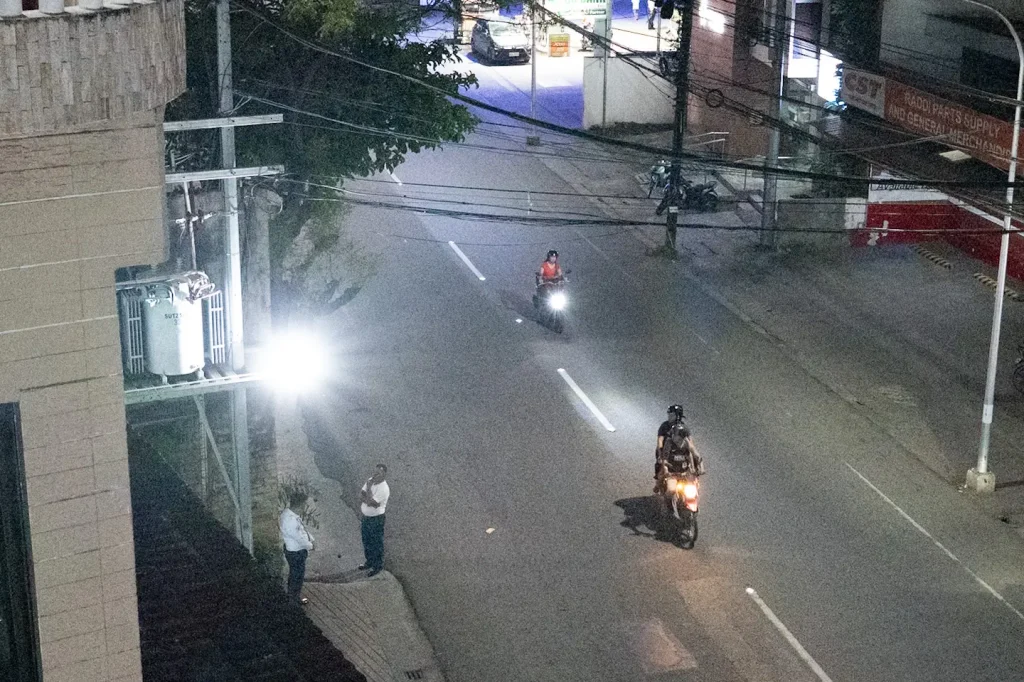
Where the Nikon Z6III really stands out is in low light performance — particularly at high ISO.. In my field notes I mentioned thinking I was around ISO 6400 when shooting at night — until I checked and saw I was at ISO 64,000. And then, after more shooting at ISO 12,800 and 16,000, I realised how genuinely usable these numbers are. As someone who started out shooting when ISO 1600 felt like witchcraft, holding a file at 12,800 that I would happily publish is still mind bending. And again — that’s RAW. If you shoot JPEG, I’d recommend turning the in-camera noise reduction down slightly as it can smooth detail a bit too aggressively.
This is where full frame earns its keep. Not in specs — but in extremes. Low light. Heavy editing. Requiring better tonality. Wanting shallow depth of field. This is where you actually feel the difference. The Z6III doesn’t just look clean at high ISO — it looks real and when you combine this level of performance with the best Nikon Z lenses for the Z6III, that combination is about as good in low light as it gets.
Reliability & Weather Sealing
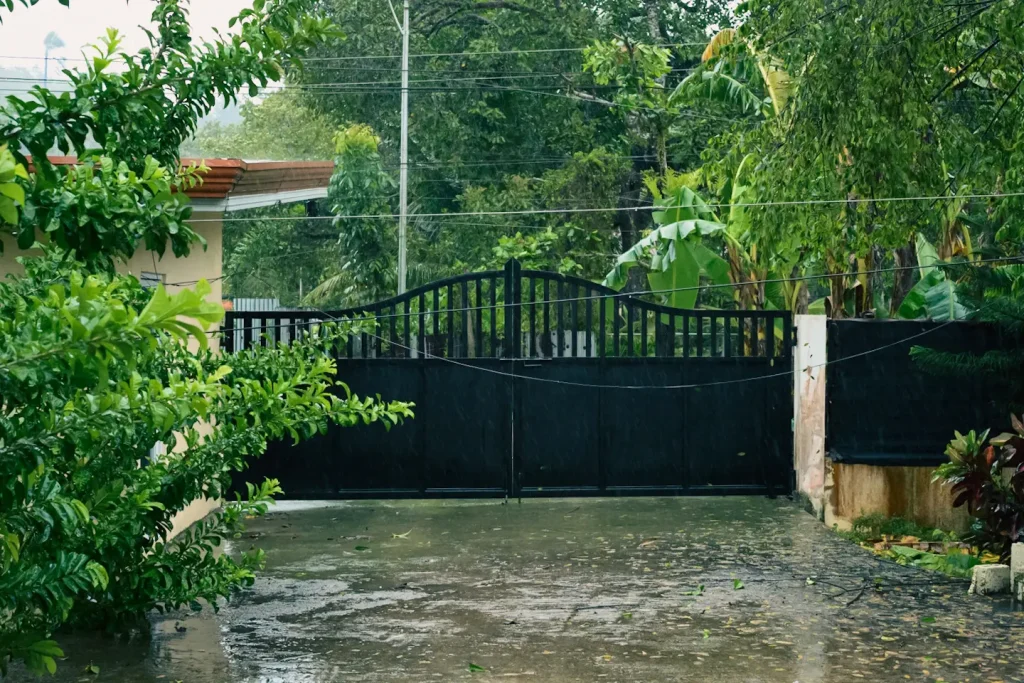
I’ve been shooting Nikon cameras for well over a decade. I’ve had them out on the windswept beaches of the Outer Hebrides, in blizzard conditions in the Highlands of Scotland, and in the scorching heat of Italian summers. I’ve never had a single failure due to weather — not with snow, humidity, sea spray, monsoon rain or dust. I trust Nikon weather sealing as much as it’s possible to trust a camera brand.
And it all adds to the feeling when I pick up the Z6III and take it out — it’s a camera that feels like it can handle whatever I throw at it. From the confident, solid click of the memory card door to the feel of the buttons, everything feels purpose-built and dependable.
What’s Changed Since Moving Back To Scotland

If anything, since moving back to Scotland, the Nikon Z6III has made even more sense to me as a general-purpose camera that can genuinely do almost everything well.
In the Philippines, I used the Z6III heavily for documentary, travel, family and street photography. Since returning to Scotland though, my shooting has shifted much more towards landscapes and wildlife photography — and that’s where the Z6III’s ergonomics, build quality and operational design have really started to shine.
I’ve been pairing the Z6III alongside my Nikon Z8 for wildlife photography in the Scottish Highlands, mainly using it with the Nikon Z 180-600mm and the Nikon Z 400mm f/4.5. Most of the time the Z6III acts as my second wildlife body and it performs extremely well in that role.
The autofocus has been able to keep up with everything from deer to birds in flight. No, it’s not quite as sticky as the Z8, and the lower resolution obviously gives you less cropping flexibility for wildlife photography — but I’d still have absolutely no hesitation using the Z6III as a dedicated wildlife camera if I needed to.
What’s impressed me most though is how seamless the transition between the Z6III and Z8 feels in real use. Because Nikon have kept the ergonomics, button placement and general operational logic so similar between the two cameras, I can switch between them instinctively without needing to think. Once both bodies are customised to match each other, they feel like part of the same system rather than two completely different cameras.
And in Scotland’s weather — cold mornings, rain, damp woodland, wind and long walks carrying gear — the Z6III has continued to reinforce what I already felt in the Philippines: this is a camera designed for photographers who simply want a dependable tool that gets out of the way and lets them work.
Why I Still Pick The Nikon Z6III
The more cameras I use, the more I’ve come to appreciate what the Nikon Z6III actually is.
It isn’t trying to be the ultimate flagship camera. It isn’t trying to dominate spec sheets. Instead, it sits in that sweet spot where it delivers an extremely high level of performance while remaining practical, comfortable and relatively easy to live with day to day.
I tend to reach for the Z6III when I want a serious photographic tool but don’t necessarily need the additional resolution of the Z8. That might mean pairing it with smaller lenses, hiking longer distances, travelling lighter, or simply knowing that 24MP is already more than enough for my intended output. And realistically, for most photography, it absolutely is.
That’s one of the things the Z6III does so well: it removes excess. The files are easy to work with, the body is slightly lighter, the overall kit feels a bit more manageable, and yet the actual shooting experience still feels genuinely professional. You never feel like you’re using a compromised camera.
But let me be completely honest here as well: as good as the Z6III is, there are still things about the Nikon Z8 that make me pick it up more often.
The slightly larger grip fits my hand better during prolonged shooting. I still prefer the Z8’s rear screen design for photography work. And for landscapes and wildlife photography especially, the additional resolution gives me more flexibility and cropping freedom. The autofocus is also just that little bit stickier in difficult situations.
But that doesn’t make the Z6III bad — far from it. In fact, I think it says a lot that the only camera I consistently compare it against is the Z8 itself. The Z6III is brilliant. It simply exists in a slightly different place within Nikon’s lineup: a camera that prioritises balance, practicality and real-world usability over absolute maximum performance.
And honestly, that’s exactly why I think the Z6III makes so much sense for so many photographers. It gives you a huge percentage of the Z8 experience in a body and price bracket that feels considerably more approachable. For many people, that balance will actually make it the better camera.
Who The Nikon Z6III Is For
The Nikon Z6III is for photographers who want the best all-round performance before you enter full flagship territory and start paying for diminishing returns. If you just want a camera that lets you go out and shoot without getting in the way, this is that camera. You can shoot pretty much any subject with it — travel, people, life, action, night — and it just performs.
It also feels great in the hand, it will withstand adverse weather, and it gives you access to one of the strongest lens ecosystems available right now. When you look at what this camera is capable of compared to the competition, the value is hard to ignore.
If a friend asked me what camera they should buy to get the best mix of size, weight, image quality, durability and handling — and they wanted a camera that just let them shoot — the Nikon Z6III is the one I would recommend.
If you’re still deciding, I’ve broken this down much more clearly in my full guide on who should buy the Nikon Z6III in 2026, including exactly who it makes sense for — and who should probably look elsewhere.
When I Pick The Nikon Z6III
When I’m shooting for professional work — or when I simply need to get the job done — I pick up the Nikons. The night before Typhoon Tino hit, after I’d cleared everything away from the house that could become a projectile and made the place safe, I walked into my studio and opened the dry cabinets.
On the right side were my Fujifilm bodies — the X-T5, X100VI, GFX100S.
On the left — the Z8 and the Z6III.
In that moment, when it wasn’t about creating a pretty photograph but documenting an important event properly, I reached for the Nikons without hesitation. I mounted the 35mm and the 50mm — and it didn’t even strike me as a decision. It was instinct. The Z6III stayed beside my bed overnight, ready — because when the purpose of the camera is “record this properly”, I trust the Nikon bodies to just get out of my way and perform.



(If you want the straight comparison between Nikon Z6III and Fujifilm, I’ve already written those articles separately — you can read the Z6III vs X-T5 comparison for that level of detail.)
Nikon Z6III — Check Latest Prices
If you’re considering the Nikon Z6III, you can check the latest pricing and availability here:
Check Latest PricesDisclosure: As an Amazon Associate, I earn from qualifying purchases at no extra cost to you.
Final Thoughts
If I was buying one full frame camera in 2025 — this is the one I would buy. The Nikon Z6III hits that perfect balance between performance, value and practicality. The ergonomics are excellent, the weather sealing is proven, the autofocus is fast and reliable, the image quality is rich and natural, and the Z lens lineup is one of the strongest on the market.
This is a camera built for photographers who want to go out, shoot what matters, and not think about the camera. It’s not a hype camera. It’s not chasing a headline number. It’s a working tool — a camera that simply lets you do your job. And at this price point, with this level of capability, that’s exactly why the Z6III stands out.
The Z6III is a fantastic sports camera. What I like, partial stacked sensor, faster autofocus than my D3s, retired as a backup. Expeed 7 cuts down electronic noise. Putting your eye through electronic viewfinder takes getting used from the optical viewfinder in the D3s. I don’t think I will ever appreciate it.
Hi David,
Thanks for sharing your experience. For sports in particular, I think the transition from OVF to EVF has taken some time to get to the point where it meets requirements. Luckily for me, I’m not fast enough for sports photography so I have found the transition a little easier.
All the best
David