

One of the great things about the Nikon Z6III (which I reviewed here) is that it really doesn’t require much to be incredibly comfortable, durable and give professional results. Unlike some of my Fuji bodies, where I needed to add grips and other accessories, the Z6III really doesn’t require much at all. This is one of the reasons it featured so highly in my best mirrorless cameras 2025 article. If you have recently bought your camera then I have a Nikon Z6III setup guide that will help you to get the most out of the camera and I’ve also written a Nikon Z system lens guide.
So I’m not going to list a bunch of random accessories which aren’t needed for this already fantastic camera. It really is a case of getting the basics right, adding a couple of key items and the Z6III will just perform for you, day in day out.
TL;DR – My Nikon Z6III Accessories Setup
One spare original Nikon battery is enough. Use CFexpress Type B + matching SD cards for reliability. A USB-C power bank replaces bulky chargers when travelling. The Peak Design Everyday Sling 10L fits the Z6III plus primes comfortably. The Peak Design Slide Lite is the most comfortable strap for this camera.
Some of the links in this article are affiliate links. This means I may earn a small commission if you make a purchase, at no extra cost to you. I only recommend gear I use myself or would genuinely buy.
Batteries and Power

The battery life on the Nikon Z6III is excellent, so rather than loading up on multiple cheaper third-party batteries, I’ve opted to simply buy one spare original Nikon battery to ensure the best performance and reliability. They may cost more, but since the Z6III’s battery easily lasts most of the day, I only needed one extra for heavy shooting sessions or those moments when you head out and realise you forgot to fully charge the camera the night before.
Thanks to the Z6III’s USB-C charging, I always carry a small but powerful power bank with me as an emergency top-up in case I run out of charge. It also serves double duty back at the hotel if I’ve filled every port on my wall charger.
The Z6III comes with an older-style charger, which some may prefer, and I still use it when I’m at home — but when you travel a lot, carrying a bulky charger that can only power one device isn’t particularly efficient. Instead, I use the Anker Nano 10,000 mAh power bank , which can recharge the Z6III multiple times. It’s compact enough to disappear into my bag, includes a built-in USB-C cable so I never lose it, and also offers an additional USB-C and USB-A port. I’ve had mine for nearly three years now, and it still holds its charge beautifully.
I pair this with the MINIX 100 W wall charger , which provides three fast USB-C ports and one standard USB-A. It lets me charge most of my gear simultaneously — and quickly — thanks to its 100-watt output. What I like most is that it’s a slick, solidly built device that doesn’t take up much space in my bag, and it comes with USA pins (which are standard here in the Philippines) plus adapters for EU and UK sockets. That covers power. Next up — storage
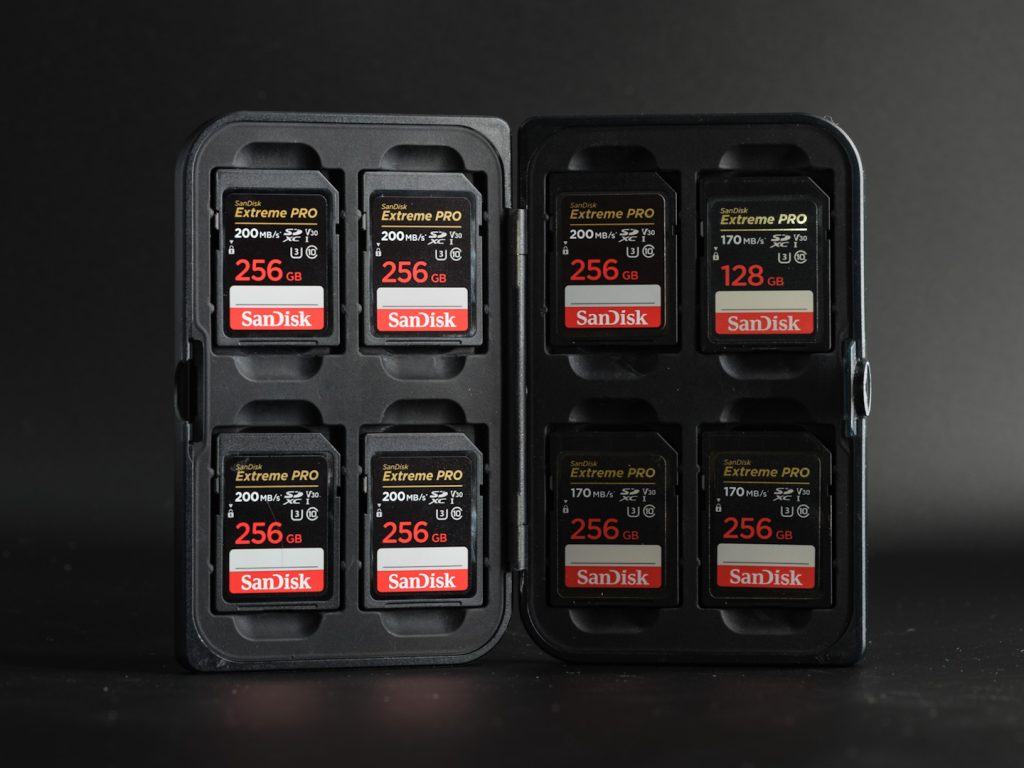
I’ve always used SanDisk SD cards, and in nearly two decades of shooting I’ve never had a single failure. Back when I first bought my CFexpress Type B cards (in 2021), they were still very expensive, so after a lot of research I decided to go with the Integral CFexpress Type B cards
At the time, there were several speed options available, and I’ve tried all of them — but the ones I now use and recommend are the Cinematic Grade cards. They’re fast enough to never slow you down when shooting bursts, and they easily handle the Z6III’s 4K 120p and higher bit-rate video modes.
I use the 512 GB versions and have two — one in my Z6III and the other in my Z8. After four years of use, I’ve never had a single issue, and I’m confident they’ll keep performing. I also own a pair of smaller 256 GB “Pro” variants as backups, but now that the Cinematic Grade cards have dropped significantly in price, I’d just go with the larger, faster versions if I were buying again.

I also use a good-quality Integral CFexpress Type B card reader, which unfortunately no longer seems to be available. If I were buying today, I’d pick up a dual CFexpress Type B / SD reader instead — it’s faster, takes up less space, and reduces the chance of leaving something behind while travelling.
For SD cards, I only use SanDisk Extreme Pro, and I recommend getting the same capacity as your CFexpress cards so you can back up everything efficiently and stay organised.
Now that the boring but essential stuff is out of the way, let’s get on to something all of us photographers actually enjoy — bags and straps.
Bags and Straps – My Everyday Travel Setup
Peak Design Everyday Sling 10L

I’ve lost count of the number of bags I’ve bought over the years — everything from Lowepro’s largest backpacks to a Billingham Hadley Digital that I used with my Fuji X-Pro1. In the last few years, as I’ve shot more in Asia, I’ve realised that backpacks just don’t work in this heat and humidity. They’re uncomfortable, and most of them scream “TOURIST” from a mile away.
After a lot of testing, I’ve settled on the Peak Design Everyday Sling 10L as my travel bag. It’s well designed and made from substantial materials that feel built to last. While not technically waterproof, the fabric does a great job of shedding rain — my gear inside has never been wet. The strap has a decent amount of padding, making it comfortable to carry all day, and it can be adjusted to wear either on the shoulder or cross-body (my preferred way).
It comfortably fits my Z6III with a Z 1.8 prime attached, plus two additional Z 1.8S primes, along with my 13” iPad Pro M4 (with Magic Keyboard and Pencil attached) in the dedicated rear slot. The internal dividers can be moved and arranged however you like, which is perfect when I’m switching between different setups. Inside, there’s a zippered compartment with built-in battery slots for up to five spares — that’s also where I store my memory cards, cleaning cloth, and rocket blower.
On the outside is another zippered compartment large enough to carry two power banks (a Nano and a larger one for the hotel), the MINIX charger, multiple cables, a Peak Design Slide Lite strap, and travel essentials like a passport or documents.
For smaller systems like Fuji or Micro Four Thirds, the Peak Design 6L or 10L bags both work well. But for the Nikon Z system, unless you’re carrying a very minimal load, the 10L is easily the better option. The 6L is fine for a body with one lens attached, but anything more feels cramped.
Thinktank Backlight 36L Backpack

Since moving to Scotland and doing more wildlife and landscape photography, I have found that I am using my ThinkTank Backlight 36L camera backpack much more often than the more travel focused Peak Design Everyday Sling. The Thinktank bag is really comfortable to carry for long periods of time, has a waterproof cover and excellent build quality as well as plenty of space for both my landscape photography kit and my widlife photography setup. It has a really comfortable hip belt which helps to distribute the load when I’m carrying my heavier setups and the straps are thick and well padded which aids comfort. It has plenty of internal and external compartments which can fit a wide variety of gear and importantly it can carry my Z8, Z6III, 180-600mm and 400mm f/4.5 plus accessories.
ThinkTank MindShift BackLight 36L
A comfortable, high-capacity camera backpack that can carry a full wildlife setup including long lenses, multiple bodies, and accessories — ideal for longer walks and unpredictable conditions.
Check Latest PricePeak Design Slide Lite

I own the Peak Design Cuff wrist strap, Leash camera strap, and Slide Lite camera strap. They’re all fantastic products, but not all of them suit every camera. The Cuff wrist strap, which my eldest daughter Sofia bought me for my last birthday, is perfect for my Fuji X100VI, but I wouldn’t want to use it with the Nikon Z6III.
Likewise, the Leash camera strap — while technically strong enough to hold the Z6III — is considerably thinner than the Slide Lite. With a camera like the Z6III, which you might pair with smaller prime lenses or heavier pro-grade zooms, you want a strap that’s not only strong enough to carry any setup, but also wide enough to spread the weight across a broader area of your neck or shoulder for comfort.
The Slide Lite is perfect for this. It’s comfortable, sturdy, and quick to attach or remove thanks to Peak Design’s Anchor Link system, which lets you clip and unclip the strap in seconds. I literally have Peak Design Anchors on all my cameras so I can swap the strap to whatever I’m using that day.
I’ve linked all the accessories mentioned in this article in one place to make them easier for you to find and compare.
➡️ View My Nikon Z6III Accessories ListA lot of the accessory articles I’ve seen list off a whole bunch of items that are neither relevant nor tailored to what you actually need to make a camera work in the field. Sure, all those fancy add-ons can be fun, but this list is about getting the best bang for your buck — the things that genuinely make the camera sing.
The Nikon Z6III is such a well-designed and comfortable camera that I see no point in trying to improve the grip — it’s already one of the most comfortable cameras to hold. The screen is fully articulating and usually closed when not in use, so why bother adding a screen protector?
This setup reflects how I shoot for travel and everyday photography, based on nearly two decades of experience with virtually every camera system out there. It’s the bare essentials you need and nothing more — and I hope that helps cut down your decision-making so you can focus on what really matters: your photography.
Want the bigger picture? Compare all systems here:
Best Cameras 2026
Nikon Z6III Accessories – FAQ
Do I need more than one battery for the Nikon Z6III?
Battery life on the Z6III is excellent, so you don’t need a bag full of spares. I use one additional original Nikon EN-EL15c battery alongside the one that comes in the box. That comfortably covers a long day of shooting, especially when combined with USB-C top-ups from a power bank.
Should I buy third-party batteries or stick with Nikon originals?
I personally stick with Nikon originals for the Z6III. They cost more, but you get the best reliability, accurate battery reporting, and full performance for stills and video. Given how good the battery life is, one extra OEM battery is usually all you need.
What size CFexpress Type B and SD cards do you recommend?
I use 512 GB CFexpress Type B cards in the Z6III (and Z8) and match them with 512 GB SD cards so I can back everything up easily. The Cinematic Grade CFexpress cards have been more than fast enough for bursts and 4K 120p, and I pair them with SanDisk Extreme Pro SD cards for reliability.
Do I need a separate battery charger, or is USB-C enough?
The Z6III ships with an older-style charger, which works fine at home, but for travel I prefer to rely on USB-C charging. A compact, high-output power bank plus a multi-port wall charger (like the MINIX 100 W) lets you charge the camera and the rest of your kit from a single small brick, which is much more efficient than carrying multiple dedicated chargers.
What’s the best type of bag for the Nikon Z6III and a few primes?
For the Z6III, I’ve settled on the Peak Design Everyday Sling 10L. It comfortably fits the Z6III with a Z 1.8 prime attached, two extra primes, my 13" iPad Pro, batteries, chargers, and small accessories. The 6L works for very minimal setups, but for a full Z system travel kit the 10L is the sweet spot.
Which camera strap works best with the Z6III?
I use the Peak Design Slide Lite with the Z6III. It’s wide and padded enough for heavier lenses, strong enough for any Z setup, and still compact. Thinner straps like the Leash work, but they’re less comfortable over a long day, especially with pro zooms.
Do I need a grip or screen protector for the Nikon Z6III?
In my view, no. The Z6III already has one of the most comfortable grips on any mirrorless body, so I don’t see a need to bulk it up further. The fully articulating screen is usually closed when I’m not using it, which protects it well enough that I don’t bother with a screen protector either. I’d rather keep the camera clean, simple, and ready to work.
I also have a z6iii and z8 and was interested in the Peak Design 10l. Does it fit the Z8 as well as the z6iii?
Cheers
Hi Konice,
Yes they both fit in the Peak Design 10L although there isn’t a lot of room to spare. I can squeeze the two camera bodies and two Z 1.8 primes in there, one on one of the bodies and the other separate.
All the best
David