

When a Quiet Worry Becomes a Turning Point
I thought it would be Isobelle that brought us back to the UK — not a flood.
In the last few months, as we started to notice small signs in her development, I found myself Googling things I hadn’t expected to Google this early in her life. And for the first time in years, my mind drifted back to the UK not as a place I once lived, but as a place where she might get the help she needs — if indeed she does need it. A place with structure, backup, and systems that don’t rely on luck or good weather.
That was the moment the idea of returning to Scotland re-entered my life. Not urgently — just quietly. A thought for “later.” Maybe July 2026. Maybe when we were ready.
Then the storms came.
And eventually, the water.
And suddenly “later” became “we have to move.”
Realising the Philippines Couldn’t Give Us the Certainty We Needed
It started quietly, almost privately — a thought I didn’t even say out loud at first.
Living in the Philippines has many beautiful sides, and it’s been home for years, but when you’re raising young children you start noticing the gaps. The “what ifs.” The moments where you realise there’s no safety net beneath you — no reliable specialists, no straightforward pathways, no infrastructure designed to catch families when they need help.
And as those small questions about Isobelle’s development began to surface, the reality of that gap hit harder.
Last week we booked a simple hearing test for her — something that, in the UK, you could arrange in minutes. We drove forty minutes in the evening (the only time they were open), disrupting her sleep, and arrived at a doctor’s surgery where the open-air waiting room was already full. We’d been told this was the nearest hearing specialist, so despite the setup raising doubts, I tried to stay optimistic.
My instincts were right.
There were no testing facilities.
All they could offer was a referral to the city — another long journey, another question mark.
I’m not complaining; this is simply how things are here.
But it made something painfully clear:
if even simple assessments require this much effort and uncertainty, what would happen if she ever needed more specialist care?
Bottom line: I can’t risk that. And I won’t.
That was the first real shift.
Not panic.
Not conclusions.
Just the quiet recognition that if she did need help — even something minor — we weren’t in a place that could reliably give it.
And when you see your children’s lives through that lens, “later” suddenly begins to look a lot more like “soon.”
The Storm That Made Everything Feel Closer Than Before
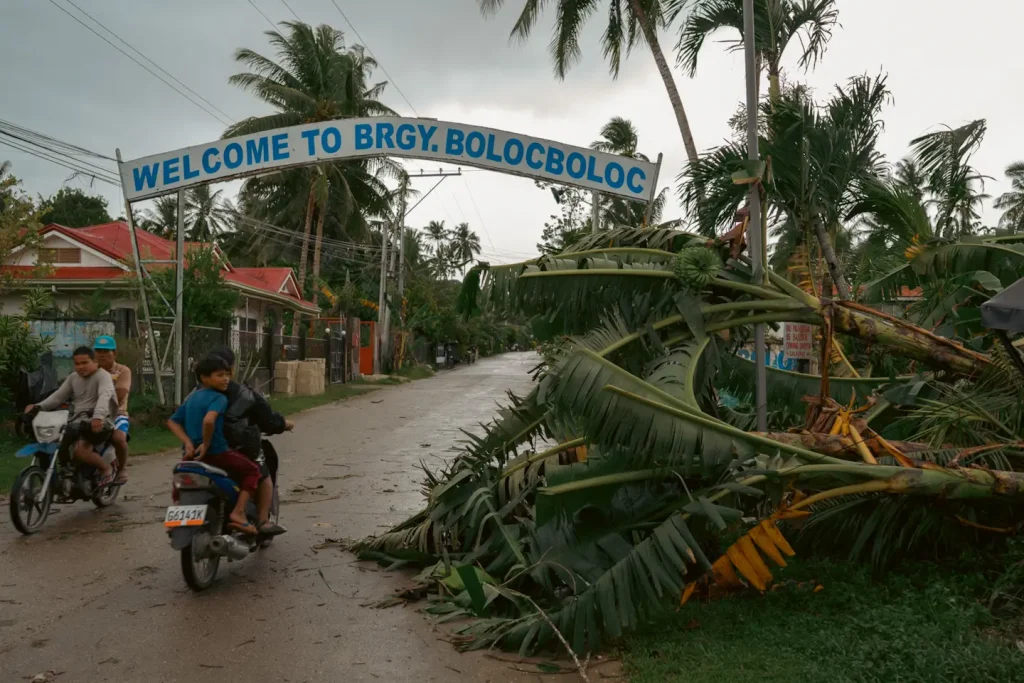
A week or two before all of this — honestly, with everything that’s happened lately I’ve lost track of dates — another typhoon was heading uncomfortably close to us. It was the latest of more than twenty typhoons the Philippines has taken this year, but this one felt different. Cebu isn’t normally hit directly by storms of that scale. At least, that used to be the case.
As it barrelled toward us, we did what everyone here does: make the area outside as safe as we can, bring everything in, and prepare the house for the worst. My mum came to stay the night. The main bathroom — always the safest room — became the fallback space again.
We were fortunate. The eye passed about 60 to 80 kilometres north, putting us on the weaker side. A few downed trees, a lot of mess, but no major damage. Others north of us weren’t as lucky. Their losses were devastating.
In my decade living here, this wasn’t normal. I’d been caught in precisely one typhoon — in Manila — and even that only caused a delayed flight. No major earthquakes where we live, maybe one or two distant volcanic eruptions, and nothing that felt like an immediate threat.
But lately it’s been different.
A few weeks ago, a 6.9 magnitude earthquake struck north of Cebu City — about sixty miles from us. We woke to the house shaking around us. It didn’t cause damage here, but I saw the devastation in Bogo. Entire sections of the town shattered. People here are half-joking, half-serious when they say it feels like “the end of the world.” I don’t think that way — but the frequency is hard to ignore.
When Typhoon Yolanda hit Tacloban in 2013, a year before I arrived in the Philippines, I remember thinking storms like that were once-in-a-generation events. Especially here in Central Cebu, sheltered from the worst of the Pacific.
Then Odette hit in 2021 and damaged our house. Locals said the last time a storm that strong hit our region was thirty years ago.
Now, just a few years later, we found ourselves bracing again. And only a week after that, a super typhoon battered Luzon and the northern Philippines. If its track had shifted even slightly south, we would have been in the firing line.
As people here started to relax and return to normal life, none of us knew that the next calamity was already lining up — less than a month away.
And this time, it wouldn’t be the wind.
It would be the water.
The Night Everything Changed
My phone buzzed — another rain alert.
Amber this time.
They use a traffic-light warning system here, and we get these regularly during the rainy season. It had already been pouring for days, so I barely paid attention. A bit late, I thought to myself.
Later that evening, another buzz.
Red rainfall warning.
Again, nothing new. I’d seen red warnings before and they’d never caused a problem, so I went to sleep to the sound of waves of rain hammering our corrugated metal roof. It reminded me of childhood holidays in a caravan in Wales — only louder, more insistent, like someone turning up the volume on a memory.
I drifted off to sleep.
At 4:10am, my phone rang.
It was my mum.
“I’m flooded in here.”
I shot out of bed and ran outside. The ten-metre gap between our two houses had become a lake. The pond was gone — swallowed under brown water — and my mum stood on her back porch with two of our four dogs, both whining and confused. (The dogs, not my mum.)
There was no way across.
Luckily, when we built our house, I’d insisted on raising the ground level, including the driveway. It was soaked, but not yet submerged, so I ran round to the front gate. I tried to pull it open — nothing. A torrent of water must have hit earlier, hard enough to wedge thick tree branches underneath and between the gate panels.
I wrestled them free and went out onto the road, moving through bewildered neighbours standing outside their homes, staring at the water as if trying to understand how the night had turned on them so quickly.
I reached my mum’s gate, but the locking bolt was buried under gravel and debris. I dug it out with my hands, forced the gate open, and the scene that greeted me when I stepped inside is something I won’t forget.
The entire house was sunk under about two feet of filthy floodwater.
My mum had stayed on her bed at first, unsure what to do, but by the time I arrived she was trying to sweep water out of the doorway in a room that now resembled a shallow lake. Electrical sockets were submerged. A cello case floated across the living room like a small boat. The house I had spent my savings renovating just three months ago for her arrival was now uninhabitable.
The Moment “One Day” Became “We Have to Leave”

After a sleepless night, morning finally came — and thankfully, the rain began to ease. My wife didn’t quite believe the scale of the damage I’d described until she saw it with her own eyes. It was only then that she and Sofia pointed to the side of the property where our perimeter wall once stood. Now it lay on its side, collapsed like a fallen domino.
During the night, I’d tried to rescue important documents, grabbing whatever I could in the dark, not fully aware of what had already been lost. Through a twist of fate, I had left our passports — mine, Sofia’s, and my mum’s — at her house. All had been soaked, along with visa papers and other vital documents. I watched the ink run and felt a mix of frustration and resolve tightening in my chest.
That was it.
The last straw.
I wasn’t going to leave my family exposed to these risks any longer.
We had to leave — and leave as soon as possible.
Read More:
As I sit here writing this, all of us now living in one house until we can get back to the UK, I don’t feel like a victim. I don’t feel unlucky. I’m not bitter or angry.
Because the truth is, I’m blessed.
Through photography — through this website — I have the one thing many here don’t: choice. The choice to take my family back to the UK. The choice to give my girls the safety, stability, and opportunities they deserve. Most families here will rebuild and remain vulnerable because they simply have no alternative. For us, it’s not going to be easy, but at least it is possible.
And through all of this, photography has been the thread that’s held me together. It has given me purpose. A reason to step outside with a camera and make something in the middle of chaos. A way to process the stress, clear my mind, and remember who I am beyond the logistics and the worry.
Photography is my release, my calm, and my work — and it’s the very thing making our move back to Scotland possible.
For that, I am incredibly grateful.
Why Scotland Represents Safety, Opportunity — and Home
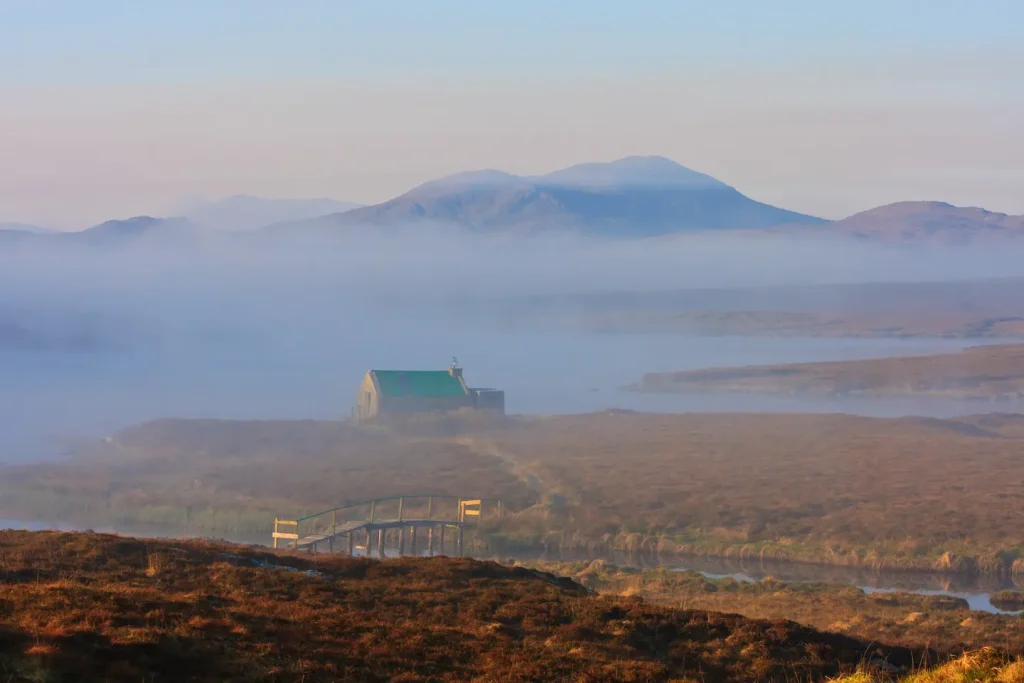
Scotland is a place I know well, and to me it represents the very best of the UK. Nature and wildlife on your doorstep. Space. Greenery. Openness. A health system and an education system that—while far from perfect—are still world-class. And when you’ve been abroad for a decade, you see that with fresh eyes. You understand its value in a way you never did growing up.
It’s also a place where I can continue working as a photographer, with some of the most inspiring subjects on the planet just a drive away. The Highlands, the rivers, the forests, the changing seasons — the kind of landscapes that not only make you want to pick up a camera, but make you proud to live among them.
I can’t wait for this next chapter of our lives. This decade in the Philippines — the beauty and the struggles — has taught me to appreciate Scotland more than ever. It’s reminded me what really matters: safety, stability, opportunity, and a life where the girls can thrive without constant risk hanging in the background.
And yes, there are deep-fried Mars bars too.
What’s not to like?
Wow.. what an adventure.. although I’m sure at the time it felt like a nightmare!
I’m pleased you are all okay and hope everything works out well for you all.
I really enjoy your blog content, the variety of subjects is great.
Keep up the good work and good luck over there.
Cheers, Lee
Hi Lee,
Thanks ever so much. It has been quite the adventure and I’m sure it’s not over yet. I’m currently sat in my car, in pouring rain trying to work as our internet is down at the house. It certainly keeps things interesting. Thanks again.
All the best
David