
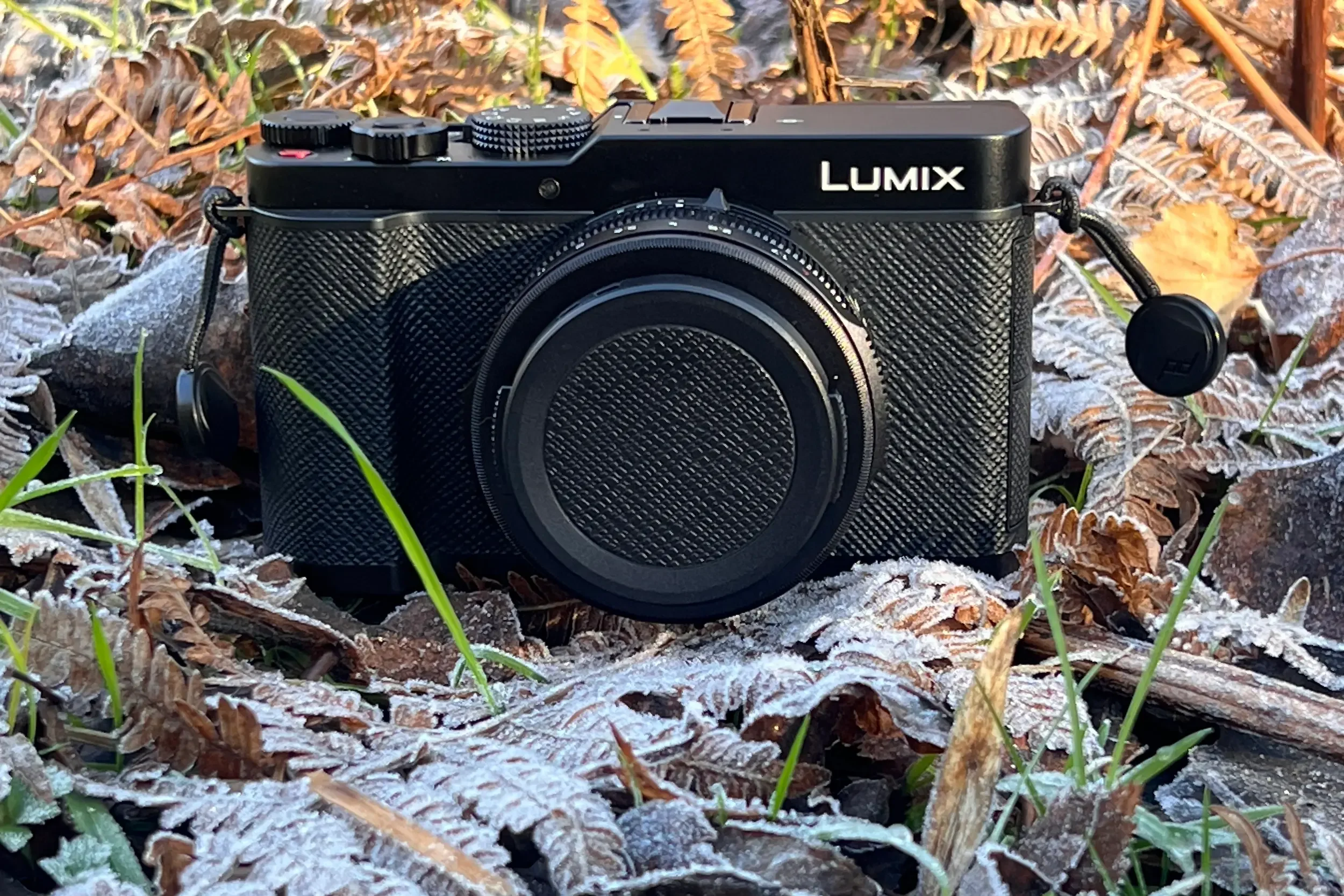
Over the last few days the temperature has dropped, the last of the Autumn leaves are dropping but with my Panasonic L10’s new accessory, I’m much less likely to drop the camera. Today I took a stroll around my local circular walk, up through Crieff golf course, connecting to the path that leads up and around the Knock of Crieff. Before I stepped outside, I was debating taking one of my Nikon Z cameras with a prime lens attached. In the end, the allure of just bringing a lightweight camera and enjoying the walk won out.

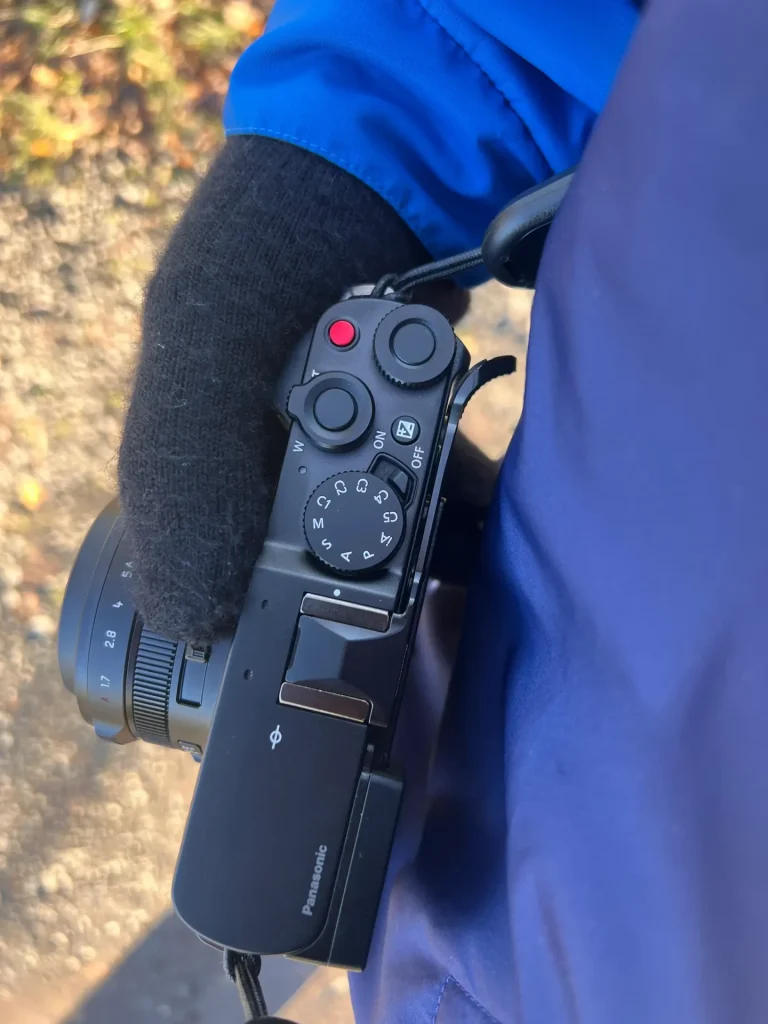
One of my friction points when using the Panasonic L10 on various outings over the last couple of weeks is that the grip, while ok for short periods, doesn’t quite give enough purchase to confidently hold the camera, ready to shoot at my side for long periods. So last week I ordered the SmallRig Thumbgrip, specifically designed for the L10. Today, with temperatures hovering around 0°C and frost and ice remaining throughout the day, that grip proved even more useful as I was wearing gloves.
As I stepped onto the path, the satisfying crunch of the frozen leaves beneath my walking boots, I had in mind to test a few features of the Panasonic L10 which I still had questions about after my first impressions. . How was the macro AF mode, just how good is the Leica lens, are the LUTs I’ve downloaded using the LUMIX Lab app capable of producing decent results straight out of the camera, and were there any other things about the camera that would irritate me in extended use, on my walks here and any future travel.
Macro
Walking up the path that cuts through Crieff golf course, puddles had frozen over and immediately caught my eye, the patterns and textures of the now broken ice were the perfect opportunity to test out the Macro mode located on the lens. Throughout the walk I was wearing black lightweight winter gloves and operating the Macro switch on the lens, as with all the other controls throughout the day was pleasantly easy. This is one of the benefits of having a slightly larger body, it actually allows you to operate it in less than ideal conditions.

I crouched down and found that I wanted to isolate particular patterns within the ice so quickly zoomed to the 70mm equivalent focal length using the step zoom function I’ve programmed the camera to operate by. I moved in close, almost instinctively to a distance that I thought may be around the minimum focus distance based on previous use of the OM System 60mm f/2.8 Macro lens on my OM System cameras. I found myself having to back off and put more distance between myself and the ice until the autofocus locked on to the particular area that I wanted to isolate.

I must admit, I was initially a little disappointed that this didn’t quite result in the frame filling composition that I had envisioned as the minimum focus distance is more than anticipated. Admittedly I hadn’t checked the specs before testing out this mode. With a bit of recomposing, I was still happy with the shots I managed to take which I felt captured excellent detail if not quite true macro level images. The colors from the LUT I had downloaded added a blue tint to the ice which I hadn’t intended but in the end reflected the cold feel of the ice while also giving warm punchy reds and browns.

Just a couple of steps away at the edge of the path was an area of frosted leaves that just summed up that crisp winter morning feeling. This time the same LUT produced rich autumnal hues which I was very happy with. While macro photographers would almost certainly be left wanting, the ability to shoot a little closer than using the standard AF modes allowed me to capture more detail and fill the frame a little more than I would have otherwise been able to do so. For a general purpose compact camera, the ability to shoot pseudo macro without any extra effort combined with the zoom lens, meant that I created some photos today that I simply wouldn’t have with a fixed lens compact like the Ricoh GR IV.
One thing I wanted to look at today was whether the Leica lens performed consistently across the zoom range and across the image. I shot some quick sample shots across the golf course at each focal length. Having now looked through those images back home, I have to say that sharpness in the centre of the frame is excellent across all the focal lengths.
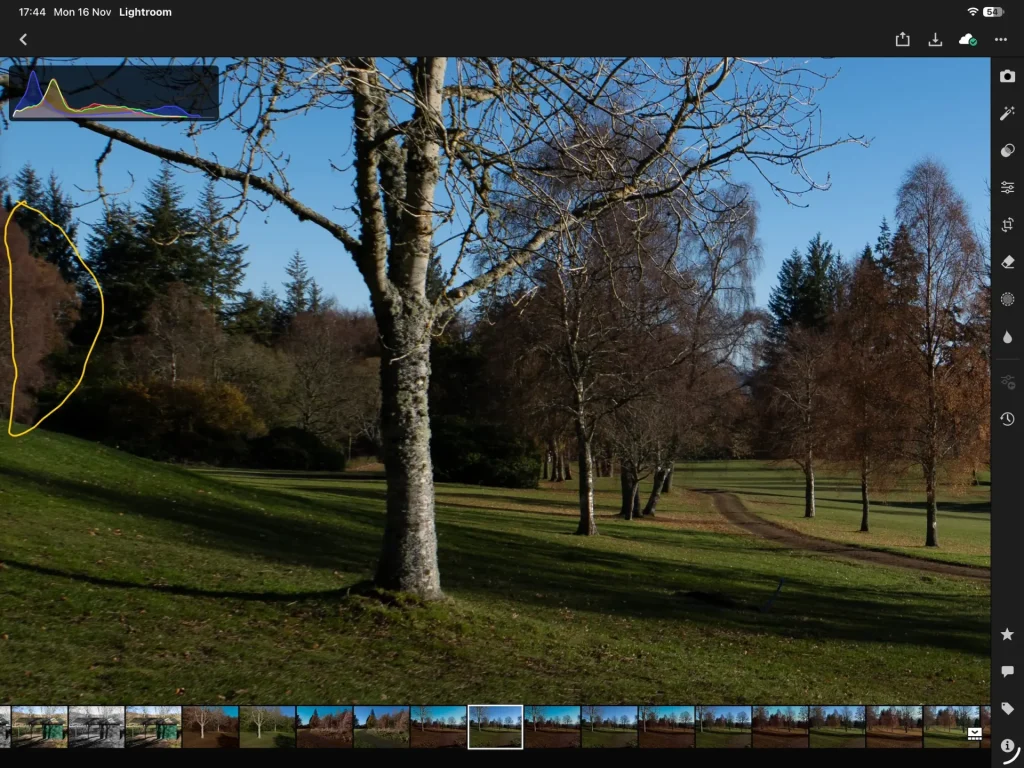
However, I did notice what appears to be some smearing at the far edge of the frame when shooting at the widest 24mm equivalent settings. This wasn’t present at any other focal lengths. I have made a note to now test this further to see if it is actually an issue or a single anomaly. I’ll report back on this once I get the chance to test again in a more controlled setting. Overall though, throughout the focal range, the lens seems to do a good job of capturing details, whether it’s close up macro shots, wider landscapes or indeed capturing fine detail in animal fur and buildings.
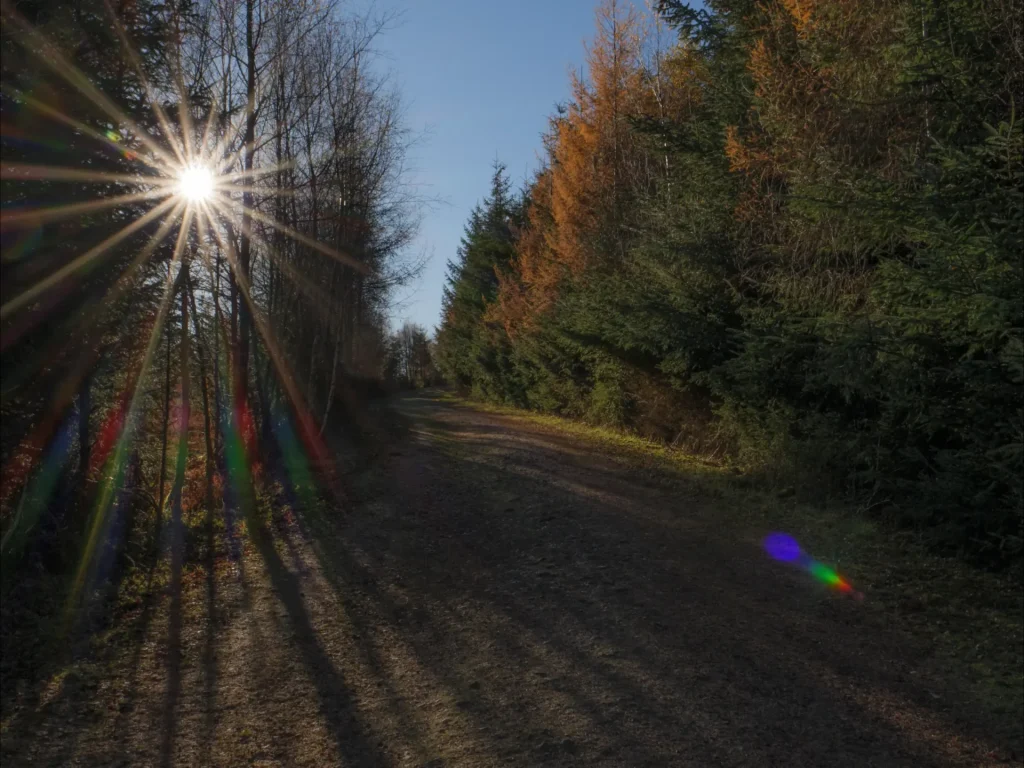
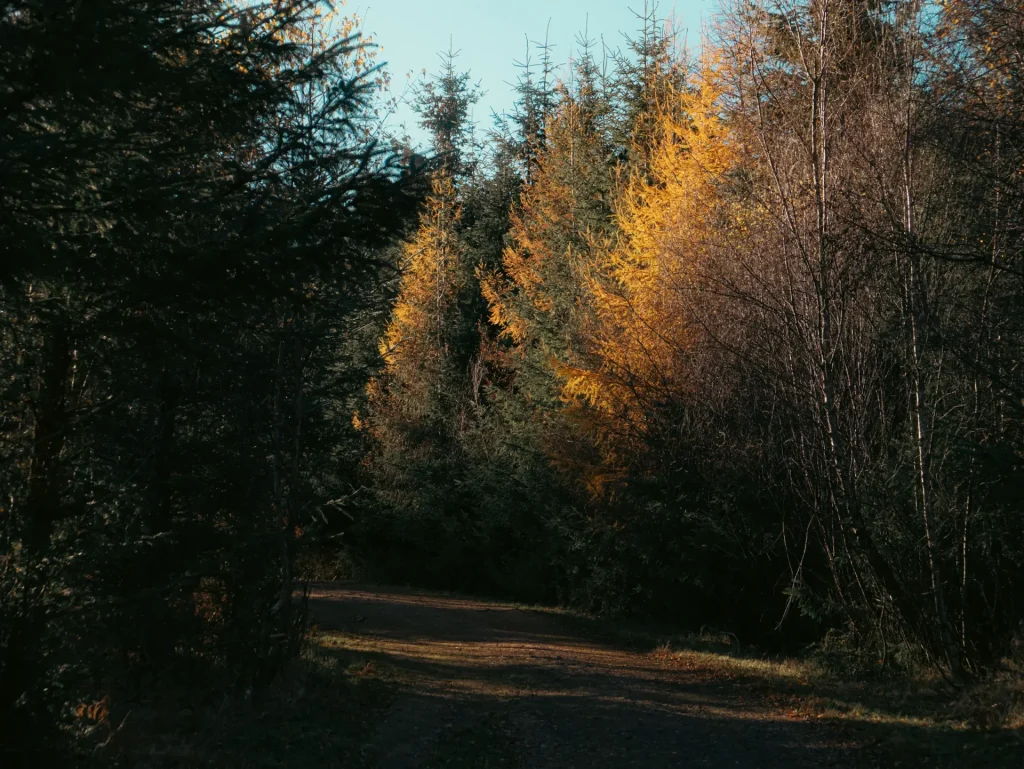
As I made my way further up the path, towards the top of the hill, the low winter sun was shining through the trees and raking long shadows across my path. I’m a sucker for exactly this kind of scene so shot a couple of frames before deciding that the image would look great with sunstars adding to the drama. I stopped the aperture down to both f/11 and f/16 and fired off a couple of shots. Visibly impressive sunstars check. Equally visible lens flare and diffraction streaks, ruining the shots, sadly also check. I moved around, changed the angle of the shot, but as long as the sun remained in the frame I could not fully remove the ugly bright coloured flare from the frame. In the end, none of the shots were any good anyway as the elements wouldn’t quite line up but had they done so, the shots would have been unusable. In fact, it’s by far the worst performance in this regard I’ve ever seen on any camera that I’ve ever owned.
Today was the first day that I really started to gel with the Panasonic L10. With my custom settings now tuned in and having had more time with the camera, small issues that initially gave me concern—such as the lack of a focus joystick, faff with zooming to the right focal length, and strange default dial settings—have been fixed with changes I’ve made to the behaviour of the camera. I’ve published the settings and downloadable file to load straight on to your Pansonic L10.
One thing I would note though is that using the trackpad autofocus on the rear screen while shooting through the viewfinder is basically a non-starter for me. I’ve now tried it multiple times, but it simply doesn’t respond in a natural way. Often, when first touching the screen, it jumps to an extreme position and takes too much effort to get the AF point back to where I intended it to be. But with my custom Fn button settings giving me much quicker access to move the focus point, it’s not proven to be something that now concerns me, as I would only use the trackpad AF if I had no other choice.
Wearing gloves for the whole walk and never feeling the need to take them off to operate the camera is something I would really like to praise. On a Nikon Z8, it’s expected to be able to use the camera with gloves on; on a compact camera, it signals well-thought-out design, logical button placement, and enough feedback on those buttons to confidently operate them. And what of the SmallRig grip? Well, that relatively cheap accessory did exactly what I wanted it to do. It gave me more confidence to hold the camera one-handed for longer periods and was actually essential today while wearing gloves, which actually worsened my grip on the camera. I briefly tried holding the camera without the grip on while wearing gloves today and it resulted in me having to apply much more pressure to maintain my hold on the camera body and felt—well, put it this way, I would not hold the camera off a bridge without the SmallRig grip while wearing gloves, as it felt like it could slip out of my hand. The most annoying thing I experienced today was constantly having to remove and then replace the lens cap every time I wanted to take a shot. Whoever designed this lens cap cannot be a photographer who cares about their gear, because it never feels like it is seated on the lens properly, making me feel that it will only take a tiny nudge to fall off. Putting it in and out of a camera bag would leave me worried that it will come off and the front element of the lens may get scratched. I’ve ordered an auto-opening lens cap to solve this last ergonomic issue with my L10, and that should be arriving in the post in a day or two. The more I shoot with the L10, the more I’m enjoying it—and for a compact camera in particular, that means I’m much more likely to take it with me and use it.