
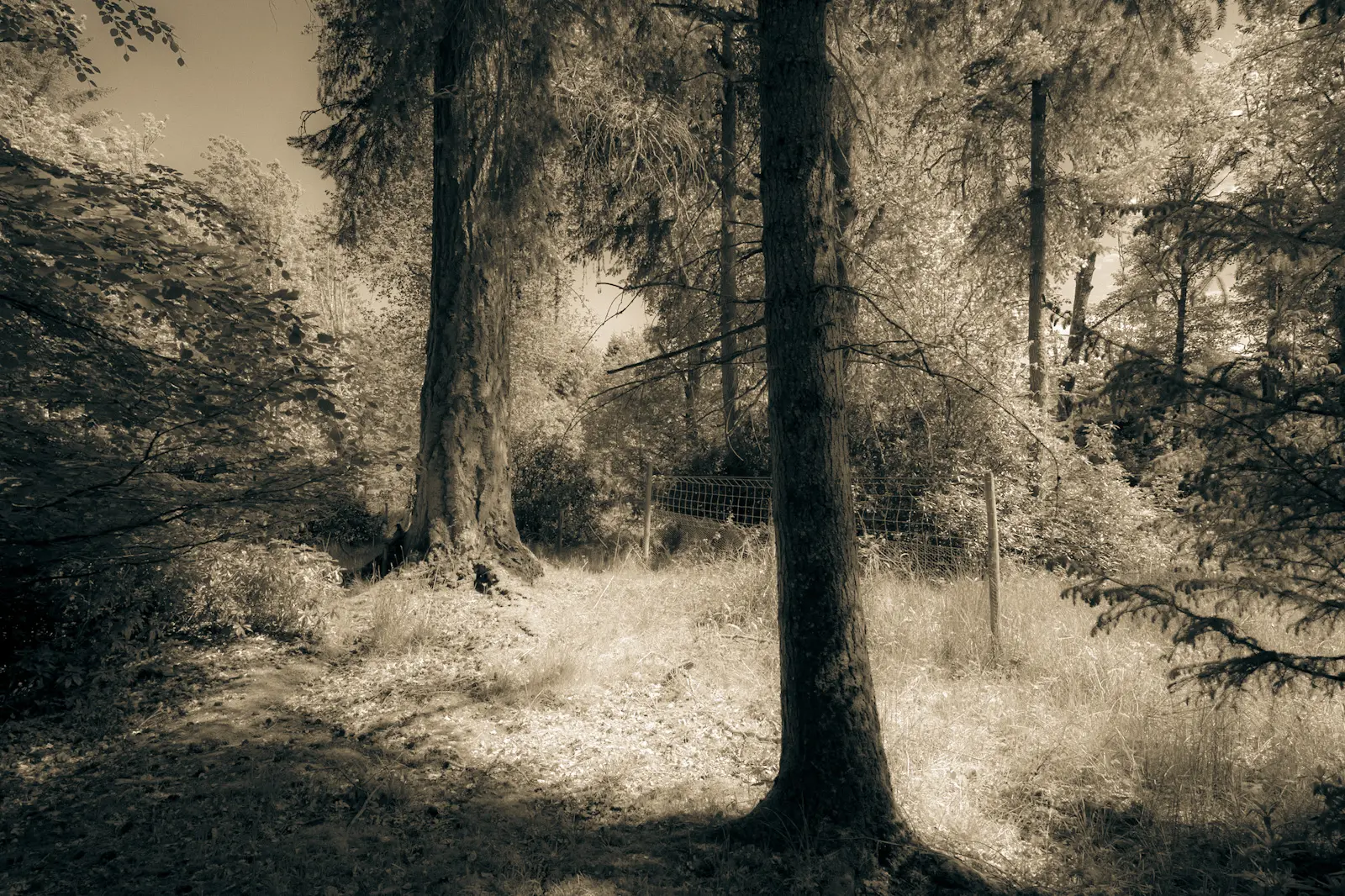
I’ve always had an absolute fascination and love for woodland. There is something magical about walking through huge ancient forests. The scale, the smells and the sounds all make me feel as if I belong there. Here in Perthshire we are absolutely spoiled for choice in terms of landscapes, whether it’s spectacular mountains and glens, beautiful rolling farmland or pockets of ancient woodland. I thought the mountains would call me the most when I returned to Scotland, but I’ve found the call of the woods to be the strongest.
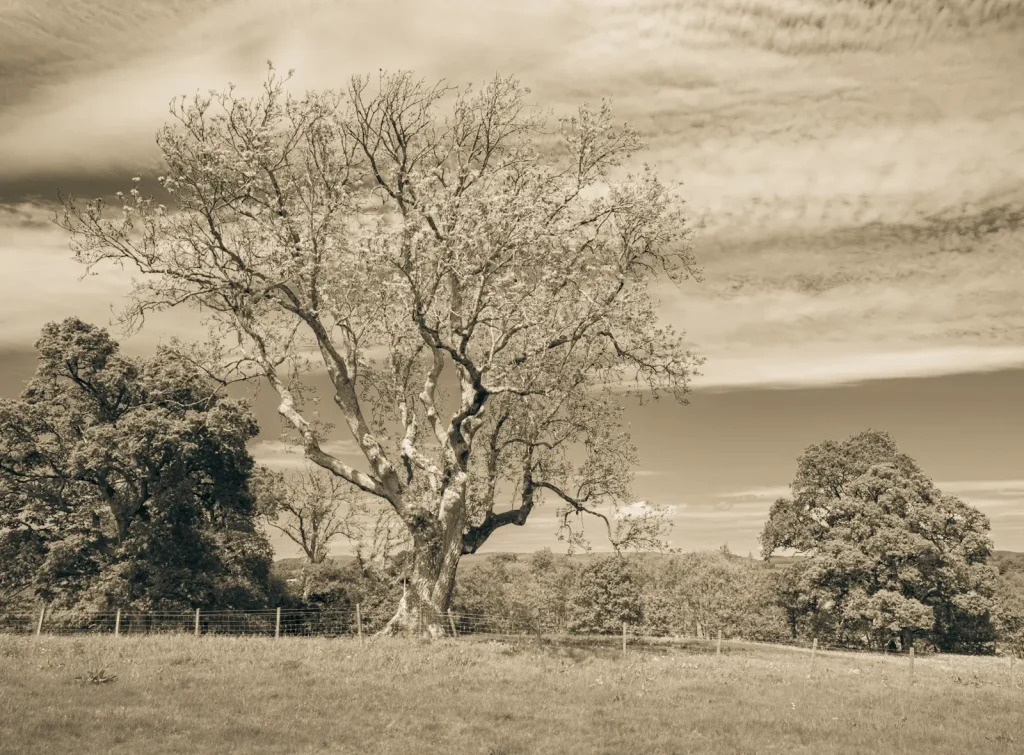
Woodland is notoriously hard to photograph. Clutter everywhere, difficult light, endless distractions. You would naturally think using a longer focal length would help isolate subjects and simplify compositions, yet I’ve found myself opting for the Nikon Z 20mm f/1.8 S lens for my woodland walks lately.
Today, I wanted to get a walk in my local woodland. It was the hottest day of the year so far, blue skies and harsh midday sun by the time I was free to get out. Not exactly the conditions we dream about as photographers, but that’s the time I had and, unlike in my younger years when I was free to pick and choose the best light, I’ll take whatever time I get these days and try to make the most of it.
So I headed out with the Nikon Z 20mm f/1.8 S attached to my Z8, a bottle of water and nothing else. I considered other lenses but decided I really do enjoy the focus and challenge of one lens, one point of view and the simplicity that offers. With everything else going on in life, a prime lens removes at least one more choice from my brain.
Photographing Woodland in Harsh Midday Light
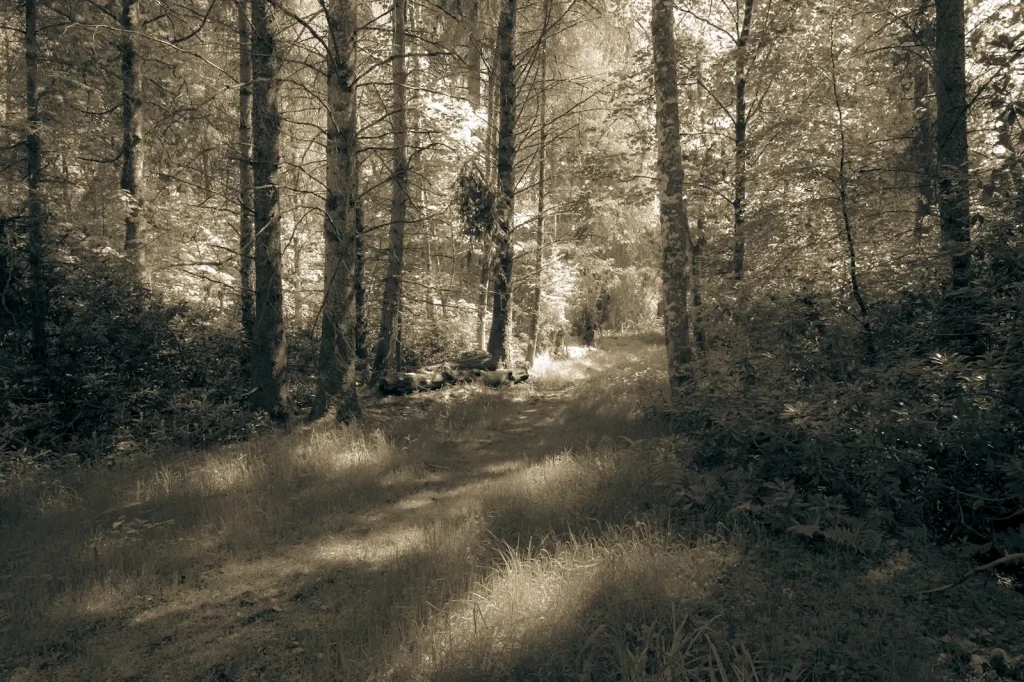
Today was hot, the sunshine was beautiful, but the light was harsh and contrasty, creating huge differences in dynamic range between the pockets of light and the dark forest floor. The kind of light where you have to pay attention to your histogram and, more often than not, make choices about where you want your exposure to sit.
As I walked into the woods, huge Scots Pines towered over me, offering welcome shade and relief from the sun. I could hear a chorus of birdsong all around me. A few minutes in, I stumbled upon a Roe Deer feeding at the side of the path, no more than 10 metres away. I half rued my choice to shoot woodland instead of wildlife as the deer froze and stared straight at me. I watched her for a moment before deciding to keep walking slowly away, allowing her to relax and continue feeding.
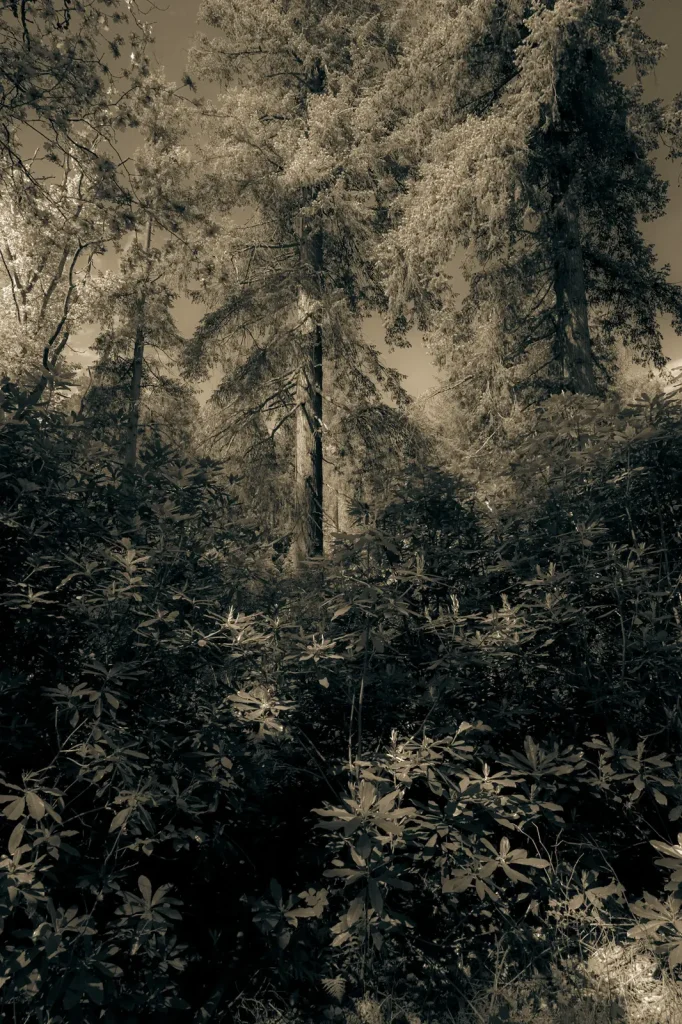
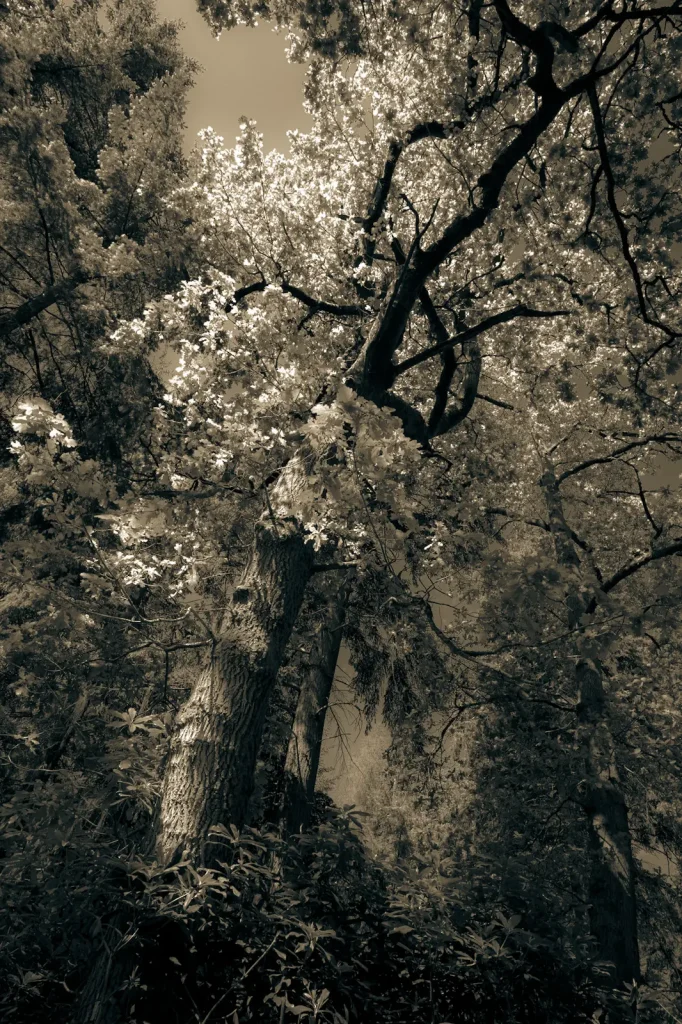
The Scots Pine trees in particular evoke a sense of awe in me as they tower straight up into the sky, their trunks covered in incredible bark so textured I could spend the whole day simply admiring them.
This kind of harsh light, with trees and the forest canopy strongly backlit by the midday sun, lends itself to strong compositions, but more than that, it makes me look for light breaking through the canopy and illuminating small areas of interest. That was my focus today, not picture-postcard woodland images, but light and how it felt on and reacted with the environment.
Why I Chose One Lens and Nothing Else
Yesterday I had laid out several lenses and even cameras to take out with me for a walk. I actually swapped lens choice a couple of times. Maybe I’ll take two cameras for coverage. At one point I had the 50mm f/1.8 S on the Z6III and the 20mm f/1.8 S on the Z8. I looked at my 400mm f/4.5 and wondered if I should take that as well to capture any chance wildlife encounters. Maybe I’ll just go light and take the OM-3.
All of this was adding to my mental load when really all I wanted was a walk in nature for some peace, relaxation and to take some photos should I see anything interesting.
I laid the Z6III down and said to myself, no, just take one camera with a fixed lens. Then I know what I have and what type of shots to look for.
And this is the real strength of prime lenses for me. Instead of trying to cover every possible scenario, they limit you in a way that a zoom doesn’t, but that limitation actually helps focus your mind. It removes indecision, not only about what lens to use, but also about the types of images you are able to make. That leads to clarity, calms your brain and, in my case, actually allows me to think about the photos I am going to make rather than being overwhelmed by choice.
In my experience, that clarity and focus allows you to concentrate on creative thinking, composition and light. More often than not, I end up with a coherent set of photos which are usually better than if I’d taken a zoom or multiple lenses.
And in the past year or so, when I’m out taking photos for myself, when it’s my time, I value that clarity more than being able to cover every possible scenario with zooms or multiple lenses.
Maybe that’s just me and a reflection of how busy my headspace has been lately, but it’s something worth thinking about. Rather than trying to cover every possible shooting scenario, make a decision, introduce a creative constraint and see if it helps improve not only the photos you make, but also your enjoyment while making them.
Why the Nikon Z 20mm f/1.8 S Works So Well in Woodland
The Nikon Z 20mm f/1.8 S is perhaps not the most natural choice for woodland photography, and neither is it a particularly small lens, but it pairs well with cameras like the Z6III and Z8.
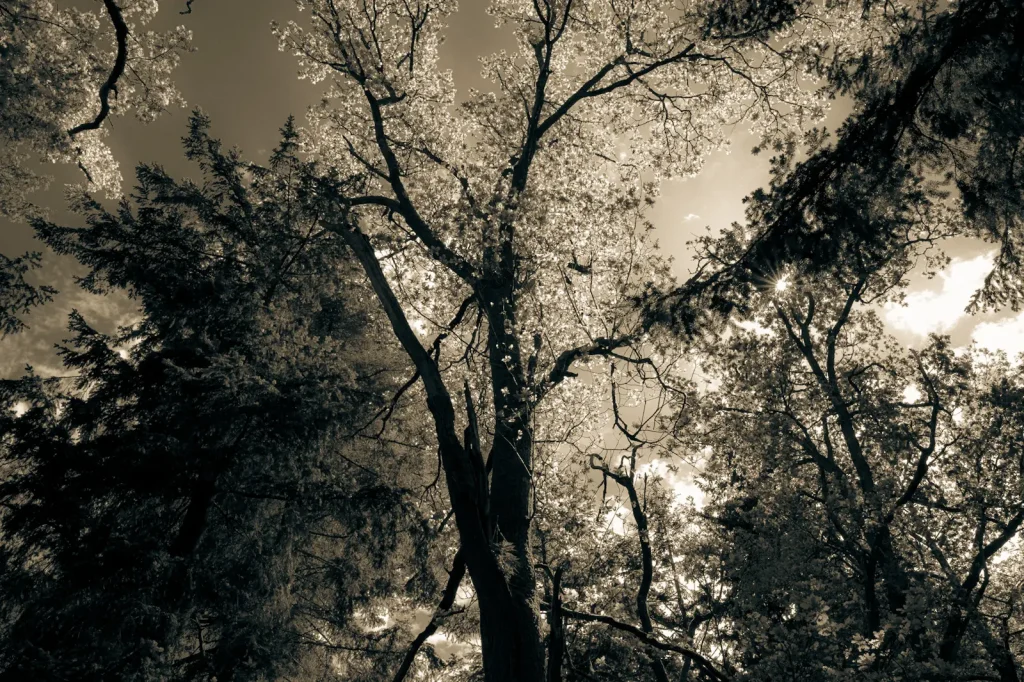
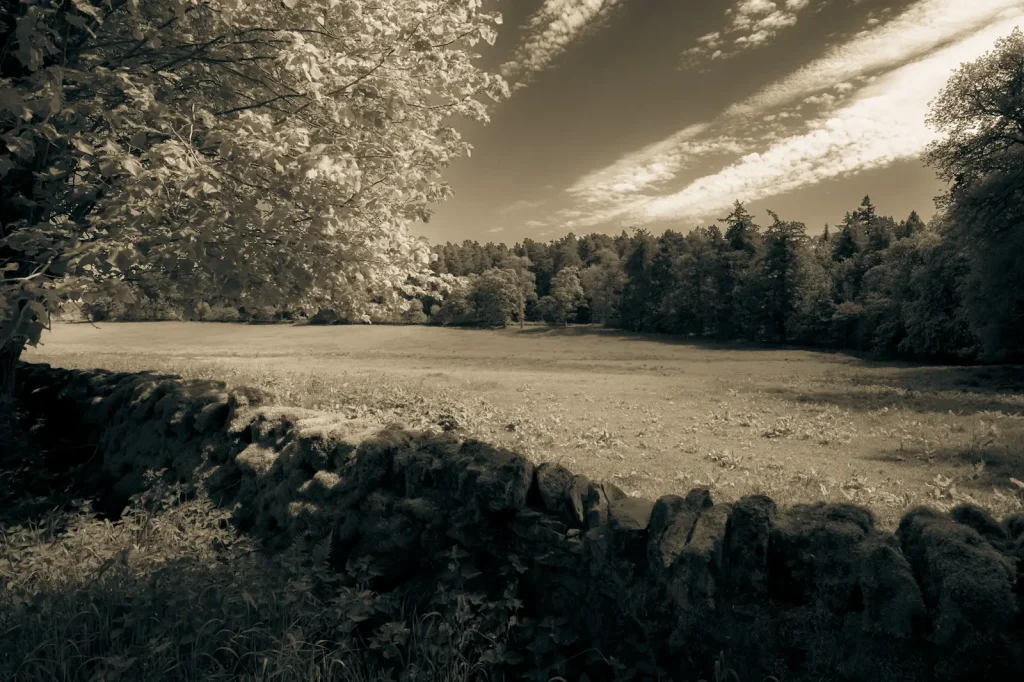
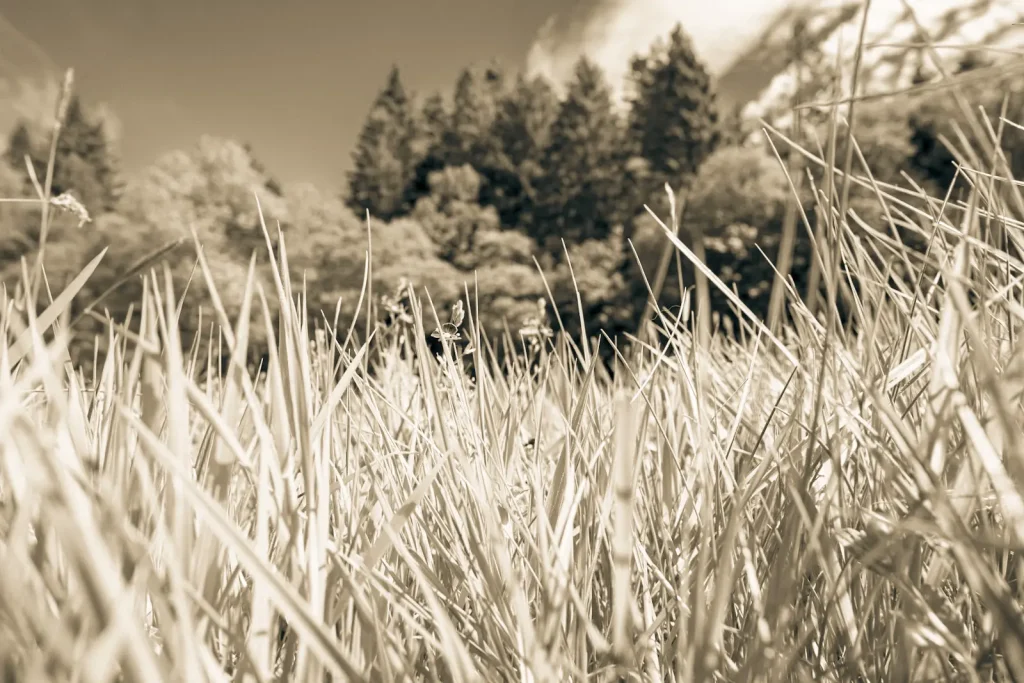
What it does well is encourage you to look for compositions you may not otherwise consider, to push in closer, get lower and really pay attention to your framing. In woodland especially, where clutter is everywhere, you start looking for angles that create separation and order within the frame intentionally. Moving in and out with your feet to remove distractions and arrange elements becomes part of the process because you cannot simply zoom in to eliminate them.
As with some of my shots of the horses, the Nikon Z 20mm f/1.8 S also allows you to get creative with depth of field, opting for a shallower depth of field which is quite unusual in wide-angle photography. That creates a very different look to standard landscape-style images shot at f/11 and beyond. Instead of trying to maximise depth and sharpness throughout the frame, I found myself trying to create atmosphere and, in yesterday’s harsh light, almost an ethereal quality.
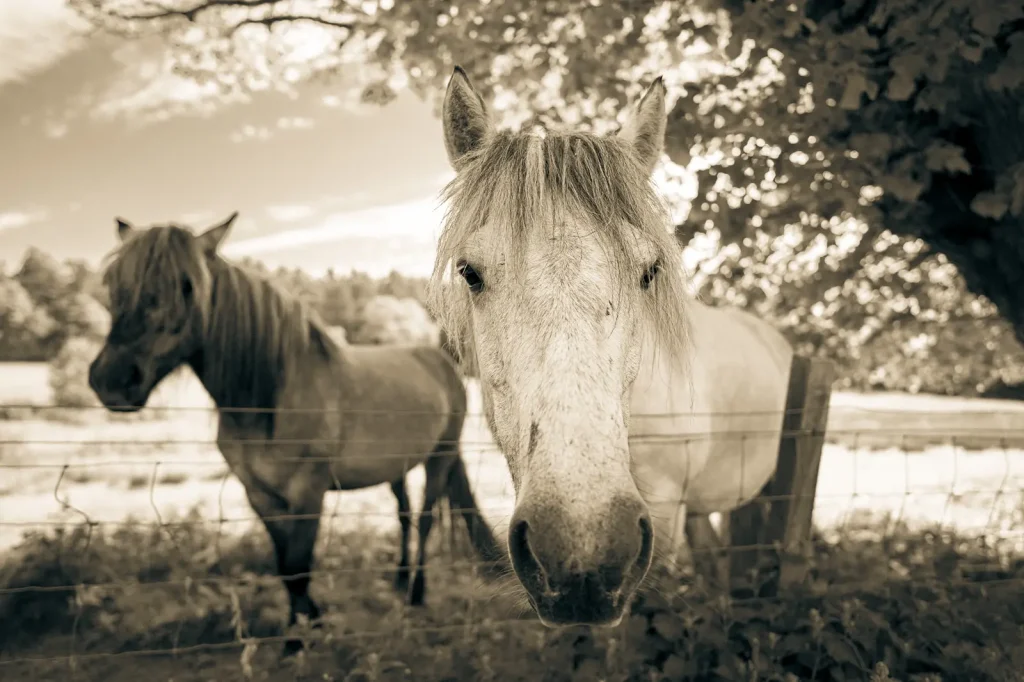
I’ll go into the specifics of the Nikon Z 20mm f/1.8 S in much more detail in my full review, but for now I can say that the optical performance is exactly what I’ve come to expect from Nikon’s Z S-line lenses.
The 20mm perspective, when used in this way, can give the feeling of being immersed in the landscape, almost as if you are part of it, rather than feeling like an outside observer, which shots taken with 35–100mm lenses often create. It feels intimate when you push in close to your subject, yet expansive at the same time.
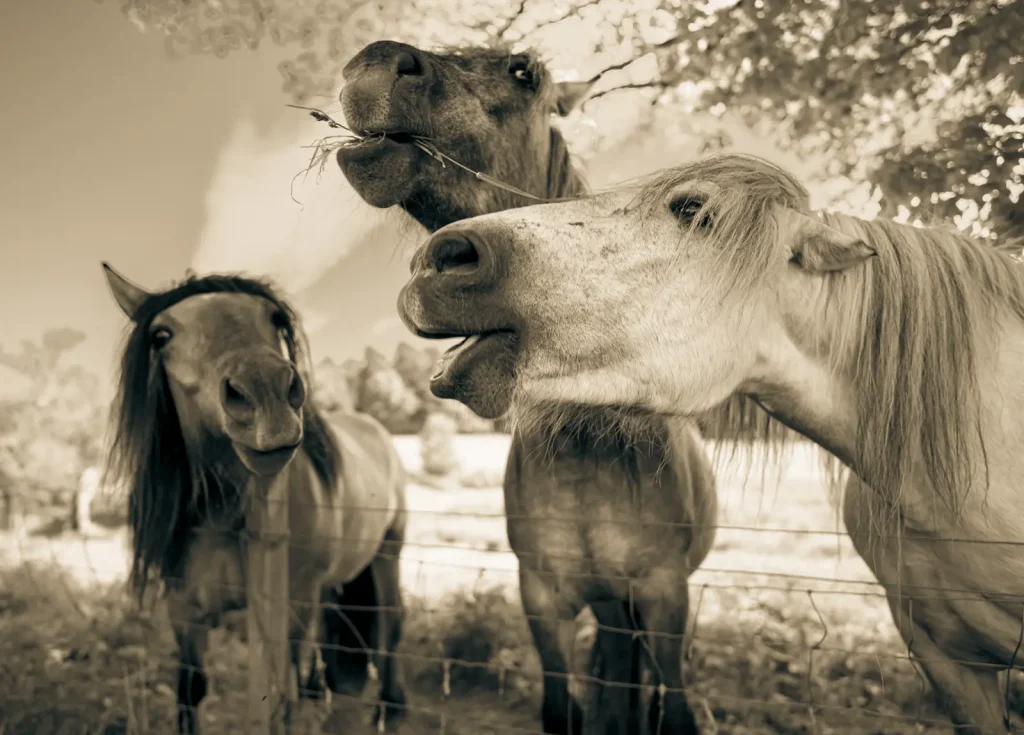
I was photographing the horses yesterday from no more than around 1.5 metres away. The ability of the 20mm lens to get that close while still giving context to the environment is unique to these wider-angle lenses. It’s a viewpoint that challenges you creatively but is ultimately very rewarding when you get things right, very similar in fact to the way I felt using the Fujifilm 18mm f/1.4 WR lens.
Why I Processed the Photos This Way
I don’t usually enjoy sepia toning. It’s not something I use often as I tend to prefer darker, moodier edits with more contrast and weight to them. Yet when I was editing the photos from my walk yesterday, I found myself wanting to remove the saturated greens and focus instead on the pockets of light breaking through the trees.
Black and white immediately felt like the right direction. As I edited the first image, initially without any intention of processing the whole set in the same way, my usual black and white style simply didn’t reflect how the woodland had felt to me yesterday. The darker, moodier processing I normally gravitate towards felt too heavy for the atmosphere I had experienced walking through the woods.
As I’d wandered beneath the trees, the overwhelming feeling I got was that this was a little slice of heaven. The heat, the birdsong, the shafts of light breaking through the canopy and the huge Scots Pines towering above me all combined to create a feeling that was peaceful, ancient and almost dreamlike. Naturally, that pushed me towards warming the images in editing, controlling the highlights while still allowing the overall brightness to come through.
In the end, I replicated that processing style throughout the set and I think the images work well together as a group, all shot with a single lens to represent how that walk and that place felt to me in that moment.
And I’ve realised this more and more over the years: photography for me is less about trying to create images that will be popular, follow the trend of the day or even accurately show how a place looked. What matters to me now is trying to convey how a place felt.
See My Other Woodland Photos With the Nikon Z 20mm f/1.8 S
Interestingly, the images in this article ended up being processed in a completely different way to another recent woodland walk I shot using the Nikon Z6III and Nikon Z 20mm f/1.8 S. Those photos were taken in wet, overcast conditions and I processed them in a much moodier colour style to reflect the darker atmosphere of the woods that day.