
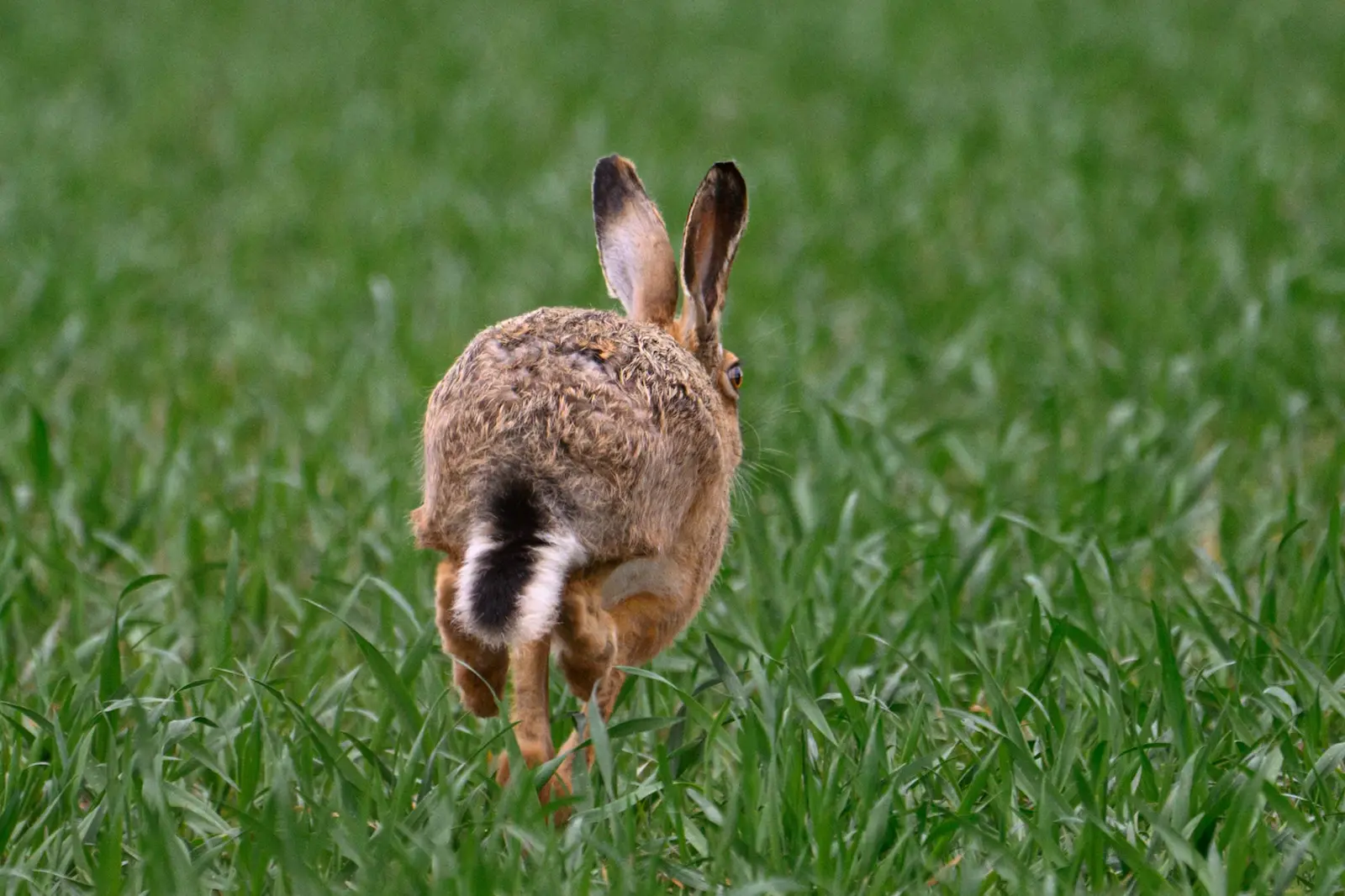
For the last week or so, I’ve been making the most of the longer evenings by heading up a local path that cuts between farmland near where I live. It’s become a bit of a routine — especially after school, when Sofia and I go out for a walk together. It gets us out into nature, gives us some time together, and for me, it’s a chance to try and photograph the hares that roam the fields.
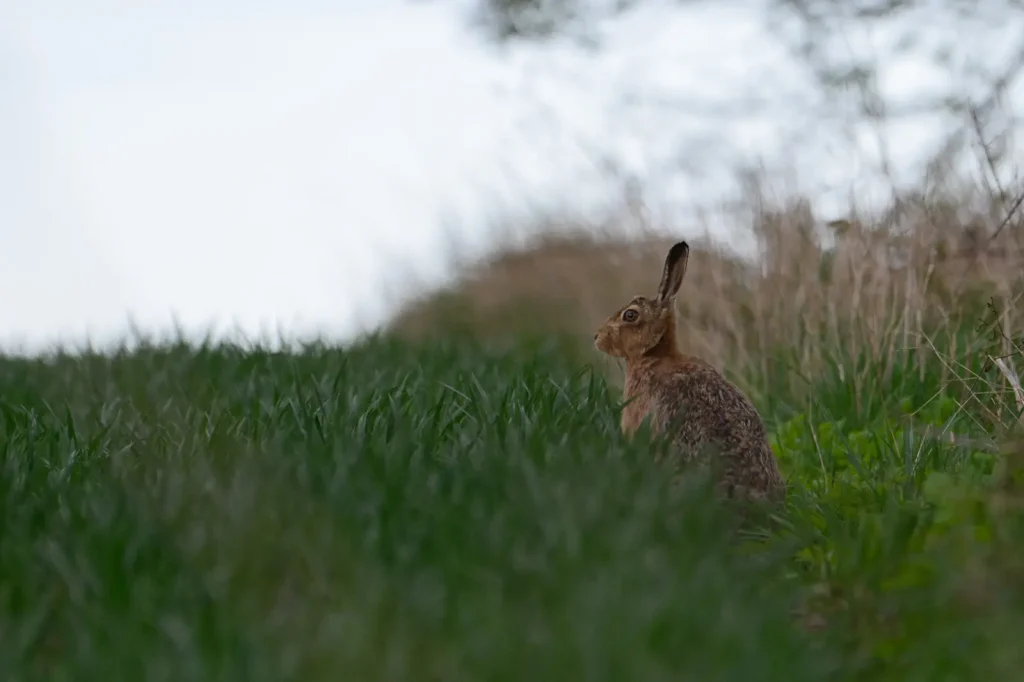
I’ve seen them plenty of times along this route. They’re usually out on the open, ploughed fields to the left of the path, but those areas rarely make for great photos — rough soil, messy backgrounds, and if they’re up on the brow of the hill, you’re often dealing with houses in the distance. So we tend to keep walking until the scenery improves, where the fields open out and the background becomes a bit cleaner.
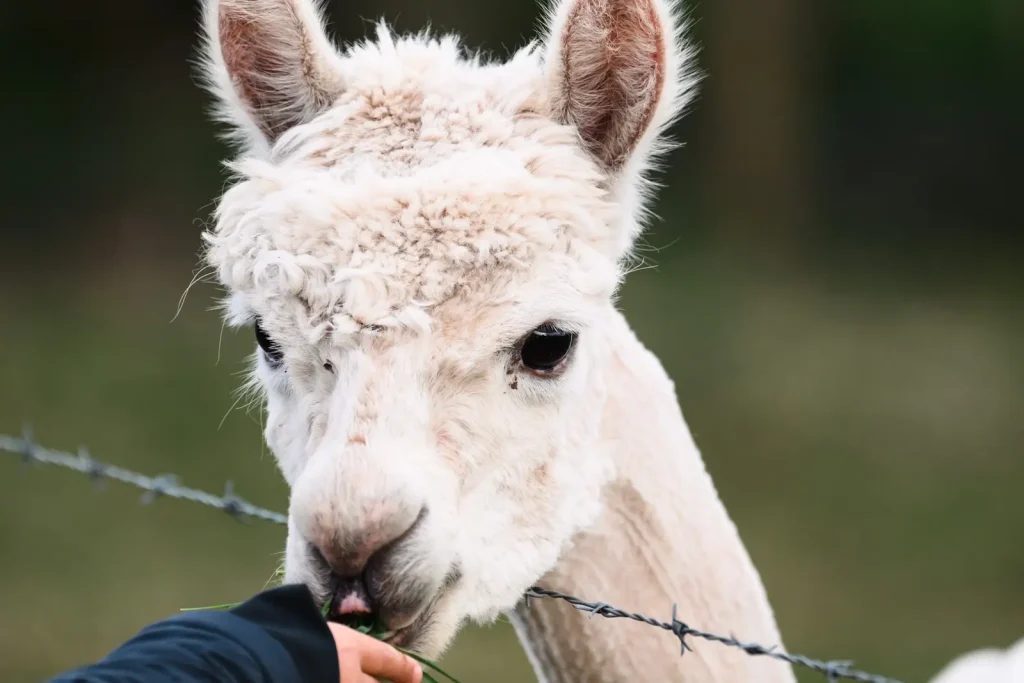
On this particular evening, we passed our usual Llama spot, where Sofia again stopped to feed them. As we continued on we stopped at a gate we’ve used before — a good spot to scan the fields and, if we’re feeling patient, climb over and slowly work our way towards a wallow where the hares often gather. Sofia enjoys that part. I usually turn it into a bit of a game — who can walk the quietest, or we pretend we’re on some kind of mission.
But this time, before we even got that far, something else caught my attention.
There were dozens of swallows feeding all around us — darting back and forth across the path, skimming the fields, weaving through the hedgerows. I found myself just watching them for a moment. The speed wasn’t the surprising part — it was how abruptly they could change direction. One second they were there, the next they were gone.
Naturally, I couldn’t leave it alone.
I was out with my usual wildlife photography kit, with the Nikon Z8 and Nikon Z 180-600mm f/5.6-6.3 VR already in hand, I decided to see if I could capture them in flight — knowing full well this wasn’t going to be easy but the 180-600mm lens has proven to be one of the best lenses for the Nikon Z8 so I was hopeful.
Why Swallows Are So Difficult to Photograph
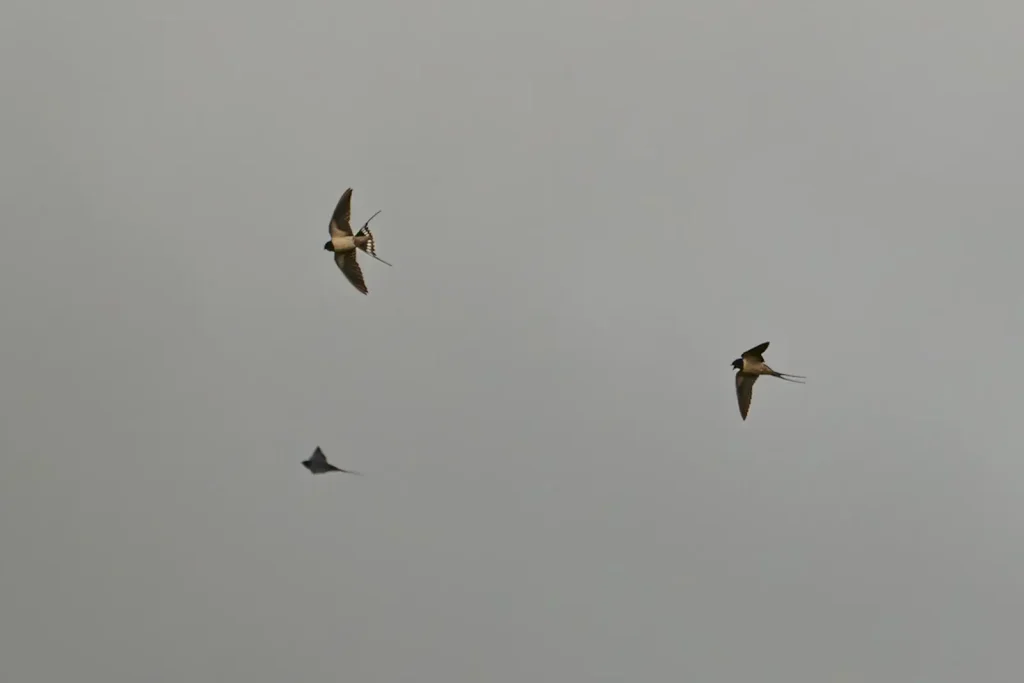
I’ve photographed birds in flight plenty of times before, but swallows are on a completely different level.
It’s not just their speed — although they are fast — it’s their agility. They’re constantly chasing insects, which means they’re changing direction unpredictably. One second they’re flying straight, the next they’ve turned sharply and disappeared out of frame.
What made it even harder was how close they were getting. You’d think that would make things easier, but it actually does the opposite. At longer distances, their movement is easier to follow. Once they get within 20–30 metres, everything happens so quickly that simply keeping them in the frame becomes a challenge. This applies to most small, fast-moving birds.
More than anything, it felt chaotic.
I’d get one in the viewfinder, try to follow it, and within a split second it was gone again. Not because the camera lost it — but because I did.
Trying to Track Them (And What Actually Worked)
At first, I found myself just reacting — swinging the lens around trying to keep up with whatever swallow happened to fly closest.
That didn’t last long.
Instead, I started watching their behaviour more carefully. Rather than chasing individual birds, I tried to anticipate where they might pass through and be ready for it. I also zoomed out slightly, working around the 400mm mark, which made it easier to pick them up in the frame before attempting to zoom in.
This is where using a zoom like the Nikon Z 180-600mm f/5.6-6.3 VR really helps. You’re not locked into one focal length — you can give yourself a bit of margin to acquire the subject before tightening the composition.
Even then, it wasn’t easy.
Keeping a swallow in the viewfinder as it darts around is one thing — keeping it there long enough to actually take a usable shot is something else entirely.
How the Nikon Z8 Handled It
A Real Tracking Sequence
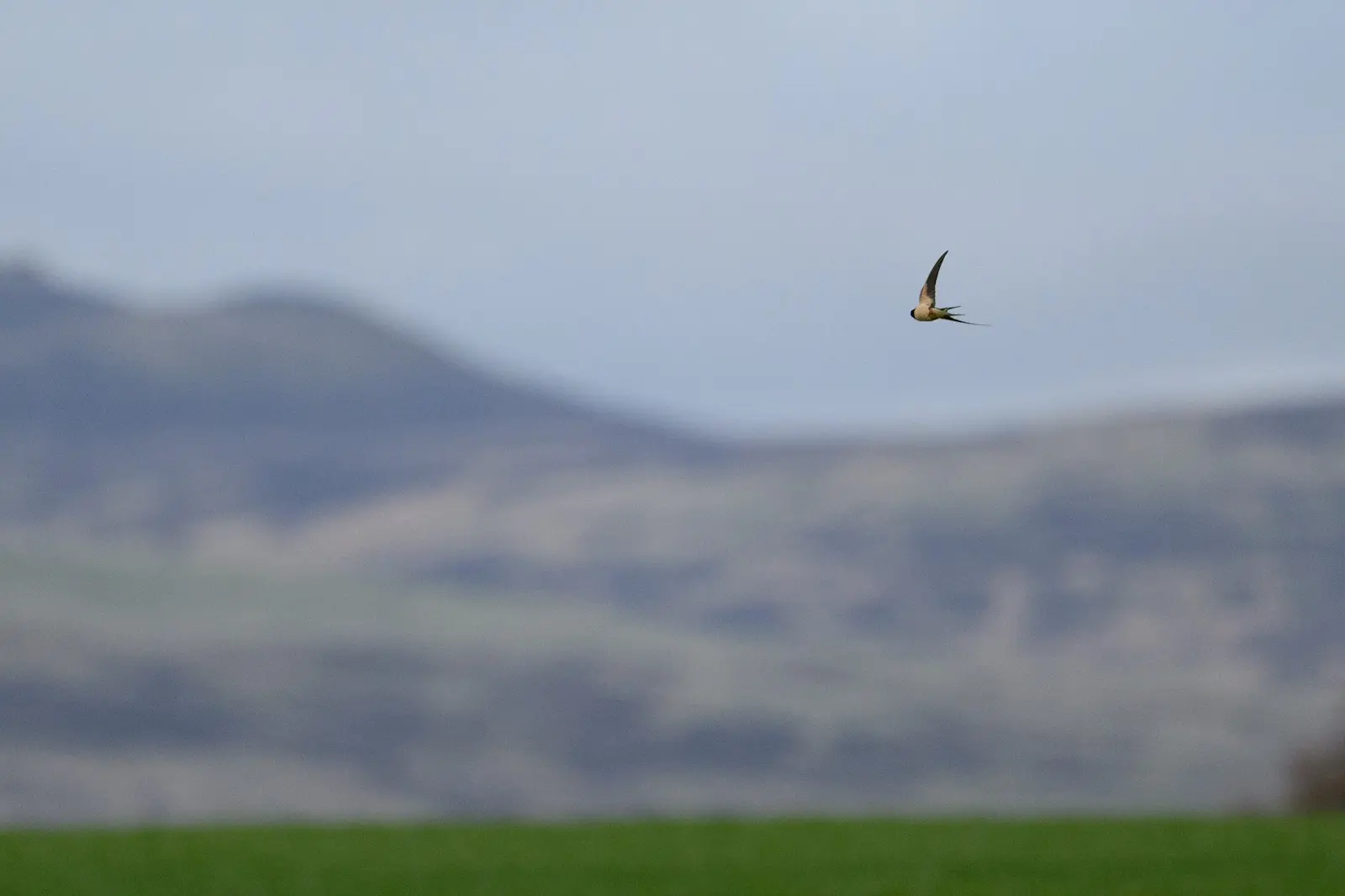
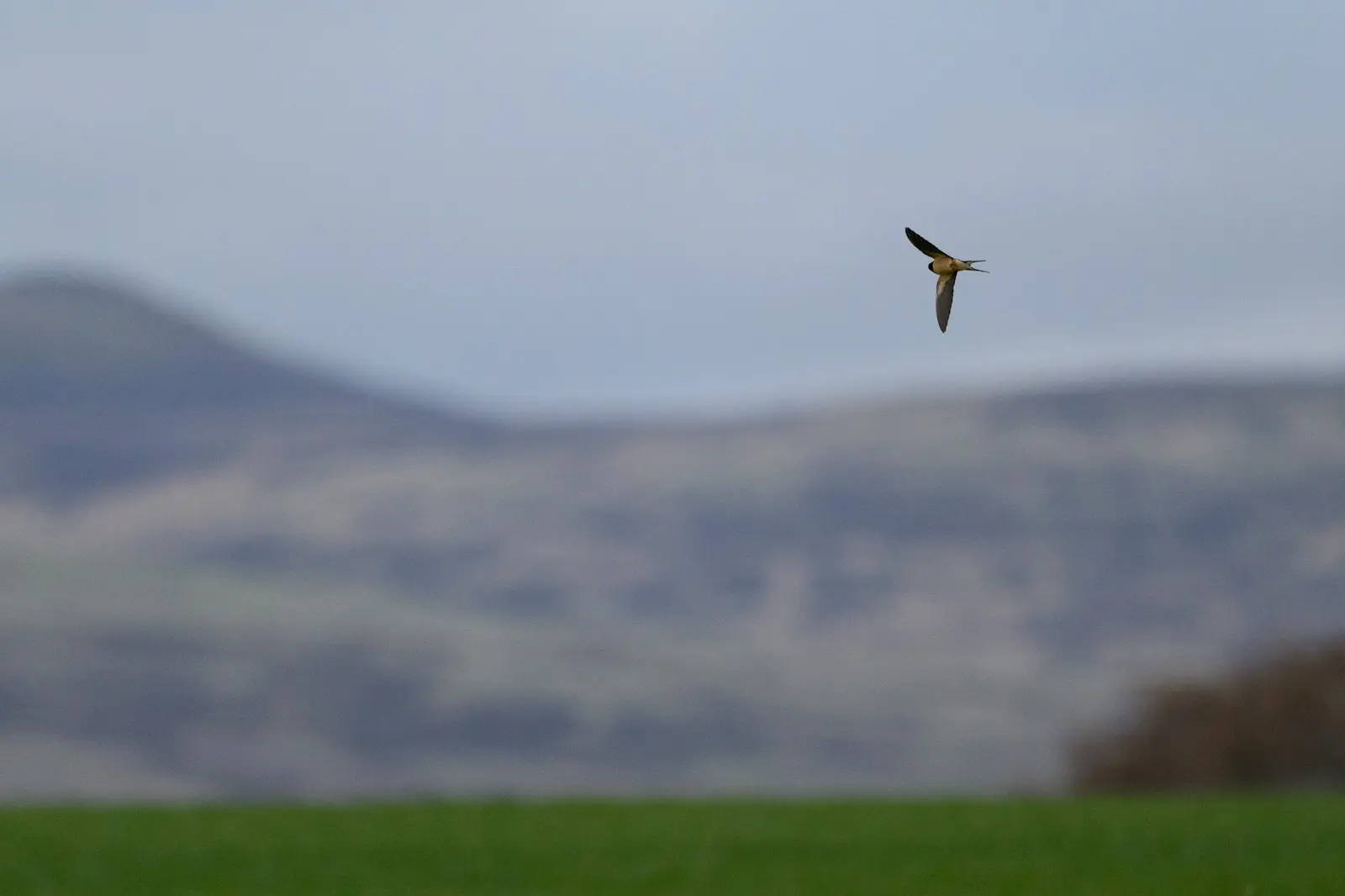
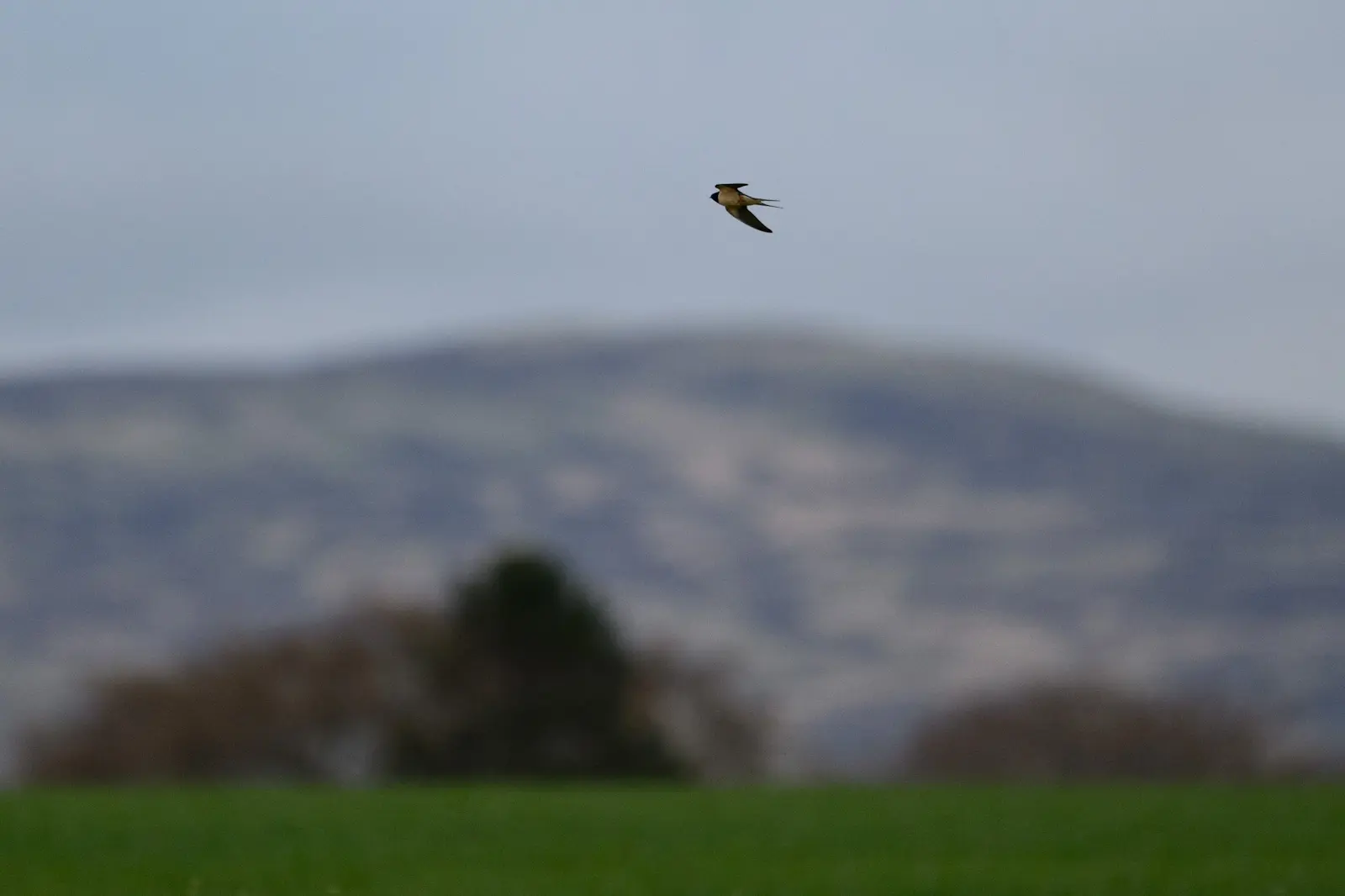
Here the Z8 had no problem tracking the swallows at around 500mm with a little more distance to work with.
Once I actually managed to get a swallow in frame, this is where the Nikon Z8 started to show what it can do.
Using my usual custom setup (Which I break down in detail here), I’d acquire focus using Wide Area AF-L and then switch across to a larger focus area using my function buttons, allowing the camera’s bird detection to take over across more of the frame.
When everything lined up — when I managed to track the bird properly — the hit rate was surprisingly high. I’ve got sequences where the camera was nailing focus on the 90% of frames, which honestly impressed me given how erratic the movement was.
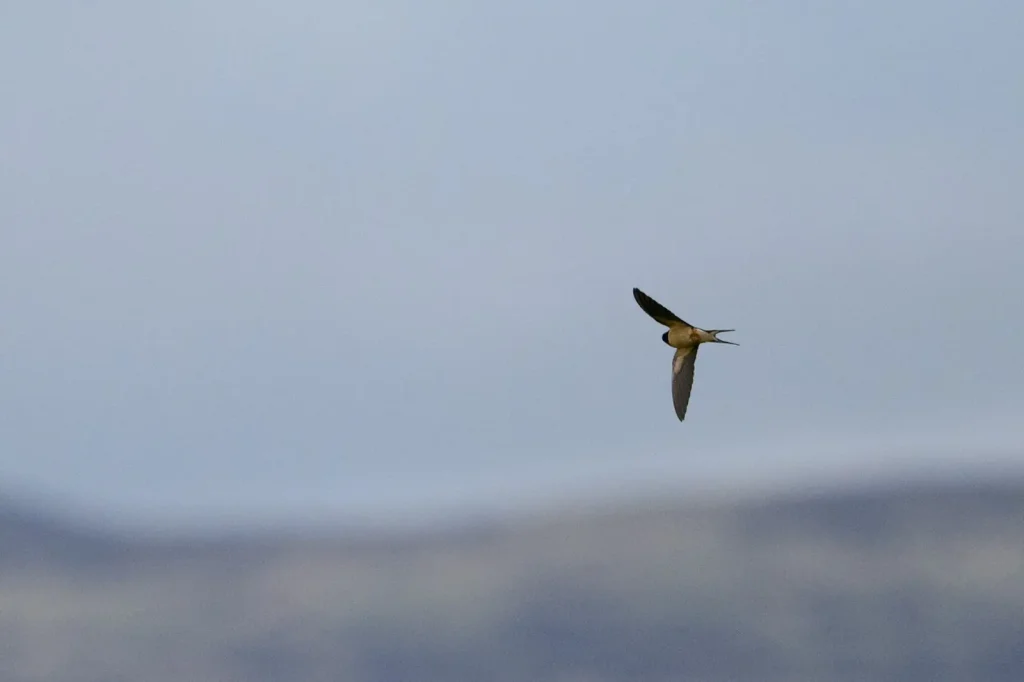
But there’s a limit.
As soon as the swallows came too close, everything started to fall apart. Not because the autofocus wasn’t capable, but because I simply couldn’t keep the subject in frame long enough for it to do its job. At that point, it’s not really a camera limitation — it’s a human one.
There’s also the physical side of it. The lens has to move a fair amount of glass to adjust focus, and when you’re swinging a 180–600mm around trying to keep up with something that unpredictable, things get messy quickly.
At one point I did wonder what I must have looked like from a distance — wildly swinging the lens around as these birds zipped past. I half expected the local farmer to call the men in white coats to come and take me away.
Birds in Flight Settings for the Nikon Z8
Once I decided to try and photograph the swallows, I made a few quick adjustments to give myself the best chance of keeping up with them.
- Mode: Manual with Auto ISO
- Shutter Speed: 1/2500s
- Autofocus: C-AF
- Subject Detection: Bird
- Initial Focus Area: Wide-AF L
- Tracking: Switched to C1 custom target area once focus was acquired
- Burst Mode: 20 FPS
This setup gave me a fighting chance, but it still came down to whether I could keep the bird in the frame long enough for the autofocus to do its job.
If you want to see exactly how I’ve configured this in more detail — including autofocus behaviour and button setup — you can find it here: Best Nikon Z8 Settings for Wildlife Photography.
What This Experience Taught Me
The biggest takeaway for me wasn’t about changing settings — it was seeing what the Nikon Z8 and 180–600mm are actually capable of when everything lines up.
When the background was clean and I managed to keep the swallow in the frame, the camera had no problem keeping up. The autofocus locked on well, and the hit rate was there. But as soon as the background became more distracting, or the bird was smaller in the frame, it could lose the subject more easily.
What stood out most though was how quickly things improved over the course of the session. At the start, I was struggling just to acquire the bird in the viewfinder. By the end, I was noticeably faster and far more consistent.
If anything, this reinforced that the camera is more capable than I am right now. With subjects like this, it’s less about finding a better setting and more about practice — then more practice after that.
The Reality of Shooting Something Like This
What this really highlighted is that even with a camera like the Nikon Z8, there’s no shortcut with subjects like this.
The autofocus is excellent — there’s no question about that — but it still relies on you doing your part. If you can’t keep the subject in frame, or give the system enough time to recognise and track it, there’s only so much it can do.
When everything comes together, it works incredibly well.
But getting to that point, especially with something as erratic as a swallow, takes time, patience, and a ton of practise. It’s frustrating at times — but when it comes together, it’s incredibly rewarding