

You’ve heard it a hundred times: full frame is better in low light.
And yeah — technically, that’s true. If you shoot wide open with fast glass, you’ll squeeze out more from your sensor. Better high ISO performance, cleaner shadows, less noise. It’s real.
But the keyword there is if. If you shoot wide open. If you don’t need much depth of field. If everything else is equal.
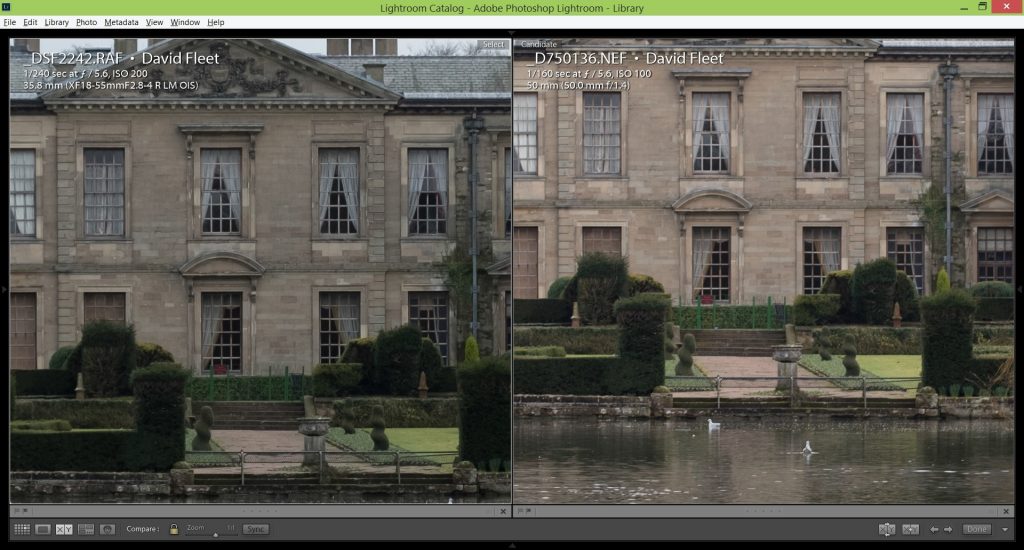
Thing is, everything else is rarely equal — especially in the real world. I found this out when I tested the Nikon Z6III vs the Fuji X-T5 recently.
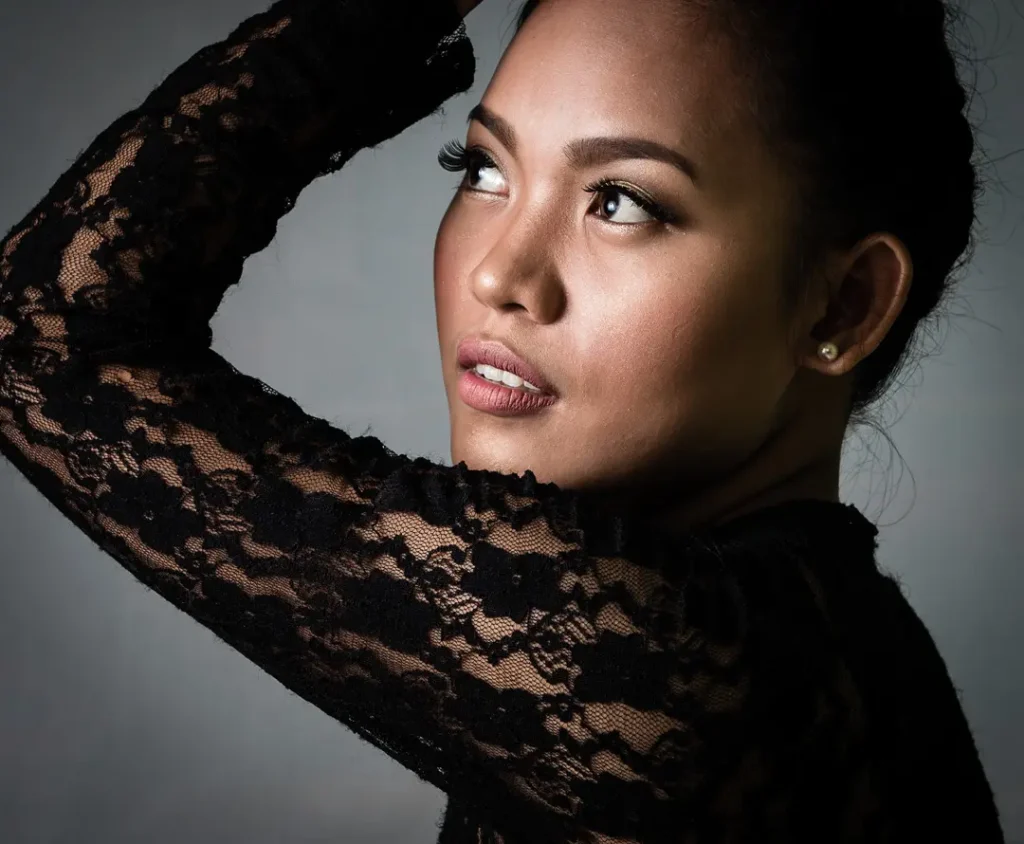


Want to know what format each image was shot on? From top to bottom
- Olympus EM5 II + 45mm 1.8 – Micro 43
- Sony A7IV + 50mm 1.2GM – Full frame
- Fuji GFX100S + 110mm f/2 – Medium format
- Fuji XT-5 + 33mm 1.4WR – APS-C
- OM1 Mark II + 25mm 1.2 Pro – Micro 43
The hidden trade-off no one mentions
What most people don’t tell you is this: full frame gives you shallower depth of field than smaller formats when you’re shooting with the same field of view and aperture.
Not because the sensor magically makes the background blurrier. But because to get the same field of view on a smaller sensor, you use a shorter focal length — and shorter focal lengths naturally give more depth of field.
That can be great if you want that shallow look. But if you’re shooting portraits and want more of the face in focus, or you’re capturing your kids running around and need both eyes sharp, or you’re documenting travel scenes with layered depth, that shallowness can be a problem.
And guess what happens when you stop down your full frame lens to get more in focus?
You give up your low light advantage, because something has to give — and usually that means increasing your ISO value.

A real-world example: family photography
Let’s make this practical.
You’re on holiday with your family. It’s early evening, light is fading, and you want to take a shot of everyone together. You’re using a full frame camera with a 50mm lens. You want everyone sharp — not just one person’s eyelash — so you stop down to f/8. You keep shutter speed at 1/200 to avoid motion blur.
To get correct exposure, you’re now at ISO 6400.
Now imagine the same scene with a Micro Four Thirds camera. To get the same field of view, you use a 25mm lens. A 25mm lens — whether on Micro Four Thirds or full frame — naturally gives more depth of field than a 50mm lens. So to match the depth of field from the full frame shot at f/8, you only need to shoot at f/4.
Same shutter speed — 1/200. But now your ISO only needs to be 1600.
So it’s not the sensor itself that affects the depth of field directly — it’s the fact that to achieve the same field of view on a cropped sensor, you need a wider focal length. And wider focal lengths give deeper depth of field for a given aperture.
How much better is a full frame camera than Micro Four Thirds in low light? Yep, you guessed it — around two stops.
So… is full frame better in low light?
Yes — if you shoot wide open or have total freedom of choice over your shutter speed.
But the moment you need more depth of field, the gap closes. Or more specifically, the moment you can no longer compensate for stopping down by lowering your shutter speed, the gap closes. If you’re shooting anything that moves — kids, people, street scenes — and need to maintain a fast enough shutter speed to freeze motion, then your only option is to raise the ISO.

And in that case, if you’re stopping down your full frame lens to f/5.6 or f/8 to get enough in focus, then your ISO will end up being the reciprocal amount higher than Micro Four Thirds or APS-C — by roughly the same amount that full frame is better in low light performance. In other words, it will balance out to being roughly equal.
That’s assuming sensor generation and processing performance are comparable between formats — which, in many cases today, they are.
Now, are there situations where full frame clearly wins? Absolutely.
Shooting landscapes on a tripod at base ISO where shutter speed doesn’t matter? Full frame will give you better image quality, smoother tones, and more dynamic range.
Shooting moving subjects where your lens — even wide open — already gives you enough depth of field? Like full-body portraits from a reasonable distance? Then yes, full frame will give you better low light performance.
All I’m saying is, you can’t make a carte blanche statement that full frame is always better in low light. It depends on how you shoot, what you shoot, and what settings the situation demands.
Smaller sensors aren’t inferior — they’re just different
Micro Four Thirds and APS-C don’t fight fair when it comes to background blur. You won’t get the same subject separation wide open. But they do give you more depth of field for a given framing — and that can be a huge advantage depending on what you’re shooting.
Need more of the scene sharp? Need both eyes in focus? Want to shoot travel scenes without everything turning to mush behind the subject?
That extra depth of field can be a feature, not a bug.
And yes — full frame still has other strengths
None of this is to say full frame doesn’t offer real advantages. It does.
Beyond the headline low-light claims, you often get smoother tonal transitions, more dynamic range, and more room to push shadows before things fall apart. Those benefits are real — and in many cases, they’re what actually make full frame files feel richer.
But in everyday low light shooting — especially when you’re not shooting wide open — those advantages shrink fast.
Why this isn’t a popular take on YouTube
Because it’s not simple.
Shallow depth of field looks great in thumbnails. Full frame cameras are more expensive and drive affiliate revenue. And “better in low light” makes for a clean, simple talking point.
But photography isn’t clean and simple. It’s nuanced. Context matters.
And the truth is, in real-world shooting — especially with families, travel, or documentary work — the shallowest depth of field isn’t always what you want. Sometimes you need more in focus.
And when you need more in focus, that full frame sensor isn’t always an advantage.
Final thought
This isn’t a call to ditch your full frame gear. It’s not an argument against buying into it. Full frame sensors are incredible. I own and use them myself.
But it is a reminder that sensor size doesn’t tell the whole story.
Agreed on all points, every sensor can get a great image and I would own all of them if I were wealthy.
BUT……when I want a laugh I will shoot in low light at a high shutter speed on my Zf, at ISO 12,800, and produce a cleaner image than my former X-T4 did at ISO 4000. It’s somewhat hilarious.
But for a hobby guy like me, I always ponder if the better way is Fuji with their truly worse (but not unusable) AF and their light f2 lenses for all the very real weight savings. Micro 4/3 I’m not sold on until i get more experience with them.
How do you find the handling on the ZF? I had chance to use one for a few weeks last year alongside my XT5. No doubt the images and AF on it are top notch. I’ll be adding Nikon Z content here starting in a few weeks time after my trip to the UK this week.
I’ll take the smallest, cheapest full frame camera over any BEST most expensive feature packed micro third or small sensor camera ANYTIME! 😷😁💪🙌🤣😊
Ps. I am a Nikon shooter btw.
Hi Norman,
That’s fair enough. What Nikon are you shooting? I’m heading back to the UK tomorrow and my Nikon Z kit is there waiting for me.
All the best
David
Sorry, not all you said is complete truth.
There are many variables.
The main one being that smaller sensors have smaller pixels. Smallers pixels detect less light. So raising the iso will get you much more noise.
Some cameras, like Fuji xt5 which I own are pretty mediocre in high iso.
Cramming 40MP into an APSC sensor is useless. And honestly, gives pretty dsiapppinting results.
Above 1600 iso the Fuji gives phone like quality… I regret to say.
So even shooting at a wider aparture and lower iso compared to FF cameras will still get pretty so so results.
Maybe the the Fuji XH2s with 26MP gives better performance at high iso. Which will probably be true for many other APSC cameras with less MP.
But I guess I will never know.
One thing for sure, my next camera will FF.
The pixel density (which is what you’re referring to) is separate from sensor size. 40mp on APS-C is roughly equivalent to 60mp on Full Frame. So the XT5 has a similar pixel density to a Sony A7RV. 16mp APS-C is similar to 24mp Full frame etc. while the XT5 might not be the absolute best in low light, it’s still more than capable of creating very good files at ISO 6400, I’ve printed them at A3+ to 30X20” on my 44” Canon pro printer. But yes, get a full frame if you feel it’s the best move for you. This article wasn’t intended to put people off any sensor size (I own Micro Four Thirds to medium format), just highlight the nuance amongst all the sensor size absolutist comments I see.
A long time ago I did a lot of photography but not sense. They’ve changed camera types. I want to get into photography again as a hobby but not spend a lot of money. What is your best general thought about which Canon to get? I have some canon lenses and hopefully will be able to use them
Hi Kay,
Thanks for your comment. That’s fantastic that you are planning to get back in to photography. If your existing Canon lenses are EF ones then you will need an adapter to use them on the newer mirrorless Canon cameras. The good news is that Canon make these but there are also lots of third party ones that are cheaper and in general your lenses will work very well. You may want to look at the Canon R100 (entry level) and the R10 (slightly better features and specs) as two capable cameras.
I don’t use full frames so I can’t try such a comparison myself, and some of this is affected by tech besides sensor size, but wouldn’t we expect a FF camera to have a couple stops less ISO than a M43? So in general, the small sensor advantage of wider aperture is somewhat equalized on FF by FF having so much less noise at a given ISO. Of course, maybe if you keep ISO below a given level it doesn’t matter much regardless thanks to the increasingly good denoising engines.
Hi Jacob,
Yes, your comment aligns with what I was saying in the article, that in general full frame offers about 2 stops better high ISO performance than Micro Four Thirds. What I was saying, wasn’t that smaller sensors are better in low light, more that in some circumstances (as outlined in the article) the advantage of full frame is negligible or none in terms of noise performance.
All the best
David
Also depends on the lens that are used with the camera – low specs full frame camera with cheap kit lens probably won’t do better than high specs non – full frame camera with high end prime lens ?
Hi Joe,
Most definitely, lens choice has a big effect on performance in a variety of areas.
All the best
David
Excellent explanation. As you show, so much of the theorycrafting falls apart in real-world use. I shoot M43 for my occasional paid gigs, even in low-light environments. I do experience some FOMO regarding the higher noise, but it’s also clear that a faster FF aperture would ruin quite a few of them. Ultra-shallow depth of field simply won’t work for things like group shots where there’s people closer to the camera than others. And nearly all of my clients ask for 5MB JPEGs for fast social media sharing/smartphone viewing. Even M43 ISO 6400 looks perfect on a phone screen at 100%. The only ones who cares about noise are silly pixel-peepers like me, haha. So for now, I add some AI Noise Reduction, as needed, and enjoy my lighter, less expensive setup. At least until G.A.S. finally wins, as it often does 😛
Hi Earl,
Keep enjoying that lighter gear. I think cameras are a little like exposure, you take in one area and have to give in aanother. It’s about finding which areas you are willing to compromise on.
All the best
David