

I’ve lived in the Philippines for the last decade. Before that, the Cotswolds in England. Before that, the Outer Hebrides in Scotland. And now I’m deep into planning a return to the Scottish mainland for Spring 2026.
In twenty years of photography, I’ve shot every major brand. I’ve chased specs, I’ve chased feel, I’ve chased meaning. I’ve used entry-level cameras, film cameras, and flagships. Canon, Nikon, Sony, Olympus/OM System, Fujifilm, Panasonic, Ricoh — I’ve owned or tested them all.
And if there’s one thing I’ve learned, it’s this:
There is no perfect camera. There never has been. And there never will be.
Not because companies fail to build one — but because photography itself refuses to be neatly contained by a single tool.
if you’re just starting your photography journey then I’ve written about the best cameras for beginners.
- Canon: Excellent colours and ergonomics; strong autofocus.
The RF lens lineup has very little affordable middle ground. - Nikon: Superb build and weather sealing; fantastic 1.8 S primes & wildlife lenses.
Bodies and pro lenses can be on the heavier side. - Sony: Class-leading autofocus; largest lens ecosystem (including third-party).
Ergonomics and weather sealing trail Nikon/OM, and colours often need more post work. - Fujifilm: Best shooting experience with physical dials; beautiful colours for people, street, and travel.
AF and wildlife/zoom options still lag behind competitors. - OM System: Industry-best weather sealing; unmatched computational features and lightweight telephotos.
Low-light performance trails larger sensor systems.
The Perfect Camera Illusion

When I shot landscapes on a Canon 5D Mark II, I looked longingly at the Nikon D810 when it came out. I envied the resolution, the dynamic range, the clean files. I remember thinking, “That’s the best landscape camera. That’s the one I should buy.” I couldn’t afford it at the time so I never got one.
Then I moved to the Philippines and pivoted to Fujifilm — their colours, especially for people, were perfect for life here. The retro design, the primes, the shooting experience… Fuji felt great for what I was doing.
But then Sony tempted me with GM lenses. All the while, I shot Olympus as I loved their ruggedness, computational modes and ergonomics. I bought my dream GFX body. I used tiny Ricohs and full-frame workhorses.
Over time, something became obvious:
Every system gives something and takes something away.
And that’s why the idea of a “perfect” camera keeps collapsing under its own weight.
The Reality: Every Camera Is a Compromise

Here’s what I mean.
Nikon Z6 III
One of the best all-rounders you can buy. Great build, great image quality, great lenses. But it’s not light. It’s not a camera you casually sling over your shoulder for an entire day in the heat or when with your kids on a family trip.
Sony A7IV
Fantastic auto focus, great lens selection but the ergonomics don’t make me want to pick it up and shoot, the shutter sound is obnoxious and Sony colors (even though they have improved greatly over the years) still require more editing in post.
Fujifilm X-T5
Brilliant image quality. Beautiful handling. Light enough to carry everywhere. But the weather sealing isn’t Nikon/OM level, the zoom lineup for landscapes/wildlife is less complete, and Fuji greens take work in post.
OM-1 Mark II
Incredible weather sealing. Blazing autofocus. The best wildlife lens ecosystem in the industry. But low-light performance can’t match larger sensors, and it’s not the first thing I’d pick for an environmental portrait series
GFX100S
The best image quality I own. The tonality, the rendering, the GF lenses — magical. But it’s chunky. It’s slow to focus. It’s not a travel camera. And it requires deep financial commitment.
Fuji X100VI
One of my favourite cameras ever. A joy to use. But it’s not tracking stags in the Scottish glens next autumn.
This is the point:
Some cameras are better for image quality.
Some are better for handling.
Some are better for people.
Some are better for landscapes.
Some are lighter. Some are tougher. Some are faster.
But none do everything.
Your Needs Change — And So Should Your Tools
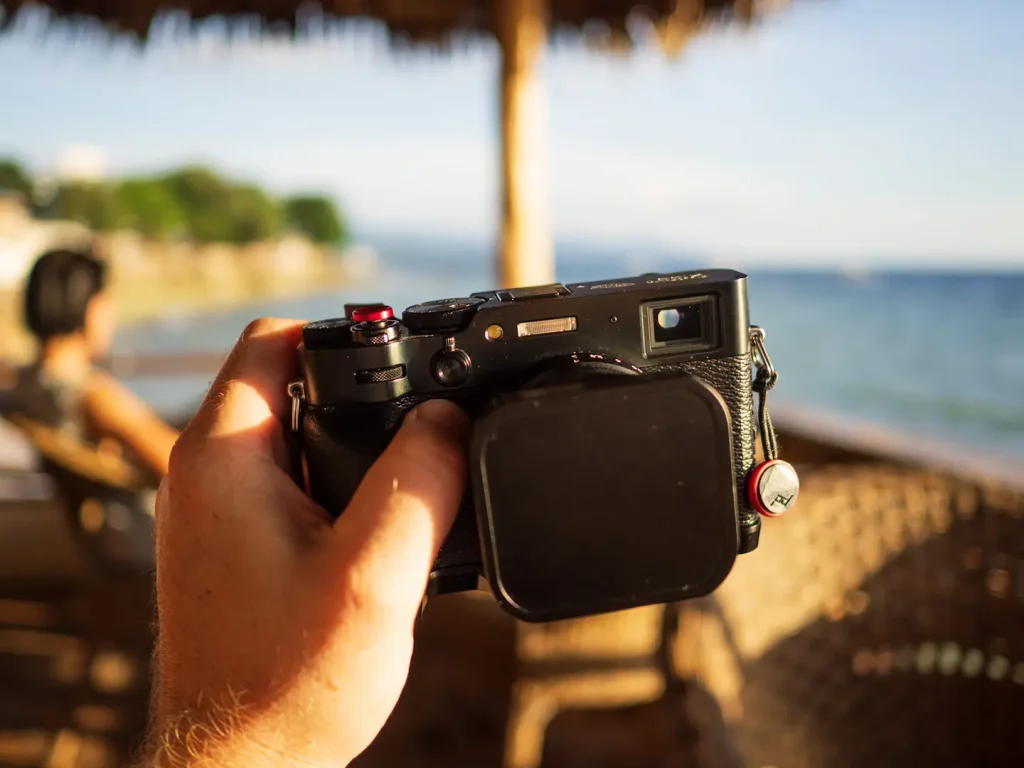
A year ago, I tried to narrow my entire setup down to a single system.
At the time, Fuji was the best compromise for my life in the Philippines — candid moments, street photography, travel. Small, discreet, great colours, great lenses.
But in 2026, when I’m back in Scotland shooting landscapes, wildlife, and outdoor stories in freezing, wet conditions?
My priorities shift again.
The perfect camera for the Philippines is not the perfect camera for the Highlands.
And the perfect camera for the Highlands is not the perfect camera for family moments with my daughters.
That’s the reality:
Your photography changes.
Your life changes.
Your needs change.
Your priorities change.
So why wouldn’t your choice of camera?
The Only Question That Actually Matters

When I owned a camera store, customers would often say they wanted to upgrade to a particular type of camera, often at a significant cost. Maybe they would come in and say they wanted a Sony A7RIV as an upgrade to their A7II. They’d looked online, in forums and people would often say this camera is way better than this one. But once I asked a few questions, the customer’s priorities would reveal themselves.
I would ask:
1. What do you want to photograph?
2. In what conditions?
3. What’s your intended output?
4. And what’s your realistic budget?
Answer those honestly, and you can usually find the closest thing to the perfect camera for you.
Someone on a forum will still tell you it’s terrible — that’s what forums are for — but if it meets your needs, then it’s right.
The Point Isn’t Perfection — It’s the Right Compromise

This is the truth after two decades, dozens of systems, and thousands of hours shooting in places as different as the Scottish Highlands and the humid streets of the Philippines:
The goal isn’t to find the perfect camera.
The goal is to find the camera that forces you to make the fewest compromises for the kind of photographer you are — right now.
That’s it.
Not the most expensive.
Not the newest.
Not the one everyone else seems to own.
Not the one that wins lab tests.
Just the one that lets you show up, create, and tell the stories you care about with the least resistance.
That’s photography.
And that’s the point.
Simply need the absolute best auto focus, you’re probably going to like Sony, want a rugged professional tool and have the budget, Nikon Z8. Prioritise shots of people and prime lenses, Fuji X-T5, already have a bunch of DSLR era Canon EF lenses, stay with Canon and go from there.
What Each System Actually Does Well
Having used all of these systems in real, lived environments — from the cold winds of the Hebrides to the humidity of the Philippines — here’s how I see the strengths of each.
If nothing else, this might help you narrow down your search.
Canon

Fantastic ergonomics, excellent autofocus, solid build quality, and some of the best colours straight out of camera. Canon files are beautiful to work with.
The RF lens lineup, however, is polarising — there’s very little middle ground. You get either cheap, average lenses or big, expensive, exceptional pro lenses, with not much in between.
Nikon

Superb build quality and ergonomics, very good weather sealing, confident autofocus, and one of the strongest full-frame lens ecosystems available.
The 1.8 S primes and the f/2.8 zooms are standouts, and Nikon arguably has the best full-frame wildlife lens lineup right now. A very balanced, dependable system.
Sony

Top-tier autofocus (equal with Canon), technically excellent image quality, and bodies that are relatively compact compared with Canon and Nikon.
Sony also has the largest lens selection thanks to extensive third-party support.
Ergonomics—while improved—still sit a notch below competitors, and weather sealing isn’t on the level of Nikon or OM System. Colours are workable but usually need a bit more attention in post.
Fujifilm
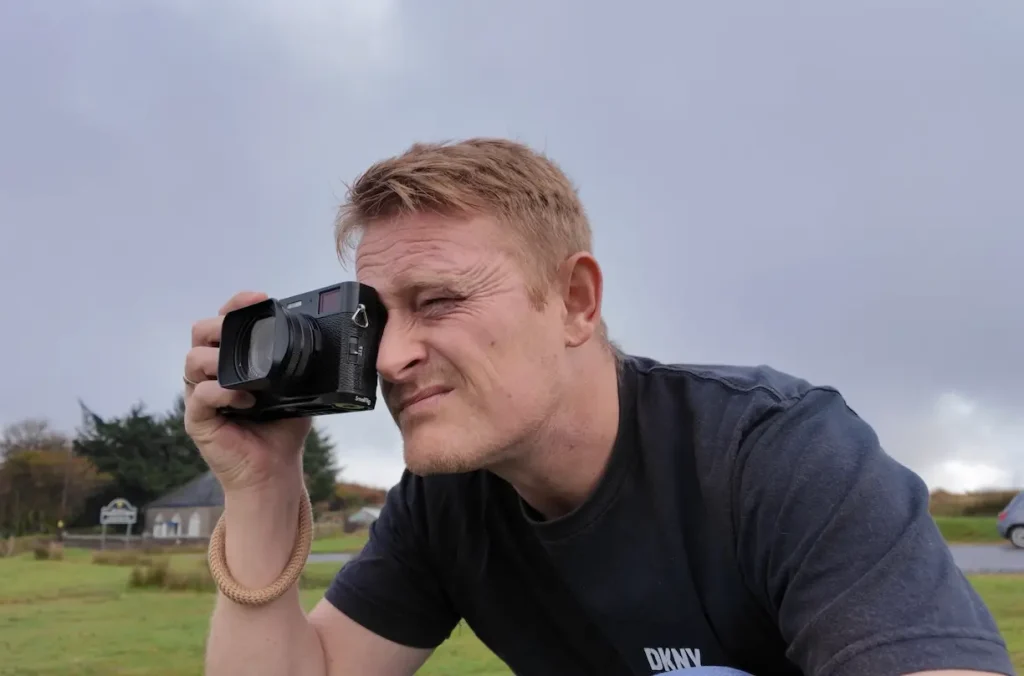
Retro aesthetics and a tactile, dial-based shooting experience that no other brand matches.
Fuji’s colours are superb for people, street, and travel. Pair an X-T5 with the f/2 primes and you have a lightweight, inspiring setup.
Professional-grade primes exist when you need them.
Autofocus has improved dramatically but still isn’t on the level of Sony, Canon, Nikon, or OM System for fast action.
The zoom lineup is good but not as deep as other brands, and wildlife options are limited.
OM System

Outstanding build quality and the best weather sealing of any camera system.
Incredible variety of lenses—from tiny pancakes to pro-grade super-telephotos—and along with Nikon, OM System offers the strongest wildlife lens ecosystem.
Autofocus is excellent, and their computational modes blow everyone else out of the water, replacing tripods, filters, and remote releases in many scenarios.
The system is lightweight, especially for telephoto work.
The smaller sensor means low-light performance lags behind larger formats, though modern software has made this less of an issue. Price-wise, it’s not “cheap” if judged purely by sensor size, but value comes from comparing not by sensor size but by features, eg Stacked sensor, burst rates etc.
Canon: I started my photography journey on Canon and most recently shot the Canon R5 throughout 2021. I now have the R5 II on the way.
Nikon: My first Nikon was the D600. Today I own the Zf, Z6 III, and Z8 — all of which will be core to my Scotland work alongside OM System.
Sony: I’ve owned one camera from every A7 generation, from the original A7R through to the A7 IV, which I sold last year.
Fujifilm: My Fuji journey began with the X-Pro1. Here in the Philippines, my most-used bodies are the X-T5, X100VI, and GFX100S.
OM System: I go all the way back to the original Olympus E-M5. I currently use the OM-3 and OM-1 Mark II and expect them to feature heavily in my Scotland shooting next year.
Final Thoughts
This is simply the way I think about the major systems I’ve used over the years.
My intention isn’t to say that Sony feels bad in the hand, or that Fujifilm can’t shoot wildlife, or that OM System can’t produce beautiful portraits.
Of course they can.
You can trek for miles with a GFX if you want, and you can photograph a wedding on Micro Four Thirds if you know what you’re doing.
What I’m trying to do here is give an honest overview of how each system fits into the broader camera landscape — where their strengths naturally lie, and which ones I’d personally reach for depending on the job.
Every system can stretch outside its comfort zone, but not every system is optimised for every scenario.
If you’re a wildlife shooter, look at OM System or Nikon.
If you’re a landscape shooter, Nikon or GFX makes sense.
If you photograph portraits or weddings, Canon or Sony are hard to beat.
If you love street, candid moments, or travel, Fujifilm shines brighter than most.
There’s no perfect camera.
There’s just the camera that makes the fewest compromises for what you want to create — in the place you live, in the life you’re living, right now.
Interesting article & spot-on I think.
I started with an Olympus OM1 (back in the 70’s!), moved to Canon & Sony and found I wasn’t enjoying the experience of shooting any more. Thought I’d fell out of love with photography, until I borrowed a Fuji from a friend. Lightbulb moment.
Now shoot with an OM3 (computerised nostalgia) and Fuji (XT5, X100v and GFX100S).
The GFX100S still leaves me awestruck on a regular basis.
Many thanks for your articles – keep up the good work and best wishes for the move back to the Motherland.
Hi Robert,
Thanks so much for your comment and taking the time to read my website. I’ve had issues with our internet connection the last few days so apologies for the slower than normal reply.
Your gear journey sounds very similar to my own. I’m glad to hear that you have fallen back in love with photography. All it takes is the right experience with the right gear.
Are you in Scotland yourself? I am deep in planning, getting passports, visas and the rest of the paperwork together. I’m hoping to get there for Spring next year.
All the best
David
Currently living in Dorset on the English south coast.
We used to holiday in Crief when I was young.
Beautiful part of the world. And dare I say, photogenic.
I hope you haven’t forgotten that it’s also quite cold. Spring would be a good time to arrive.
All the best for Christmas & the new year.
And please keep up the good work.
bob
Hi Bob,
I’ve spent quite a bit of time planning a new wardrobe full of jackets rather than shorts so I should be ok.
Dorset is a lovely part of the world too. Hve a lovely Christmas and all the best for 2026.
David
Hi David,
I just discovered your website and I’m enjoying your information and writing style. Great info, well presented, easy to digest. I’m catching this at the right time (for me). I’m 66 yrs old, dealing with some health issues and have just sold my Z6III, 5 lenses, etc. I’m retiring at the end of the year and my wife and I are planning some light traveling. I currently own a Sony RX100VII and am looking for something a little “more”. Any suggestions would be appreciated…..
Shooting mainly travel and landscapes. Possibly some wildlife……
Good luck with your move to Scotland! One of the best trips we’ve taken in 40 yrs was to Edinburgh and day trips to the countryside……
Thanks,
Jim
Hi Jim,
Thanks for your kind comment.
If you want to keep things fairly light but still flexible, I’d take a good look at the OM-3. You can pair it with lightweight lenses like the 17mm 1.8II for a minimal setup but equally, if you want to , you can expand the kit to include some excellent zooms. Alternatively, the OM1 Mark II would be a great choice, particularly for wildlife. I use both cameras and plan on using the OM1 mark II for lots of wildlife photography once I’m back in Scotland in a few months time. I have a hub page for all the articles and reviews that I have written for Olympus/OM System which includes reviews, best lenses etc> I’lll link to that below as I think there will be some useful information for you there.There is an OM1 (mark I) review on that page too, a lot of which is relevant to the OM1 Mark II version. If you want any further information, feel free to reply and I’ll do my best to help.
https://thecotswoldphotographer.com/the-om-system-gear-ive-used-over-the-years/
All the best
David