
Last week, I wrote about dealing with a creative rut—something most creatives have to deal with at some point or another. In that piece, I touched on how using smaller cameras often helps me push through those stagnant patches. They act as a mental crutch to relieve self-induced pressure, encourage me to simply get outside, and offer a vast array of computational modes to make experimenting with photography much easier.
This weekend gave me a chance to put that exact philosophy into practice, using the OM System OM-1 Mark II on a routine evening walk.
Low-Friction Wandering
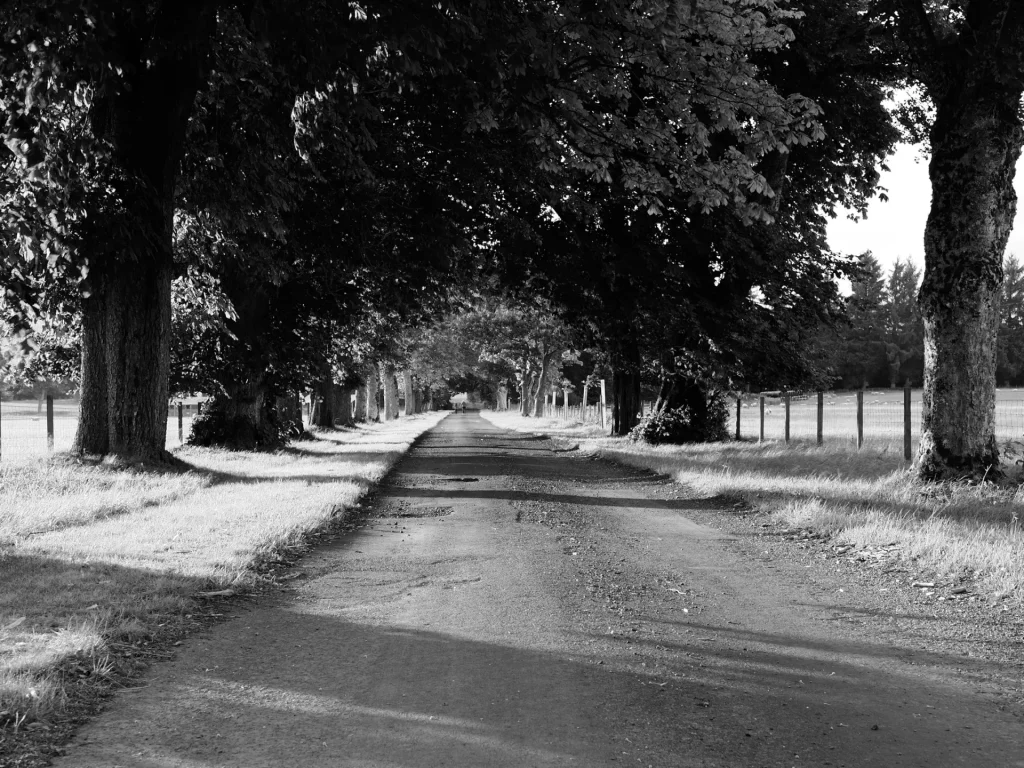
Right next to where we live in Perthshire, we’ve gotten into a wonderful habit of taking our elderly neighbours’ dogs out. It’s a beautiful little walk on the local country estate, it helps out people who can no longer take their dogs for anything more than a quick toilet break outside, and it provides a completely low-friction way for me to get out with a camera.
This time, I decided to pair the OM-1 Mark II with the OM System 25mm f/1.2 PRO lens. When I am in a creative rut, using a zoom lens gives me far too many options and quickly overwhelms my brain. The simplicity of a prime—and specifically one of my all-time favourites across any system—was designed to remove that friction and get my creative juices flowing. I keep my setup as simple as possible and only add a few essential accessories which I went through in another article.
It was early evening with the sun dropping low in the sky. As we picked up Teddy and Poppy, my mum and my eldest daughter Sofia took the dogs ahead, while I wandered slowly down the estate’s path with the camera in hand.
Working the Path
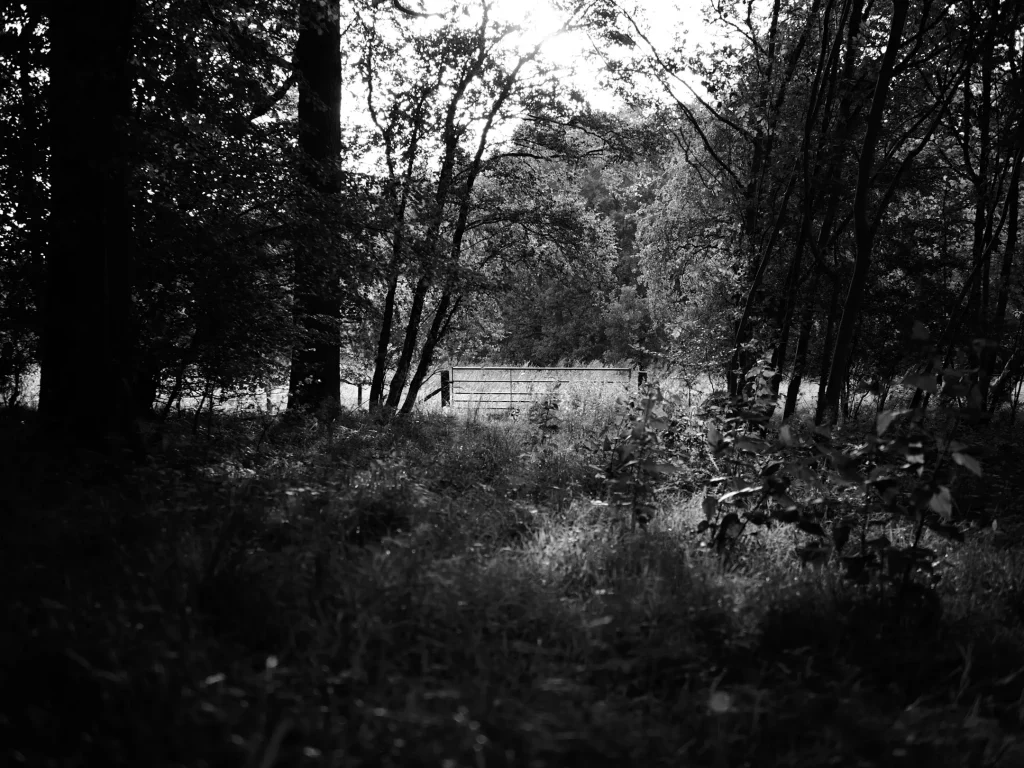
As patches of light began breaking through the huge Scots pine trees lining either side of the path, I raised the camera and fired off a few test frames. A few observations immediately stood out:
- Speed & Computational Power: I played around with the OM-1 Mark II’s handheld High-Res mode, which is dramatically more usable than on the Mark I thanks to its much faster processing speeds.
- Depth & Sharpness: Thanks to the Micro Four Thirds sensor naturally yielding a deeper depth of field for a given aperture, I was happy shooting anywhere from wide-open at f/1.2 down to f/5.6, consistently getting tack-sharp photos with plenty of depth.
- Ergonomics & Viewfinder: The camera is exceptionally quick to operate and comfortable in my hands. In the high-contrast, bright patches of the evening, the 5.6-million-dot viewfinder made composition effortless.
- IBIS Confidence: In the dimmer sections of the path sandwiched between towering trees, I reminded myself of the camera’s brilliant image stabilization. It allowed me to consciously drop the ISO to base level, shooting at slow shutter speeds that would be impossible on most other systems.
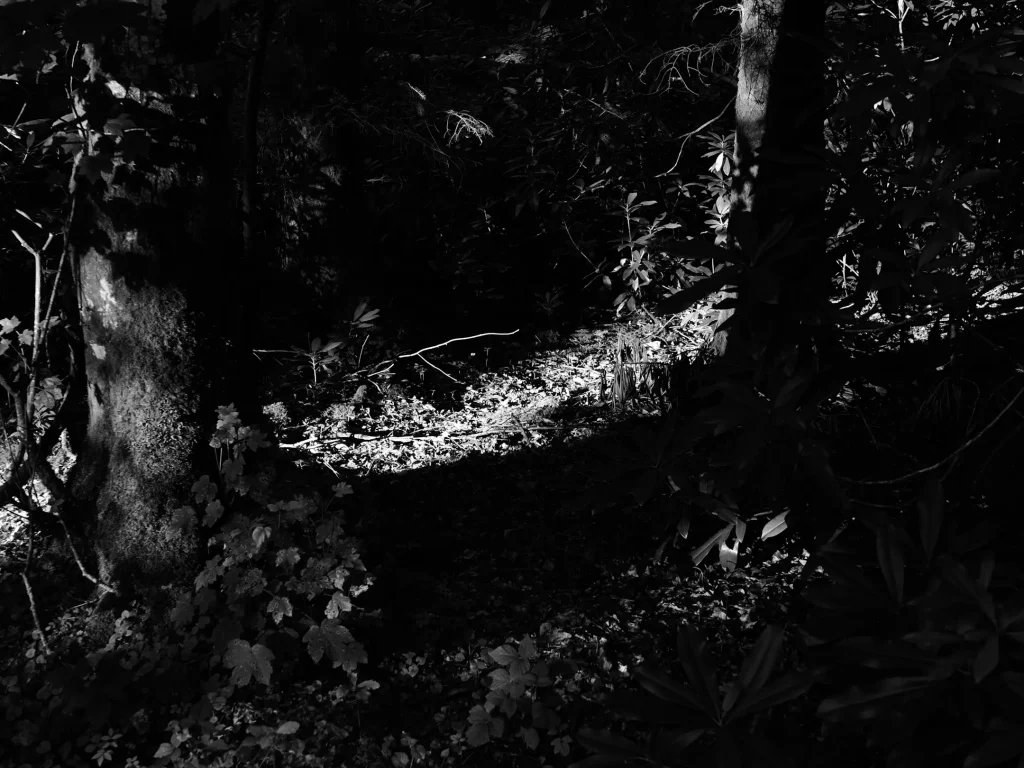
I didn’t get any keepers along that initial stretch of the path, but the strict constraints of the prime lens combined with the lightweight, intuitive nature of the OM-1 Mark II did their job. I started feeling comfortable enough to actually look and see potential images again.
The Shot Through the Trees
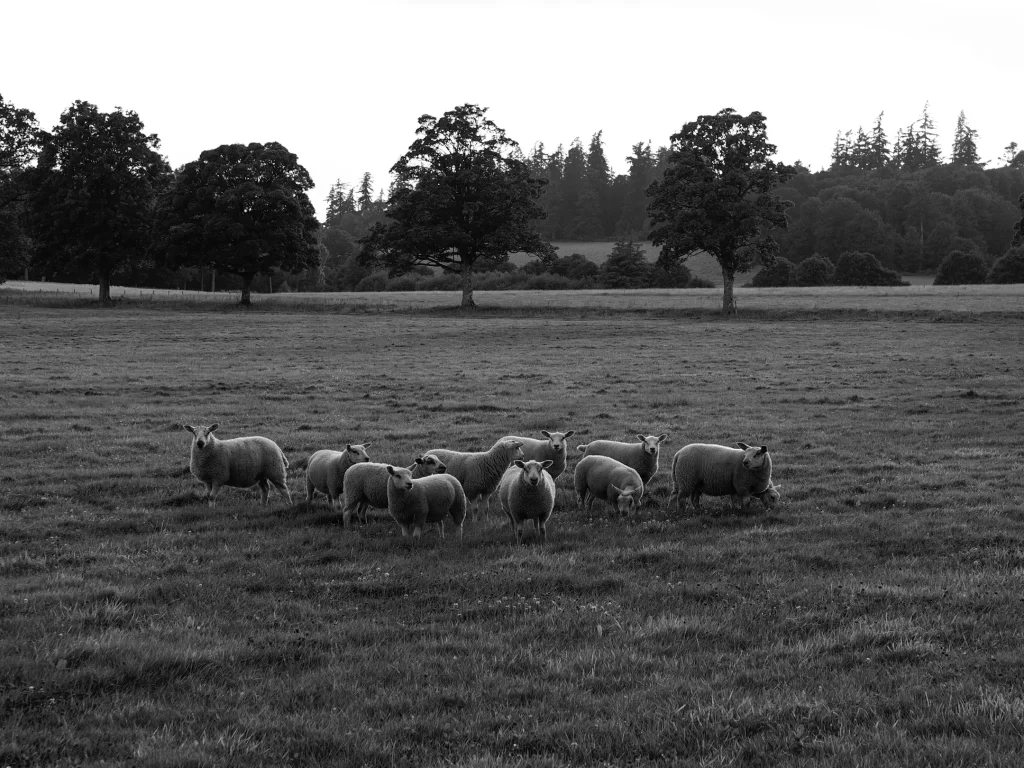
As we walked further in, the path opened up to fields on both sides—tonight filled with sheep and their rather large lambs bleating away after some had been separated to have their coats sheared. The light was now raking across the landscape beautifully.
That’s when I spotted a stunning view: looking through the last couple of trees out to the fields beyond, with evening light casting long shadows, the hazy mountains of the lower Scottish Highlands in the distance, and crepuscular rays piercing through the sky.
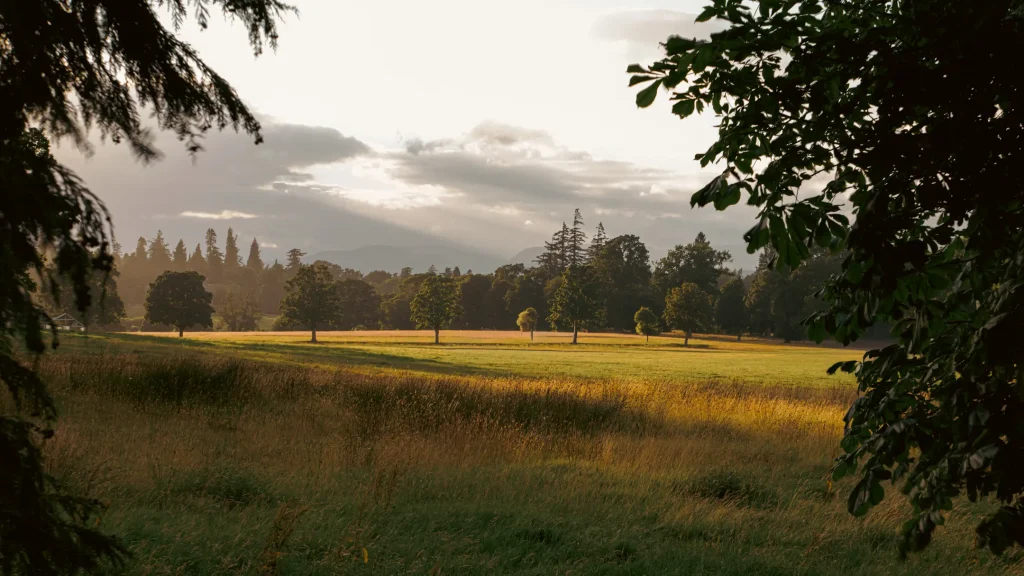
I set up the composition to create a sense of depth, using the closest trees to frame the shot and create the feeling of peering through to witness the landscape beyond. Deciding this view was worthy of the camera’s High-Res mode, I grabbed a handheld 50-megapixel file before hurrying along to catch up with Sofia, Mum, and the dogs.
Walking toward the lake, I felt a little lighter than I have lately. The fresh air, gorgeous light, and seeing Sofia in good spirits playing with Poppy and Teddy were the perfect antidote to the stress occupying my mind. We sat for a little while to enjoy the warm evening and give the dogs a few treats before heading back up the path, returning the dogs, and heading home.
Bringing It Together in Lightroom
Back at home, I uploaded the photos to my iPad—which has become my preferred editing tool, as the Apple Pencil makes working in Lightroom incredibly intuitive. I waited until the next day to look through them.
Most were average at best, but one stood out: the shot through the trees.
It wasn’t quite right straight out of the camera. I cropped it into a 16:9 aspect ratio to remove a fence at the bottom of the image. The fence added nothing; in fact, it acted as a visual barrier, stopping you from immersing yourself in the scene.
Interestingly, I had been shooting the previous night almost exclusively in black and white—largely because I’ve been so impressed with the OM-3’s monochrome output and wanted to keep things simple. While the black-and-white SOOC jpeg was genuinely lovely with great contrast and atmosphere, the warm colors of the evening demanded a color edit using the parallel RAW file.
To get it looking how the landscape actually felt:
- I gently reduced the saturation of the green channel (as OM System files can sometimes make greens a bit too garish for my taste).
- I slightly increased the orange channel and generally warmed the image up.
- I pulled down the highlights in the sky to reveal subtle detail without killing the scene’s brightness.
- I used local masks for dodging and burning to build contrast in the foreground and deepen the sense of spatial depth.
I am genuinely happy with the result. It’s the first photo in a while that made me wish I had a printer set up. (My Canon PRO-4100 was one of the casualties of our move back from the Philippines, but if I ever get another large-format printer, this on a fine cotton rag paper will look fantastic.)
Seeing Light at the End of the Tunnel
The OM-1 Mark II didn’t just help me capture a shot I felt good about; it helped me push through a creative rut by removing friction from the process.
I could easily have sat at home, letting the recent dark clouds completely take over. But by stripping away complexity, getting outside, and observing the world again with a camera that doesn’t demand a fight, I finally found some light at the end of the tunnel.
Tonight, Sofia and I are travelling 2 hours to go and view some puppies, as she has been longing for a little furry friend for some time now. If we end up bringing one home with us soon, he or she will be coming out on a lot of adventures with us, and no doubt, will inspire me to continue getting outside and taking more photos.