
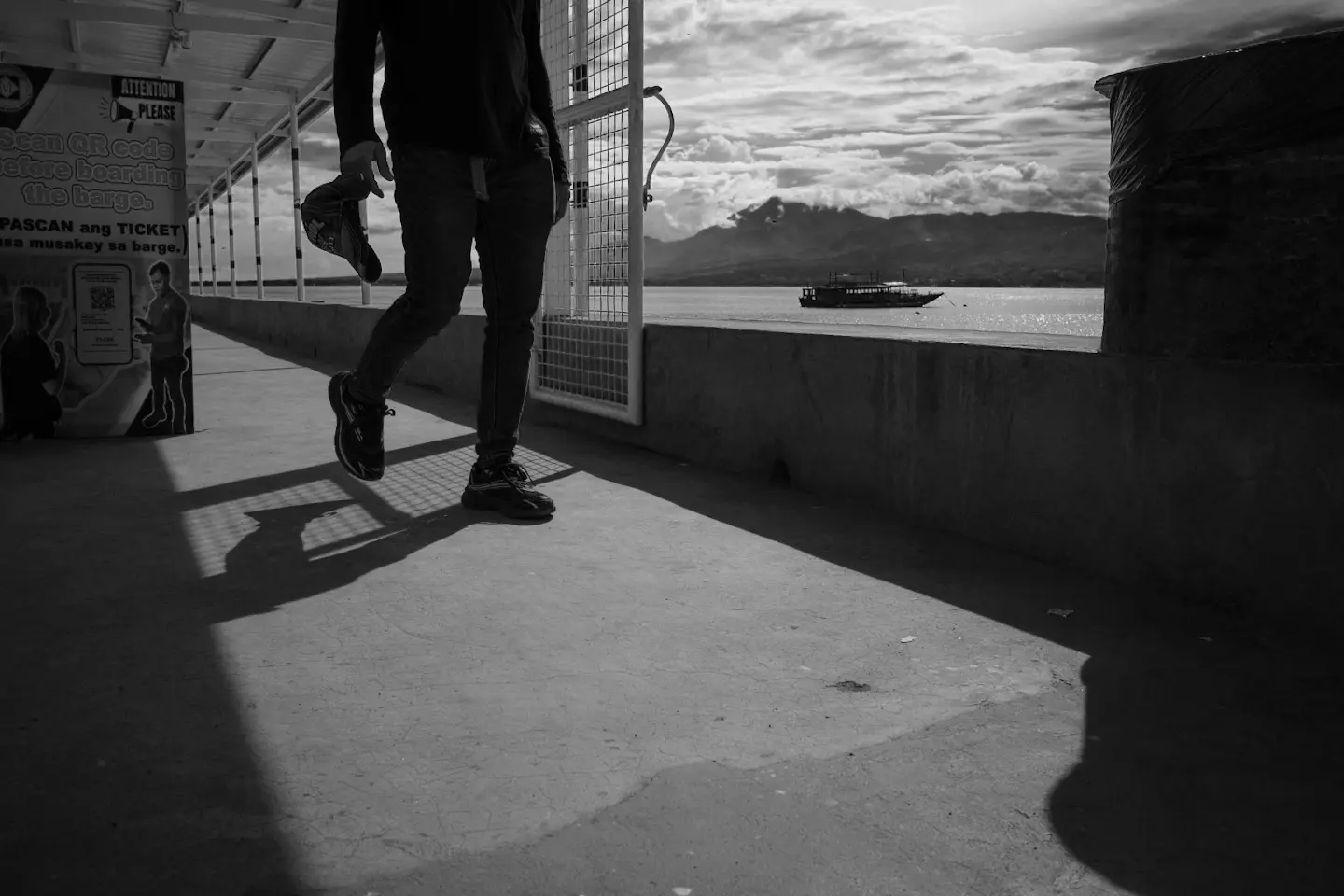
I own both the Fujifilm X100VI and the Ricoh GR IV, and I’ve also shot extensively with the Ricoh GR III. Recently, I’ve been using the GR IV quite a lot and spent time comparing it directly to the GR III. While it is a better camera overall, I’ll be honest — the updates feel a little underwhelming, especially given how strong the GR III already was.
I’ve been shooting with the X100VI since I pre-ordered it, and it has firmly taken on the “bring-it-everywhere” role in my kit. That said, it’s simply not as small as the GR series. It’s also more expensive, harder to get hold of, and — despite being compact — asks more of you in terms of size and commitment.
So the question is obvious: can the Ricoh GR IV replace the X100VI? And is it actually the better compact camera? If you want to see which compact cameras are the best heading in to 2026 then I’ve written a full article on just that subject.
TL;DR: Fujifilm X100VI vs Ricoh GR IV
The Ricoh GR IV is the better choice if you already have a main camera system and just want a genuinely pocketable, everyday carry camera. It’s tiny, discreet, easy to forget you’re even carrying, and now feels more modern than the GR III in autofocus and responsiveness. You give up a viewfinder and a tilting screen, but you gain a camera you’ll actually have on you all the time.
The Fujifilm X100VI is still the better choice if you want one camera to do it all. It’s not truly pocketable in the same way, but it offers a much richer shooting experience: hybrid optical/electronic viewfinder, physical dials, tilting LCD and that versatile 35mm equivalent field of view. It also performs better in low light and gives you a bit more flexibility for cropping with its 40MP sensor.
In short: second camera / always-with-you tool? Go Ricoh GR IV. Main camera / enjoyment of the shooting experience? Go Fujifilm X100VI.
This article contains affiliate links. If you buy something through these links, I may earn a small commission at no extra cost to you. This helps support the site and lets me keep creating free content. Thank you.
Fujifilm X100VI vs Ricoh GR IV: Key Specs
| Fujifilm X100VI | Ricoh GR IV | |
|---|---|---|
| Sensor | APS-C X-Trans CMOS 5 HR | APS-C CMOS |
| Resolution | 40.2 MP | 26 MP |
| Lens (Full-frame equiv.) | 23mm f/2 (35mm equiv.) | 18mm f/2.8 (28mm equiv.) |
| Image Stabilisation | Yes (5-axis IBIS) | Yes (5-axis sensor-shift) |
| Viewfinder | Hybrid optical / electronic | None (LCD-only) |
| Rear Screen | 3.0″ Tilting, 1.62M dots | 3.0″ Fixed, 1.04M dots |
| Autofocus | Phase + contrast detect | Phase + contrast detect |
| Max Aperture | f/2 | f/2.8 |
| Weight (with battery) | ~521 g | 262 g |
| Pocketability | Small, but needs a bag or strap | Genuinely pocketable |
Size, Handling, and Everyday Carry

I’m going to cut straight to the chase here: these cameras simply don’t function in the same way.
The Ricoh GR IV is genuinely pocketable. It’s tiny and slips into almost any pocket without effort. You can take it out with you and genuinely forget it’s even there. This has nothing to do with style or how the camera looks — it’s about always having a camera on you for everyday life, or being as unobtrusive as possible to get shots you simply wouldn’t if you’d left your camera at home.

In my view, the X100VI is not this kind of camera. While it is relatively small — and some people say it fits comfortably in their pockets — it doesn’t fit in any of mine. It’s also too nice an object for me to want to squeeze it in alongside keys and other items. This is a camera that asks to be carried with a bit more care.

That’s because it offers more in terms of the shooting experience. The X100VI has a hybrid optical/electronic viewfinder, dedicated physical dials for shutter speed, ISO, and aperture, and a beautifully machined tilting rear LCD. All of that makes it more engaging to use, but it also means there’s a greater level of commitment involved in taking it out with you. It’s not a “throw it in your pocket and forget about it until you need it” kind of camera.
That said, it is compact and lightweight enough to be far more suitable as an everyday carry camera than most interchangeable-lens systems.
Which camera is actually “better” really comes down to how you plan to use it, and a set of very personal preferences around how you like to shoot. What I will say is this: both cameras are excellent at what they’re designed to do — they just approach the problem from completely different directions.
Viewfinder vs Screen-Only Shooting

The Ricoh GR IV uses the same rear LCD screen as the GR III. It’s perfectly usable in dull to normal light, but here in the Philippines — especially in bright sunlight — I do sometimes struggle to see the screen clearly enough to compose precisely. You can work around it by finding a bit of shade or adjusting how you hold the camera, but it does make accurate composition more difficult at times.

The screen is also fixed, so if you want to shoot from more unusual angles you either have to move your body into position or shoot blindly and hope you get what you want. It’s not a huge issue — and, as I’ve said, there are workarounds — but it does affect how fluid and precise the shooting experience feels.
The X100VI, by contrast, offers a completely different way of working. Its hybrid optical/electronic viewfinder allows me to immerse myself far more fully in the act of photographing, and I find I’m simply more accurate with my compositions when shooting through a viewfinder. The tilting rear screen also makes low- or high-angle shots much easier without resorting to guesswork.
Shooting via an LCD screen feels more casual to me. That’s not a criticism — some people will actively prefer that approach. But if, like me, you value immersion and precision in how you frame your images, the X100VI’s viewfinder makes a meaningful difference. Others will feel the exact opposite, and that’s perfectly valid too.
Autofocus and Responsiveness
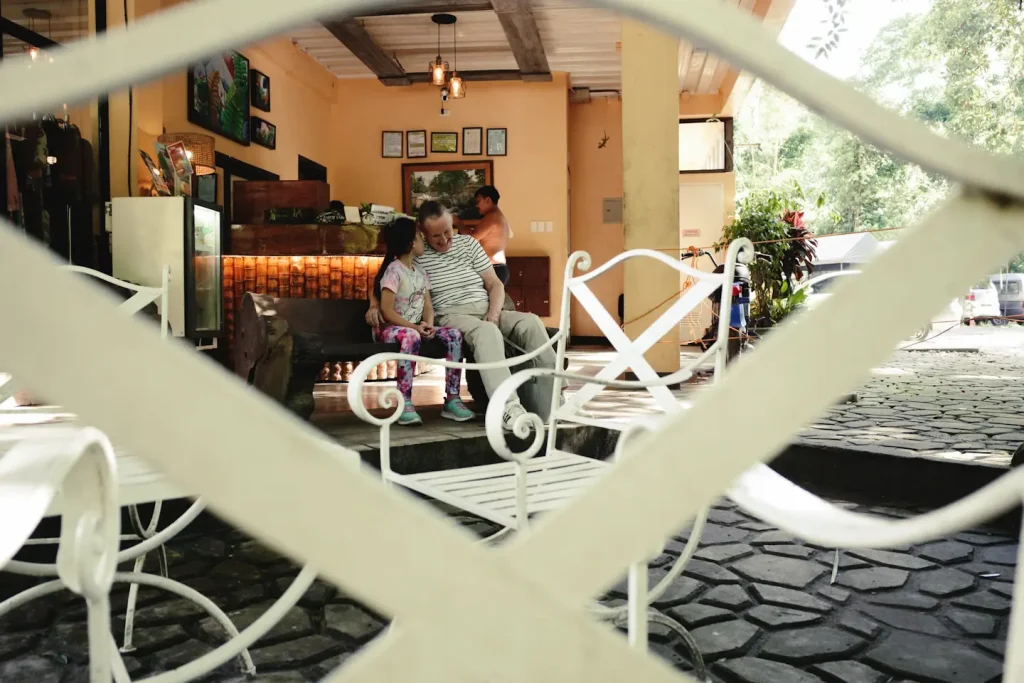
Neither the Ricoh GR IV nor the Fujifilm X100VI is known for lightning-fast autofocus, but both are more than capable of getting the shot in most everyday situations.
This is an area where the GR IV has improved significantly over the GR III. In daylight, autofocus is now genuinely usable as long as your subjects aren’t moving too quickly. I can, for example, get sharp photos of Sofia playing at the playground — just not when she’s racing around at full speed. The camera can keep up with casual movement, but not fast, unpredictable action.
The X100VI is a little better, but it’s not in a different league. It won’t suddenly let you track fast-moving subjects with confidence, and neither camera is designed for that kind of shooting. If your main priority is reliable subject tracking at speed, neither of these is the right tool.
Low-light autofocus is where the gap widens.

On a recent trip to Dumaguete, the GR IV struggled noticeably at night. In a poorly lit restaurant, it hunted back and forth repeatedly and often took multiple attempts to lock focus. In that scenario, I’d estimate my focus hit rate was around one in four — workable if you’re patient, but far from ideal.
The X100VI isn’t fast in low light either, but it does perform noticeably better. Focus acquisition is more reliable, and the f/2 lens helps here compared to the GR IV’s f/2.8, giving the camera a small but meaningful advantage when light levels drop.
In terms of overall responsiveness, the X100VI always felt quicker than the GR III, but the GR IV has clearly caught up. Menu navigation, changing settings, and general operation now feel much more modern. Both cameras feel responsive, efficient, and up to date in everyday use.
28mm vs 35mm Equivalent: Lens and Focal Length Philosophy


I want to start this section by saying something that often gets overlooked in comparisons like this: image quality really isn’t a deciding factor between these two cameras, at least in my opinion.
Both use very good APS-C sensors — the Ricoh GR IV with 26 megapixels and the Fujifilm X100VI with 40 megapixels. On paper, that gives the X100VI a slight advantage for cropping, which may matter to some people. In reality, the difference is far smaller than it sounds. I’ve printed images from both, and I’d wager that 90% of people wouldn’t be able to tell the difference based on image quality alone.
Where these cameras genuinely differ is focal length and field of view.
The Ricoh GR IV uses an 18mm lens (28mm full-frame equivalent), while the X100VI is built around a 23mm lens (35mm equivalent). That might not sound like much — after all, what’s a few millimetres between friends — but in real-world shooting, the difference is very noticeable.
The 28mm equivalent field of view lets a lot more into the frame, which means you need to be much more careful about what’s happening around the edges. It encourages you to move closer and immerse yourself in the scene, but it also demands greater awareness of perspective and distortion, particularly when people are involved. For street and travel photography, it’s incredibly popular for good reason — but unless you’re being deliberate, it’s not the most flattering focal length for people.
The X100VI’s 35mm equivalent, on the other hand, is just that bit narrower, and that makes it more flexible. It can still give a wide, expansive feel when needed, but it’s far easier to include people in your images without worrying as much about distortion or exaggerated verticals. It’s simply more forgiving.
Personally, I like both — but for different reasons.

I tend to enjoy 28mm for Alex Webb–style compositions, where you’re consciously organising multiple elements in the frame and creating depth. It asks more of you as a photographer, and nailing a composition takes work, but when it comes together the results can be exceptional. The 35mm equivalent of the X100VI, though, is easier to live with day to day and works well across a broader range of subjects and situations but if you’re not deliberate, images can stray into feeling a little safe and boring.

Ultimately, this is one of the most important differences between these two cameras, and it really does come down to personal preference and how you like to see the world.
Who Each Camera Is Really For
Ultimately, I think this matters far more than whether one camera is slightly better than the other at autofocus or low-light performance. In my view, these are the two best compact cameras available today — but they suit different people and different styles of photography.
The Ricoh GR IV is, for me, the perfect everyday carry camera. It’s especially well suited to photographers who already shoot with a full mirrorless system but don’t want to haul that kit around everywhere just in case they see something worth photographing. It’s so compact, yet still offers the things we actually care about — excellent image quality, full manual control, and a now-improved lens — that you can simply slip it into a pocket and take it everywhere.
The GR IV’s appeal lies in its minimalism. There’s no fuss, no excess, no attempt to be anything other than a tool that does its job quietly and efficiently. It prioritises function over form, and for many photographers, that’s exactly what they want from a second camera.
The Fujifilm X100VI, while capable of filling a similar role, is better suited to photographers who value the shooting experience as much as the utility of having a light, compact camera with them. The physical dials, the hybrid viewfinder, and the overall design create a very different relationship with the camera — one where form and function are balanced rather than purely utilitarian. Let’s not forget that it also offers a built in flash and a 4-stop ND filter compared with the GRIV’s 2 stop ND.
I wouldn’t slip the X100VI into my pocket and grab shots in quite the same carefree way I do with the Ricoh. But I can see the X100VI satisfying me as an only camera — and it has, in the past. The X100T was my sole camera for over a year, and I never felt limited by it.
The GR IV’s higher launch price compared to the GR III brings it closer to the X100VI financially, which makes the choice more nuanced than it once was. If I were advising a friend, my recommendation would be simple:
- As a second camera to a larger system — something genuinely compact for everyday carry — the Ricoh GR IV is hard to beat, provided you’re happy shooting without a viewfinder.
- As a single do-everything camera, one that delivers strong results while also making the act of photographing enjoyable and immersive, I’d recommend the Fujifilm X100VI.
Neither choice is wrong — but they’re right for different people.
If you want to check current pricing and availability, you can find both cameras here:
Frequently Asked Questions
Is the Ricoh GR IV better than the Fujifilm X100VI?
Neither camera is objectively “better” — they’re designed for different purposes. The Ricoh GR IV is ideal as a genuinely pocketable everyday carry camera, while the Fujifilm X100VI is better suited as a primary camera with a viewfinder, physical dials, and greater overall versatility.
Can the Ricoh GR IV replace the Fujifilm X100VI?
For most photographers, no. The GR IV works extremely well as a second camera but lacks a viewfinder, tilting screen, built-in flash, and the immersive handling that makes the X100VI suitable as an only camera.
Which camera is better for travel photography?
If you want something you can carry everywhere without thinking, the Ricoh GR IV is hard to beat. If you want one camera that can comfortably handle street, people, landscapes, and low-light situations, the Fujifilm X100VI is the more versatile option.
Is 28mm or 35mm better for photographing people?
The 35mm equivalent lens of the X100VI is generally more forgiving for people photography, with less distortion and easier composition. The Ricoh’s 28mm equivalent works well for immersive street photography but requires greater care with framing.
Does the Fujifilm X100VI have better image quality than the Ricoh GR IV?
In real-world use, image quality is very similar. Both cameras use high-quality APS-C sensors, and most differences come down to focal length, handling, and shooting style rather than outright image quality.